Imagine floating in warm, ink-black water, your beam of light cutting through the darkness to reveal a world most people never see. Parrotfish sleeping in mucous cocoons. Octopuses, bold and curious, sliding across the reef. Shrimp with eyes that glow like tiny LEDs. This is night snorkeling, and it's nothing like the daytime version. For beginners, the idea can be intimidating—I remember my first time, clutching my light so tight my knuckles were white. But with the right preparation, it's not just safe; it's the most magical snorkeling experience you'll ever have.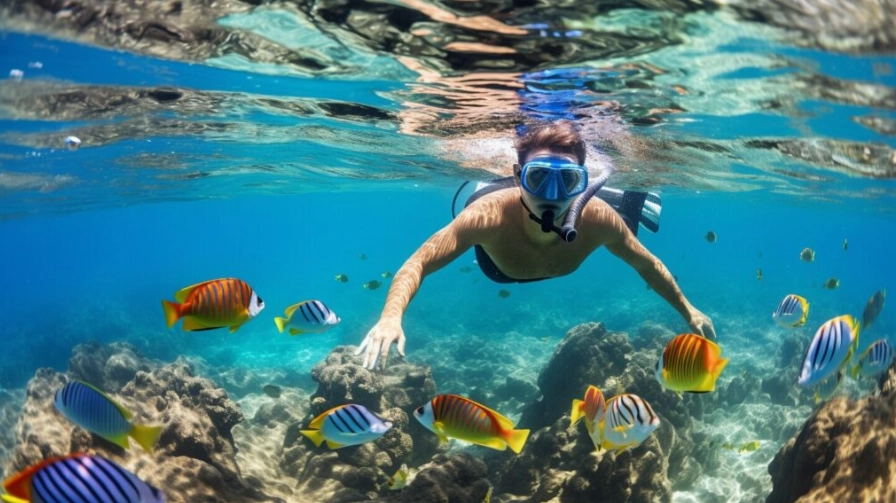
The ocean doesn't close at sunset. It changes shift. The secretive, nocturnal creatures come out to play, and the diurnal fish tuck themselves into cracks and crevices. Your mission, should you choose to accept it, is to visit this shift change. Let's strip away the mystery and the fear and replace it with a clear, actionable plan.
What You'll Learn in This Guide
Essential Gear for Night Snorkeling (Beyond the Basics)
You need your standard snorkel kit—mask, snorkel, fins. But at night, three pieces of gear get promoted from "nice-to-have" to "absolutely critical." Get these wrong, and your experience will range from frustrating to dangerous.
The Right Mask and Snorkel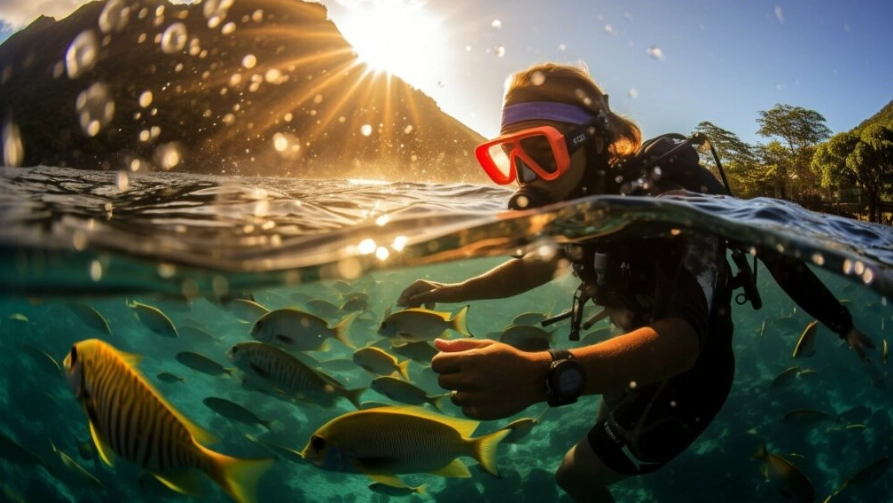
A foggy mask during the day is annoying. At night, with limited light, it's a trip-ender. I've seen more beginners quit because of mask fog than anything else. Skip the cheap spit-and-rinse method. Use a dedicated defogging solution or gel. Apply it, rinse it lightly with seawater just before you enter, and don't touch the inside of the lens again. A full-face snorkel mask? I don't recommend them for night snorkeling. If the seal fails or fogs in the dark, it's harder to clear and can induce panic. Stick with a traditional, low-volume mask you're familiar with.
For the snorkel, a dry snorkel is your best friend. When a small wave hits you unexpectedly, the last thing you want is to choke on seawater in the dark. The splash guard makes a real difference.
Lighting is Everything
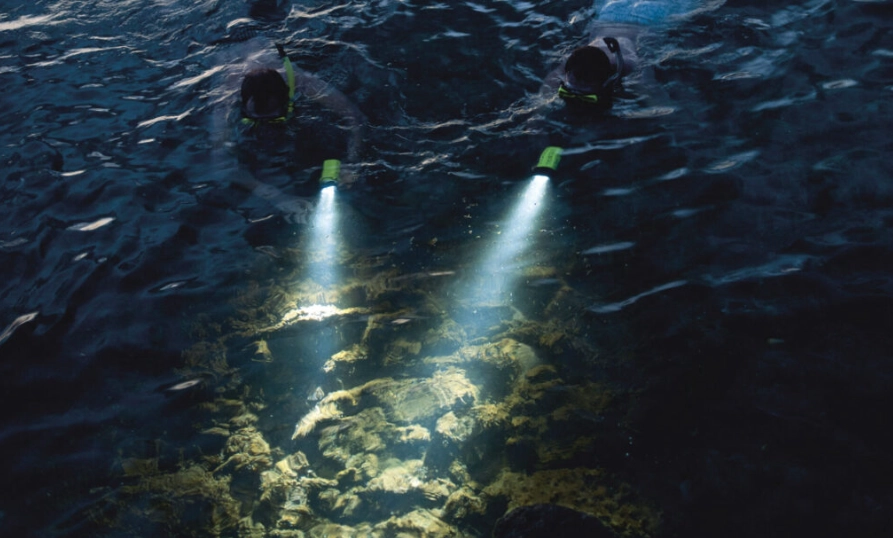
This is your lifeline and your window to the underwater world. You need two lights: a primary and a backup. Not one. Two.
>Optional but highly advised. A small, waterproof LED stick light (usually red or white) attached to a floating buoy or your person.| Light Type | Specs & Purpose | Beginner Tip |
|---|---|---|
| Primary Light | Minimum 1000 lumens. A wide beam is better than a narrow spotlight for general exploration. Wrist strap or lanyard is mandatory. | Don't go for the cheapest option. A reliable brand like Underwater Kinetics or Bigblue is worth the investment. Test it in a dark room before you go. |
| Backup Light | A small, compact light (300-500 lumens). Can be a handheld or a smaller dive light. Its only job is to get you back to shore if the primary fails. | Attach this one to your BCD or swimsuit with a clip. It should be separate from your primary light, not just another setting on the same device. |
| Surface Marker Light | This isn't for seeing. It's for being seen by boats and your buddies on the surface. A simple glow stick can work in a pinch. |
A common mistake? Shining your light directly into other snorkelers' eyes. It blinds them just as it would on land. Point it down, or signal by moving it across the seabed.
Exposure Protection
You get cold much faster at night, even in tropical waters. That 82°F (28°C) water feels different after sunset. A 2-3mm neoprene shorty or full wetsuit isn't just for warmth; it provides crucial protection from accidental scrapes on coral you might not see as clearly.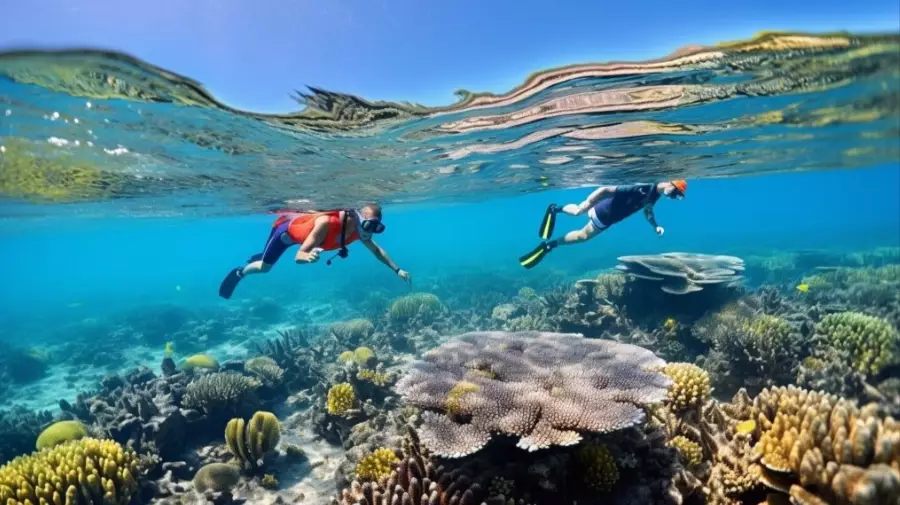
How to Choose Your First Night Snorkeling Location
Your first night snorkel is not the time for exploration. It's the time for a familiar, controlled environment. Think of it as a training mission.
Rule number one: Know it by day.
You should have snorkeled the exact spot during daylight at least once, preferably multiple times. You need to know the entry and exit points like the back of your hand. Is the beach sandy or rocky? Are there any permanent mooring lines or channels to avoid? Where's the deepest part? This prior knowledge reduces cognitive load when your senses are already heightened.
Ideal beginner locations have:
- Calm, Protected Water: A sheltered bay, a lagoon, or a leeward cove. Avoid areas with known strong currents or surf.
- Easy Shore Access: A gently sloping sandy beach is gold. Rocky cliff entries are for later, after you've gained confidence.
- Reasonable Depth: 5 to 20 feet (1.5 to 6 meters) is perfect. Shallow enough to stand if needed, deep enough to see interesting life.
- Known Marine Life: A healthy reef or seagrass bed you've enjoyed during the day.
Many popular snorkeling destinations like Hawaii's Hanauma Bay, parts of the Florida Keys, or the calm bays of Bonaire offer guided night snorkel tours. These are fantastic for beginners—they provide lights, guides, and safety in numbers. Check with local operators like SeaQuest Hawaii or Bonaire's Toucan Diving for reputable tours.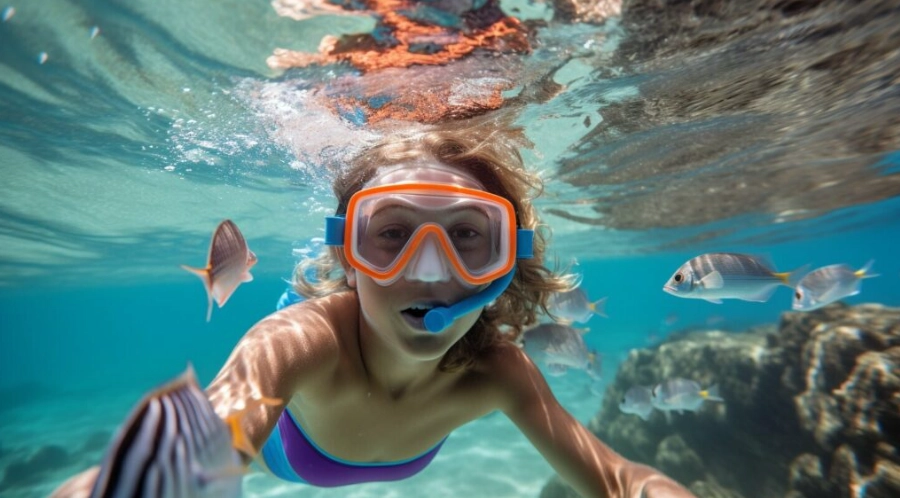
Safety First: Non-Negotiable Protocols
Safety during night snorkeling isn't a section of the guide; it's the foundation of the entire activity. Let's be blunt: ignoring these turns an adventure into a risk.
Check Conditions in the Afternoon. Don't just show up at dusk. Go to the site a few hours before. Check the wind, surf, and tide charts. Is the tide going out, potentially creating a current? Is the wind picking up? The National Oceanic and Atmospheric Administration (NOAA) website or local marine forecasts are your best friends here.
Establish a Light Protocol. If you get separated from your buddy, what do you do? The standard is to hold your light still on your head. A moving light means you're swimming. A light shining in a circle is a distress signal. Everyone in your group must know this.
Have a Shore Contact. Tell someone reliable on shore where you are going and when you expect to be back. Give them a hard deadline to call for help if you don't check in.
Preparing for Your First Night Snorkel: A Step-by-Step Scenario
Let's walk through the evening of your first snorkel. You've chosen a calm bay in Maui you've visited twice before during the day.
4:00 PM - Pre-Snorkel Scout: You and your buddy drive to the bay. The water is calm, just like yesterday. You note your entry point—a break in the rocks next to the big palm tree. Your exit point is the same. You tell your friend at the hotel you'll be back by 8:30 PM.
6:00 PM - Gear Check: At your hotel, you lay everything out. You test both lights—they blaze brightly. You apply defog to your mask. You pack a small dry bag with towels, water, and a snack for after.
6:45 PM - Sunset Entry: You arrive at the beach as the sun is dipping below the horizon. This is the best tip I can give: enter the water during twilight. Your eyes adjust naturally to the fading light, and you get to witness the incredible transition as nocturnal life awakens. It's less jarring than plunging into total darkness.
7:00 PM - The Dive: You're in. You give the "OK" signal to your buddy, who returns it. You swim slowly, methodically. You don't chase fish. You let your light pan across the bottom. You see a sleeping parrotfish, its brilliant colors muted. A hermit crab scuttles. You breathe slowly through your snorkel. The sound is amplified in the dark. It's just you, your breath, and the beam of light.
7:45 PM - Time Check: You agreed on a 45-minute max for your first time. You signal to your buddy: "Time to go up." You swim slowly back to your entry point, using the lights from shore as a guide.
That's it. Short, sweet, controlled. You've just completed your first successful night snorkel.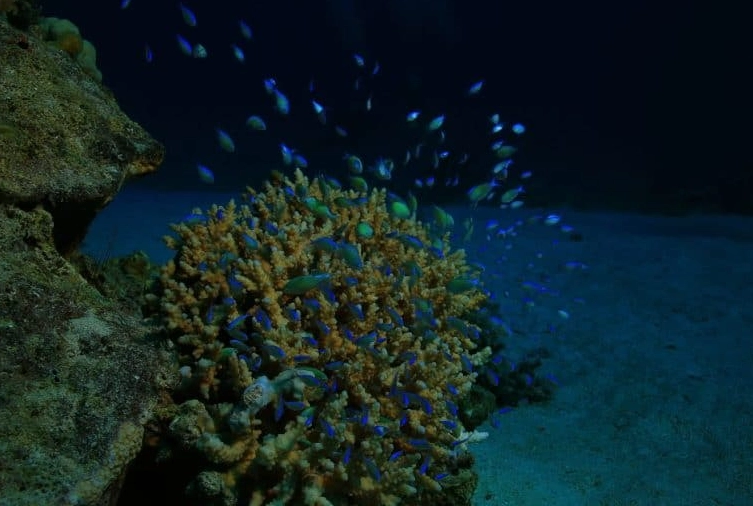
What to Expect: The Nighttime Cast of Characters
Forget the daytime cast of colorful reef fish. At night, you're meeting the specialists.
The Sleepers: Many fish like parrotfish, wrasses, and some tangs secrete a mucous cocoon around themselves and sleep in crevices or on the reef. Your light might startle them—move slowly.
The Hunters: Octopuses, squid, and lobsters are on the move. Octopuses are incredibly intelligent; if you stay still, they often come out to investigate your light beam.
The Bioluminescence: In some locations, you might see tiny pinpricks of blue-green light when you stir the water—plankton called dinoflagellates. It's like swimming through stars. Popular spots for this include Mosquito Bay in Puerto Rico (often a kayak tour) or parts of the Maldives.
The Crustaceans: Shrimp, crabs, and cleaner shrimp are far more active. Look for their reflective, jewel-like eyes shining back at your light.
Remember, you are a visitor in their home. Never touch or harass the animals. Your light is already an intrusion—keep it moving and avoid shining directly on one creature for too long.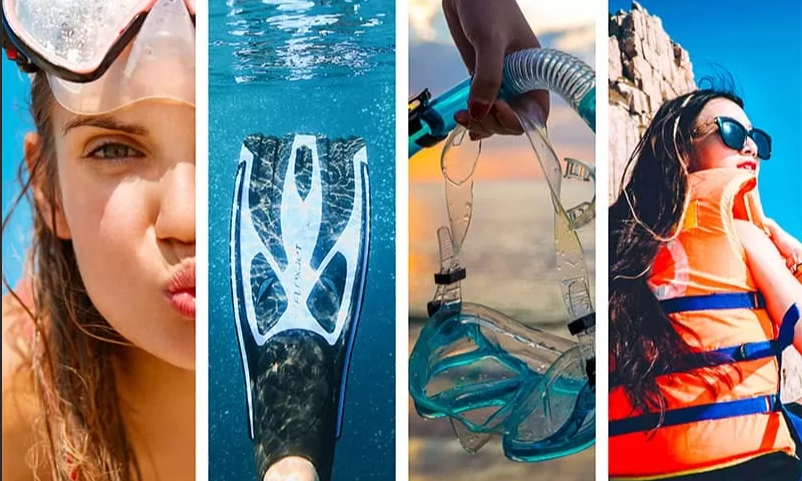
Your Night Snorkeling Questions, Answered
Is night snorkeling safe for someone who can't swim well?
It significantly increases the risk. Night snorkeling requires confident swimming skills, the ability to tread water comfortably, and no panic if you get a mouthful of water. If you're not a strong swimmer, stick to daytime snorkeling in very shallow, calm areas or use a flotation vest. A guided tour with a flotation device might be an option, but you must be honest with the guide about your ability.
What if my underwater light fails during the night snorkel?
This is exactly why the backup light is non-negotiable. Immediately switch to your backup. Signal to your buddy with your backup light that you have a problem. Then, both of you should calmly and slowly make your way back to your pre-planned exit point. This is a procedure, not a panic moment, if you've prepared correctly.
How do I avoid getting disoriented or lost in the dark?
This is a major fear, and the solution is simple: maintain a constant visual or auditory reference to shore. Never swim so far out that you can't see the lights of the shore or your entry point. If visibility is poor, one buddy can face shore while the other explores, switching roles. The sound of waves on the shore is also a reliable guide. On a moonlit night, the moon can be a general directional marker.
Are there sharks, and are they more dangerous at night?
Sharks are present in the ocean day and night. Most reef sharks (like blacktip or whitetip reef sharks) are shy and pose little threat. At night, some species may be more active. The key is to avoid snorkeling in areas known for aggressive species or where people are fishing (which attracts sharks). Your light does not specifically attract sharks. Incidents are exceedingly rare. The real risks are currents, boat traffic, and your own preparedness—not sharks.
Can I use a waterproof phone case and my phone's flashlight?
Absolutely not. This is a top-tier beginner mistake. Phone flashlights are not designed for underwater use, lack the necessary lumens, and the waterproof cases are notoriously unreliable under pressure. You risk destroying your phone and being left in the dark. Invest in a proper dive light. It's the most important piece of gear you'll buy.
 Night snorkeling for beginners is about swapping fear for fascination through preparation. It's about respecting the ocean's rhythm and having the humility to start small. Get your gear right, choose your location wisely, drill the safety rules, and go see the shift change. That first time you lock eyes with an octopus under your beam, you'll forget you were ever nervous. You'll just be amazed.
Reader Comments