Let's be honest. Your first time breathing while snorkeling probably felt weird, maybe even a bit scary. That plastic tube in your mouth, the sound of your own breath echoing, the nagging thought of water getting in. I've taught hundreds of people to snorkel, and almost everyone gets it wrong at first. They tense up. They suck air like they're running a marathon. They fight the equipment. But here's the secret: breathing with a snorkel should be the most effortless part of the experience. If it's not, you're working too hard. This guide will strip away the mystery and give you the exact, actionable steps to breathe calmly and safely underwater.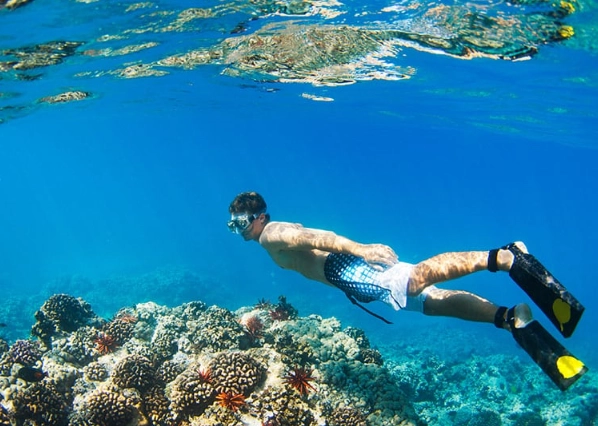
What You'll Learn
Why Breathing While Snorkeling Feels Wrong at First
It's physiology and psychology, not just technique. When your face is submerged, your body's mammalian dive reflex kicks in slightly. Your heart rate can drop, and there's a primal instinct to hold your breath. On top of that, you're breathing through a narrow tube, which adds airway resistance. Your brain interprets this extra work as "something is wrong," which triggers shallow, panicked chest breathing. Most beginners also clamp down on the snorkel mouthpiece with their molars, straining their jaw and neck muscles, which further restricts airflow. The key is to override these instincts with deliberate, diaphragmatic breathing.
The Step-by-Step Guide to Breathing Calmly with a Snorkel
Forget just "breathing in and out." Let's break it down into a sequence you can follow from the moment you put the snorkel in your mouth.
Step 1: The Mouthpiece Bite (It's a Gentle Hold)
Don't bite down with your back teeth. Place the mouthpiece between your front teeth and your lips, letting it rest on the ridge just behind your teeth. Your lips should seal around the flange comfortably. If your jaw aches after five minutes, you're biting too hard. A relaxed jaw is the foundation of relaxed breathing.
Step 2: The Inhale (Think "Fill Your Lower Back")
Breathe in slowly and deeply through your mouth. Focus on making your stomach expand, not your chest. Imagine you're trying to fill the lower part of your lungs first. A good, deep inhale should take about 4-5 seconds. This deep breath does two things: it maximizes oxygen exchange, and it gives you more time before you feel the urge to breathe again, reducing anxiety.
Step 3: The Exhale (The Secret to Clear Masks)
This is the most important part. Exhale steadily, firmly, and completely. Your exhale should be longer than your inhale—aim for 6-7 seconds. Push all the air out. A strong, complete exhale removes the "stale" air (high in carbon dioxide) from the snorkel tube. If you don't exhale fully, you'll start re-breathing CO2, which quickly leads to that panicky, air-hungry feeling. This forceful exhale also keeps water droplets from the splash guard at bay and helps prevent your mask from fogging up by removing moist air from your face.
Pro Tip from a Decade of Guiding: The biggest mistake I see? People inhaling sharply but only exhaling 50%. They're essentially hyperventilating into the tube. Your breathing rhythm should sound like a slow, steady Darth Vader, not a panting dog. Count in your head: "In for four, out for six." Make the exhale deliberate.
How Your Gear Directly Impacts Your Breathing
You can have perfect technique, but bad gear will ruin it. Not all snorkels are created equal, and the right choice makes breathing while snorkeling feel almost natural.
| Snorkel Type | How It Affects Breathing | Best For | Potential Drawback |
|---|---|---|---|
| Classic J-Snorkel | Simple, no valves. Lowest air resistance but will fill with water if submerged. | Confident swimmers, freedivers who are skilled at clearing water. | Requires a forceful blast-clear technique, which can disrupt breathing rhythm. |
| Dry Snorkel (with float valve) | Valve seals shut when submerged. Prevents most water entry, reducing anxiety. | Beginners, relaxed surface snorkeling. | Slightly more resistance when inhaling. The valve can sometimes stick if sand/debris gets in. |
| Semi-Dry Snorkel (splash guard) | Has a cover to deflect splashes, but not a sealing valve. A good middle ground. | Most recreational snorkelers. Balances ease and reliability. | Will take in water if fully submerged, requiring a clear. |
| Flexible Purge Snorkel | Has a flexible tube section and a purge valve at the bottom to drain water easily. | Those who hate the hard blast-clear. Makes clearing effortless. | The purge valve is an extra part that can fail. Flexible section can be chewed through. |
My personal take? For 90% of people, a good semi-dry snorkel is the sweet spot. It's less fussy than a dry snorkel (whose valve can sometimes create a slight vacuum on inhalation), and the splash guard handles waves and spray effectively. Invest in a silicone mouthpiece—it's softer and more comfortable than cheap PVC, which makes a huge difference for your jaw over an hour-long swim.
Fixing Common Snorkel Breathing Problems
Let's troubleshoot the specific issues that ruin the experience.
Problem: "I feel like I'm not getting enough air."
This is almost always caused by shallow chest breathing and an incomplete exhale. You're not clearing the carbon dioxide from the tube. Go back to the 4-second inhale, 6-second exhale rhythm. Also, check if your snorkel is too narrow—some cheap models have a tiny bore diameter that genuinely restricts flow.
Problem: "Water keeps getting in my snorkel."
If you have a dry snorkel, a tiny bit of water is normal—just a tilt of the head and a gentle exhale should clear it. If a wave swamps you, don't jerk your head up. Stay calm, hold your breath for a second, then give one strong, continuous exhale to blast the water out the top. Jerky movements cause more water to enter.
Problem: "My mask fogs up immediately."
This is a breathing problem! Fog forms from the warm, moist air from your lungs condensing on the cold lens. Before you even get in the water, clean the lens thoroughly with a mild soap or dedicated defogger. Just spit is rarely enough, despite the old myth. Once in the water, your strong, directed exhales through your nose (if your mask fits) help push moist air out of the mask skirt.
The Best Drill Nobody Does (Practice on Land)
You wouldn't swing a golf club for the first time on the course. Don't learn to breathe with a snorkel for the first time in the ocean. Here's a simple 5-minute drill:
- Sit comfortably in a chair. Put your snorkel and mask on. Don't bite, just let the mouthpiece rest.
- Close your eyes and breathe through the snorkel for two minutes. Focus on slow, deep belly breaths. In for 4, out for 6.
- Now, have a friend (or use a spray bottle) lightly mist water onto the top of your snorkel. Practice breathing normally without reacting. Get used to the sound of a few droplets inside the tube.
- Finally, pour a cup of water into the snorkel from the top. Hold your breath, then practice a single, forceful blast-clear exhale. Feel the water eject.
This drill builds muscle memory and confidence. The ocean will feel less intimidating because you've already dealt with the sensations on land.
Your Snorkel Breathing Questions, Answered
Reader Comments