You're standing on a beautiful tropical beach, the water is impossibly blue, and you're about to ruin it all. Why? Because you wear glasses, and the thought of blurry fish and indistinguishable coral is already giving you a headache. I've been there. For over a decade of leading snorkel trips and testing gear, I've seen the frustration firsthand. The good news? You have more than one solid solution. The bad news? Picking the wrong one can turn your dream trip into a leaky, foggy mess. Let's cut through the noise and find the gear that lets you see the underwater world in crisp, clear detail.
What’s Inside: Your Quick Navigation
The Core Challenge: Why Regular Gear Fails
Let's get this out of the way first. Trying to jam your everyday glasses into a standard snorkel mask is a guaranteed failure. I don't care how clever you think you are with the arm angles. The mask skirt—the soft silicone part that seals to your face—needs a perfectly smooth, continuous surface. Glasses arms create channels for water to pour in. Even if you manage a semi-decent seal on the surface, the moment you put your face in the water, pressure changes will find those gaps.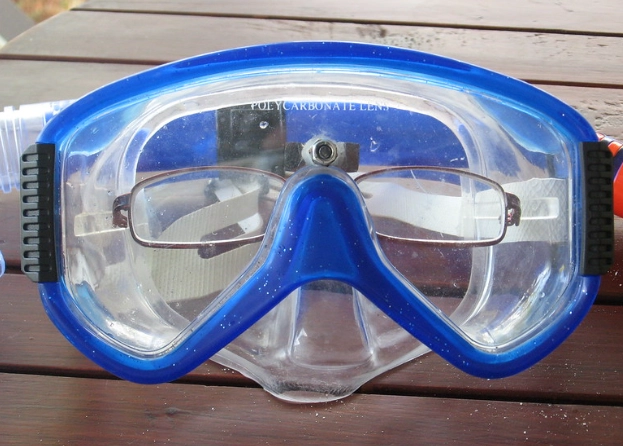
It's not just about leaks. The mask frame itself will prevent a proper fit, often causing discomfort on the bridge of your nose. You'll be constantly adjusting, water will seep in, and you'll miss the show. So, we need solutions built for purpose.
Your Three Main Options: A Detailed Breakdown
You essentially have three paths, each with its own trade-offs in cost, convenience, and optical quality. Think of it as a spectrum from "most customized and sharpest" to "most accessible and affordable."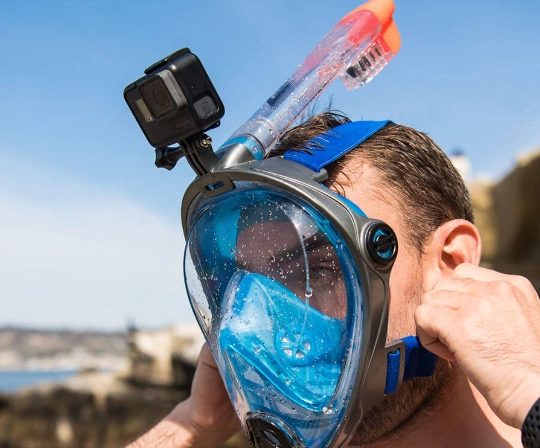
Option 1: Prescription Snorkel Masks (The Custom Tailored Suit)
This is the gold standard. The entire front lens (or lenses, in a dual-lens mask) is ground to your exact prescription. Brands like Seavision and Prescription Dive Masks have been doing this for years. The vision is phenomenal—just like your glasses on land. The field of view is uncompromised, and there are no extra internal lenses to collect condensation between them.
The catch? Cost and commitment. A custom mask starts around $150 and can go well over $300 for complex prescriptions (high astigmatism, strong prism). It's also a dedicated piece of gear. You can't easily change the prescription or share the mask with a friend. The lead time can be 2-4 weeks. But if you snorkel frequently, have a strong or complex prescription, or just want the absolute best visual experience, this is your endpoint.
Option 2: Optical Mask Inserts (Diopter Lenses) (The Adaptable Workhorse)
This is the most popular and practical choice for most people. You buy a quality standard snorkel mask (like a Cressi or TUSA model), and then purchase separate optical lenses that clip or glue onto the inside of the mask's lens. Brands like AquaOptix and SeaVision (their "Stick-On" line) dominate here.
How it works: You select the diopter strength (e.g., -2.5, -3.0) that matches your spherical correction. They come in 0.5 increments, typically from -1.0 to -8.0. You pop them into the mask, and you're set.
The major pro: Affordability and flexibility. The inserts themselves cost $40-$80. You can move them between compatible masks (check fit guides carefully!), and you're investing in a good mask you can keep forever, even if your prescription changes. The vision is excellent for most.
The subtle con everyone misses: The adapter plate. Many systems use a plastic frame that holds the lenses. This frame sits a few millimeters away from the main mask lens. If you don't install it perfectly or if the mask design isn't ideal, this tiny gap can be a secondary spot for fog to form between the lenses. It's solvable with careful prep, but it's a real-world quirk.
Option 3: Full-Face Snorkel Masks with Prescription Inserts (The Panoramic Compromise)
This is the newest and most controversial category. Full-face masks like some models from Ocean Reef (specifically their Aria series) offer optional optical inserts. The appeal is huge: you breathe naturally through your nose and mouth, no jaw fatigue, and a massive panoramic view.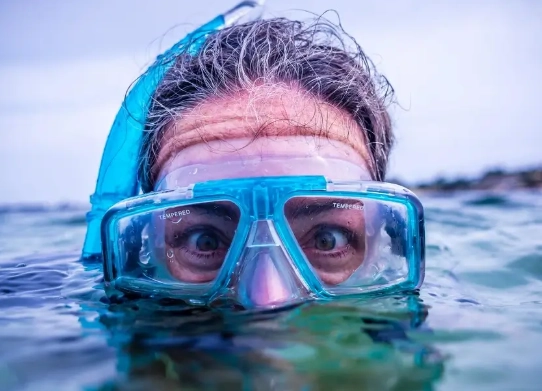
But. There are big buts.
First, only a few models support this. Do not assume any full-face mask can accommodate inserts. Second, the sealing surface is more complex. You must do a dry-land fit test: put the mask on without the strap, inhale gently through your nose, and see if it stays suctioned to your face for 5-10 seconds. If it falls, it will leak. Third, they are unsuitable for any kind of diving below the surface, as you cannot equalize your ears by pinching your nose.
They are a fantastic, clear-vision solution only if you pass the fit test and plan on pure surface snorkeling in calm conditions.
| Option | Best For | Estimated Cost | Key Advantage | Biggest Drawback |
|---|---|---|---|---|
| Prescription Mask | Frequent snorkelers, complex prescriptions, purists. | $150 - $350+ | Optically perfect, no internal fogging gaps. | High cost, not shareable, long lead time. |
| Optical Inserts | Most recreational users, travelers, those on a budget. | $40-$80 (plus mask cost) | Great value, flexible, easy to find. | Potential for fog between lenses, must ensure mask compatibility. |
| Full-Face w/ Inserts | Surface-only snorkeling in warm, calm water. | $100-$200 (for inserts + mask) | Natural breathing, wide view, easy for beginners. | Critical fit test required, not for diving down. |
How to Choose: A Decision Framework Based on Your Needs
Stop looking at products and start asking yourself these questions.
"How often do I snorkel?" Once on a honeymoon? Go with optical inserts. You'll get 95% of the visual clarity for a fraction of the price. Several times a year? Inserts are still king. Every month or a liveaboard trip? Consider investing in a custom prescription mask.
"What's my actual prescription?" Grab your prescription sheet. Is there a number under "CYL" (Cylinder)? That's astigmatism. If it's above -1.00, generic spherical inserts might leave you with some blur. You'll likely need a custom solution (either a full prescription mask or custom-ground inserts) for true sharpness.
"Am I just floating, or do I dive down to look at things?" This is the full-face mask gatekeeper. If you like to duck-dive even a meter to get a closer look at a clam, rule out full-face masks immediately. Stick with a traditional low-volume mask (with inserts or prescription) that allows easy equalization.
"What's my budget, including shipping time?" If your trip is in two weeks, a custom mask is likely off the table. Factor in time for shipping and potential returns. Optical inserts from Amazon can arrive in two days, giving you time for a bath tub test.
What About Contact Lenses for Snorkeling?
It's a valid workaround, endorsed by organizations like PADI for recreational diving and snorkeling. Use daily disposable lenses. Put in a fresh pair right before you snorkel, and throw them away after. This eliminates any risk of storing contaminated lenses.
The fear of losing a lens underwater is mostly overblown—a properly fitting mask keeps water out, so the lens stays put. The real issue is comfort. If you're not a regular contact lens wearer, the ocean wind and salt spray can dry your eyes out quickly. And if you do get a flood, it can sting. I use this method often, but I always carry rewetting drops and a spare pair of lenses in my dry bag.
But what if you're not a candidate for contacts? That's why we have the gear options above.
Clearing Up Common Confusion (Your Questions Answered)
So there you have it. Blurry snorkeling is a solved problem. Whether you invest in a custom mask, snap in some optical inserts, or cautiously try a compatible full-face model, you can finally see the parrotfish's colors and the coral's textures as they were meant to be seen. Don't let your glasses be the reason you miss out. Get the right gear, prep it well, and dive into a world that's finally in focus.
Reader Comments