You think you know a reef. You've seen it in the blazing sun, fish darting, corals glowing. Then you slip into the same water after sunset, and it's like someone flipped a switch on an entirely new planet. Night snorkeling isn't just a different activity; it's a sensory reboot. The ocean slows down. Predators come out to play. Nocturnal critters you'd never see by day emerge from their hidey-holes. And if you're lucky, you might swim through liquid constellations of bioluminescence. But let's be real – the idea can also be intimidating. That's why this guide exists. We're going to strip away the mystery and give you the concrete, actionable plan to do it safely and have your mind blown.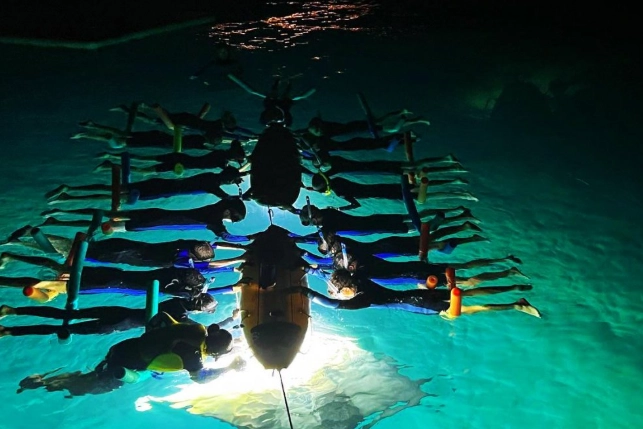
What's Inside: Your Night Dive Blueprint
Why Bother? The Night Shift on the Reef
Daytime snorkeling is a party. Nighttime is the secret after-party where the real characters show up. Parrotfish encase themselves in mucus sleeping bags. Moray eels slither through open water, hunting. Octopuses, masters of disguise by day, become bold explorers. Coral polyps extend their tiny tentacles to feed, making the reef look fuzzy and alive in your light beam. The psychology is different too. Your world shrinks to the cone of your flashlight, which focuses your attention intensely. You notice details – a tiny shrimp on a sponge, the intricate pattern of a sea star. It's meditative. For me, the first time I saw a bioluminescent trail sparkle behind my hand, I forgot I was floating in dark water. I was in a galaxy.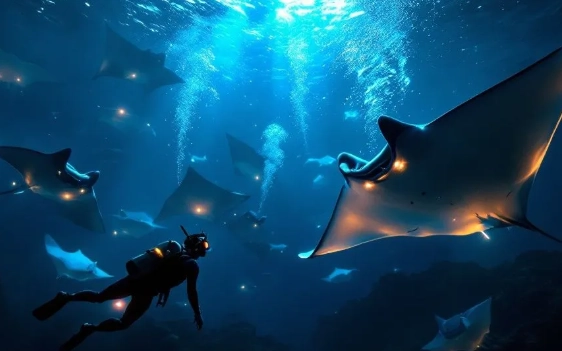
Gear Up Right: What You Actually Need (And What You Don't)
Forget the fancy stuff for your first time. Nail the basics. A common mistake is prioritizing a super-bright light over everything else. Wrong. Your primary light is crucial, but if your mask is leaking or you're cold, the experience is ruined.
| Gear Item | Why It's Critical for Night | Pro Tip / Common Mistake |
|---|---|---|
| Primary Dive Light | Your main vision. 200-500 lumens is perfect. Wider beam > super focused spot. | Mistake: Using a handheld flashlight not meant for water. It can fail. Get a proper dive light with a wrist lanyard. Test it the day before. |
| Backup Dive Light | Non-negotiable. If your primary dies, this is your ticket back. | A small, cheap dive light clipped to your BCD or swimsuit is fine. It just needs to work. |
| Exposure Protection | You get cold much faster at night, even in tropical water. | A 2-3mm wetsuit or a full skin suit. It also protects from accidental scrapes or jellyfish. |
| Familiar, Well-Fitting Mask & Snorkel | Fogging or a leak is 10x more annoying in the dark. | Use your day-time, trusted set. Apply anti-fog the right way (spit works, but dedicated gel is better). |
| Surface Marker Buoy (SMB) | Makes you visible to boats. A safety must for any snorkel away from shore. | Many beginners skip this. Don't. An inflatable SMB is cheap and could save your life. |
Light Etiquette: Never shine your light directly in another snorkeler's face. You'll destroy their night vision. Point it down or away. To get someone's attention, wave your light beam across the water surface near them.
Picking Your First Night Snorkeling Spot
Your first time should be easy, not epic. Choose a location you've snorkeled by day, multiple times. You know the entry/exit, the depth, the general layout. Calm, protected bays are ideal. Avoid areas with strong currents or complex boat traffic. Here are three beginner-friendly spots that are famous for a reason: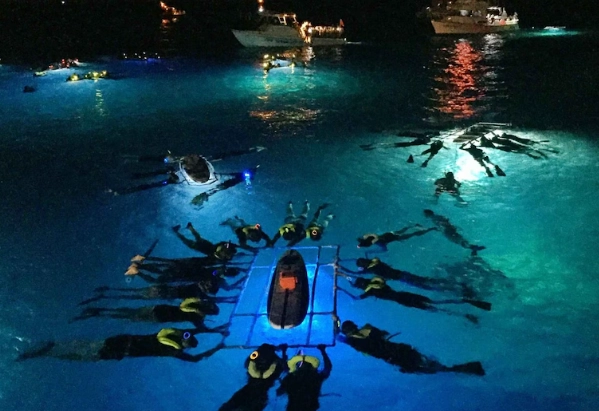
Hanauma Bay, Oahu, Hawaii (USA)
Yes, it's popular. But for night snorkeling, it's a controlled, perfect classroom. The bay is a marine preserve, so life is abundant. You need a permit for night access, which limits crowds. The sandy entry is gentle, and the inner reef is shallow.
Key Info: Permits required (book well in advance via the City & County of Honolulu website). Park closes during the day. Night sessions have specific entry times. No facilities open at night. Bring everything.
Bight Reef ("The Bight"), Providenciales, Turks & Caicos
Right off Grace Bay Beach, this is as easy as it gets. Sandy bottom, gradual slope, and a roped-off snorkel trail you can follow even at night. The coral heads are packed with sleeping fish. I've seen octopus here almost every night dive.
Key Info: Free public access from Grace Bay Beach. No facilities directly at the site. Best on evenings with little wind. Stay inside the roped area for safety.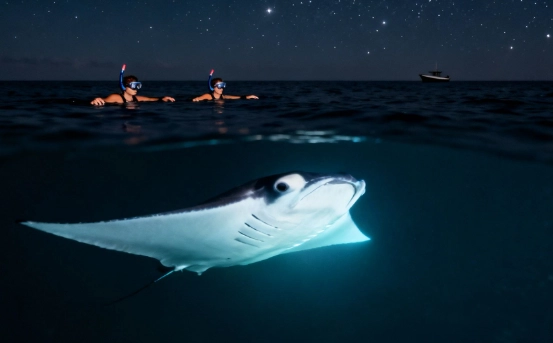
Thunderball Grotto, Exuma, Bahamas
For the adventurous beginner. This is a swim-through cave system made famous by James Bond. By day, it's packed. By late afternoon/early evening, the crowds vanish. The play of light through the holes in the cave roof is magical. Caution: Only attempt on a calm day at low tide. Know your exit point before it gets dark.
Key Info: Access is by boat only (join a late afternoon tour or charter). Tides are critical – consult a local guide. No official operating hours or fees for the site itself.
The Night Snorkeling Safety Protocol: A Step-by-Step Plan
This isn't a casual swim. It's a planned operation. Follow these steps in order.
Step 1: The Pre-Dive Briefing (On Dry Land)
With your buddy, agree on: Maximum depth and time. (e.g., "20 feet, 45 minutes max"). Hand signals: Thumbs up, okay, problem, light (point to eye). Separation procedure: If we get separated, shine your light up to the surface, spin slowly for 1 minute. If no reunion, exit the water at our agreed entry point. Entry/Exit point: Physically point to the exact spot you'll get in and out.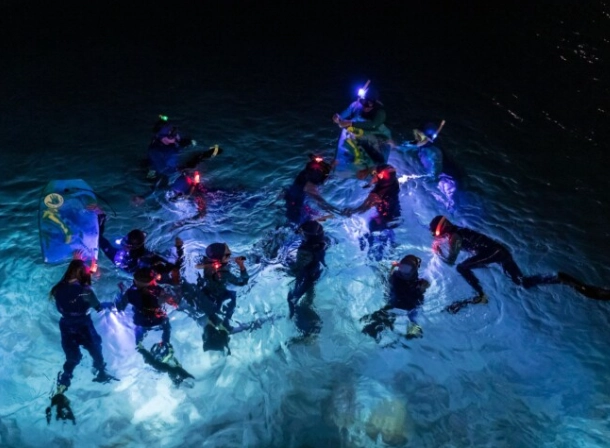
Step 2: Entry & The Bubble
Enter the water while it's still twilight if possible. Get your bearings. Float together. Turn off your lights for a minute. Let your eyes adjust to the ambient light. Notice where the moon is, the shore lights. This creates a mental map. Now turn your lights on.
Step 3: In the Water – The Buddy Dance
Stay close enough to see each other's light beams without shining in each other's face. A good rule is within 10-15 feet. Check in with a light signal or touch every few minutes. Move slowly. Your buoyancy is key – kicking up sand destroys visibility. Look, don't touch. Many nocturnal creatures are more fragile or defensive.
Step 4: The Exit & Debrief
Stick to your planned time. When it's time to go, signal your buddy and head straight for your exit point. Once out, do a quick gear pack-up. Then, while it's fresh, talk about what you saw. This "debrief" helps cement the memory and is half the fun.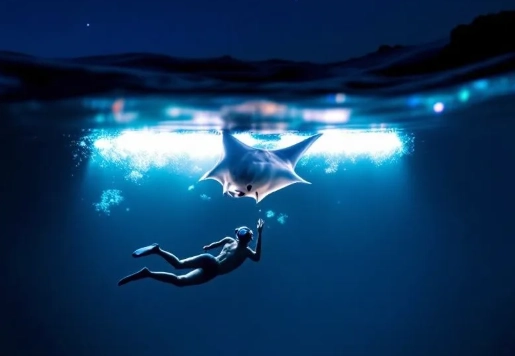
Capturing the Night: A Realistic Take on Photos
Forget trying to get National Geographic shots on your first go. Your goal is to document, not win awards. A common frustration is ending up with 100 photos of blurry, green-lit nothing. Here's the simple approach: Use a GoPro or a tough camera with a video light. The little LED on most cameras is useless at night. You need a dedicated, bright video light. Set your camera to video mode and take short clips. It's easier than nailing a still photo. Screenshot the best frames later. For photos, use the camera's "night mode" if it has one, and hold very, very still. Your subject? Start with something easy and stationary, like a big coral head or a sleeping parrotfish.
Night Snorkeling FAQs: Beyond the Basic Questions
I'm a confident daytime snorkeler. Is night snorkeling safe for my first try without a guide?
I strongly recommend against it. Even in a familiar spot, the psychological factor is huge. A local guide knows the specific night-time currents, where the interesting critters hide, and acts as a third, experienced buddy. They provide an extra light and safety net. View the cost as insurance for an enjoyable, stress-free experience. After one or two guided trips, you'll have the confidence to go with a well-briefed buddy.
How do I avoid getting disoriented or lost during a night snorkel?
This is the top mental hurdle. The trick is to constantly build a "triangulation" fix in your head. Before you submerge, pick three fixed points: a bright shore light, the moon's position, and the silhouette of a big rock or pier. Every few minutes, lift your head, find those three points, and note your position relative to them. Swim out against a gentle current so you have an easy drift back. And always know your maximum swim distance from shore—if you can't see your entry point clearly, you've gone too far.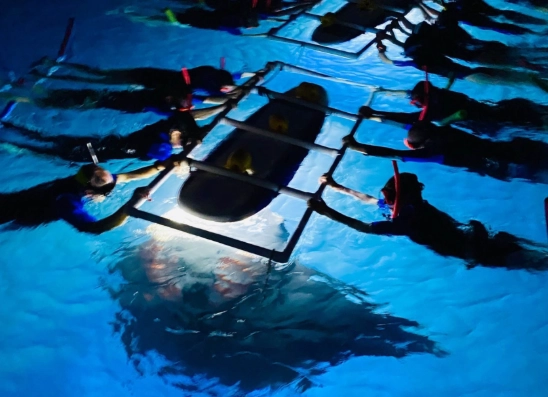
What's the one piece of advice you'd give to prevent a bad first night snorkel?
Manage your buoyancy before you even get in. Most new night snorkelers are so focused on their light and the dark that they forget to breathe normally. They sink or, more commonly, fin wildly and kick the reef. Spend the first five minutes just floating, breathing deeply, and getting neutrally buoyant. A calm snorkeler sees more, disturbs less, and uses far less energy. If you're struggling, add a little air to your BCD (if you have one) or use a snorkel vest. Being comfortably afloat changes everything.
Are there specific marine animals I should be wary of at night?
You're more likely to encounter predators, but they're not interested in you. The real issue is defensiveness. Don't poke your light into small holes or crevices—you might startle an eel or lobster. Avoid touching the seabed; stingrays often rest in sand and you could step on one. The main rule is observation from a respectful distance. Shine your light around an area, not directly at an animal's eyes for prolonged periods.
Can I go night snorkeling if I'm not a strong swimmer?
This is a firm "it depends." If "not strong" means you tire easily, choose a spot where you can stand in waist-deep water the entire time, like a very shallow lagoon. Use a flotation aid (snorkel vest, pool noodle). The key is to eliminate any need to swim hard. Always go with a guide or a very strong buddy who understands your limits. Open water with any current is not the place to test your swimming stamina after dark.
The ocean at night asks for a bit more respect and preparation than its daytime self. But the reward is a private showing of a world few ever see. Start simple, gear up smart, and follow the plan. That moment when your light catches the iridescent flash of a squid, or you hover over a garden of feeding coral—that's when you'll get it. You're not just snorkeling in the dark. You're being let in on a secret.
Reader Comments