So, you're thinking about snorkeling. Maybe you've seen those incredible photos of tropical fish and coral reefs, and you want to see it for yourself. I get it, it's an amazing feeling. But let's be honest for a second – the ocean isn't a swimming pool. It's powerful, it's unpredictable, and it demands respect. That excitement you feel? It needs to be paired with a good dose of common sense and preparation.
I've been snorkeling for years, from the calm bays of the Caribbean to the stronger currents in the South Pacific. I've had blissfully perfect days, and I've also had moments where I thought, "Okay, that was a bit too close for comfort." One time in the Bahamas, I got so distracted by a school of fish that I didn't notice the gentle current had carried me much further from the boat than I intended. Nothing bad happened, but that slow swim back against the current was a tiring reminder to always, always pay attention.
That's what this is all about. The best snorkeling safety tips aren't about scaring you away from the water. They're your toolkit for confidence. They transform anxiety into awareness, so you can relax and actually enjoy the incredible world beneath the surface. Forget the generic advice you might skim over. We're going deep into the practical, the often-overlooked, and the genuinely useful stuff.
The Core Idea: Safety isn't a checklist you do once. It's a mindset you carry with you from the moment you start planning your trip until you're back on dry land, smiling about the turtles you saw.
Your Snorkeling Safety Roadmap
Getting Your Gear Sorted: It's More Important Than You Think
This is where most mistakes happen, right at the start. Ill-fitting, foggy, or leaky gear can turn a dream into a stressful struggle. You don't need the most expensive equipment, but you do need gear that works for you.
The Mask: Your Window to the Underwater World
A leaking mask is miserable. It forces you to stop constantly, clear it, and breaks your rhythm. The fit is everything. Here's a simple test: place the mask on your face without putting the strap over your head. Inhale gently through your nose. If the mask stays suctioned to your face without you holding it, you've got a good seal. If it falls, try a different model. Face shapes are different – what works for your friend might not work for you.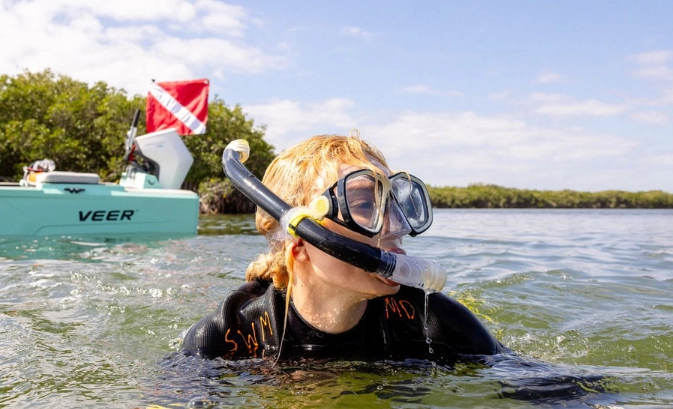
And fogging? It's the ultimate buzzkill. Spit, baby shampoo, or commercial defogger – use something. Rub it on the inside of the lens, rinse it slightly with sea water (not fresh water), and you're good to go. Just don't touch the inside of the lens after you've treated it.
The Snorkel: Breathe Easy
The debate between classic J-tubes and dry-top snorkels is real. Personally, I'm team dry-top for beginners. That little float valve at the top seals the tube if a wave washes over you, preventing a mouthful of water. It's one less thing to worry about when you're getting used to breathing through a tube. A purge valve at the bottom also makes clearing water much easier – just a sharp exhale and it's gone.
Fins: Your Power and Safety Engine
Fins are not just for speed. They are your primary safety device for maneuvering and conserving energy. Full-foot fins (like slippers) are great for warm, calm water from a beach. Open-heel fins (with adjustable straps) are more versatile, often more powerful, and work with booties – which you'll want if you're walking over rocky entries.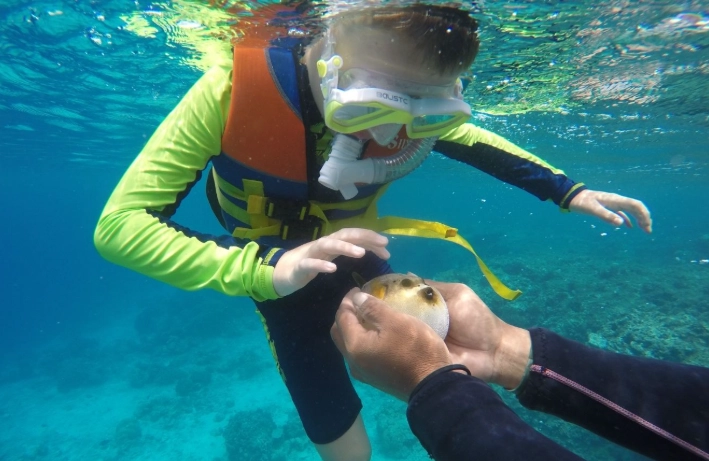
Don't get fins that are too stiff. You'll cramp up. You want a comfortable, efficient kick. Practice a slow, steady flutter kick from your hips, not a frantic bicycle kick from your knees. Efficient kicking saves your energy for enjoying the view, not just fighting to move.
Pro Tip: If you're renting gear, don't be shy. Spend 10 minutes at the shop or on the beach adjusting everything. A mask strap that's too tight will give you a headache. Fins that are too loose will blister your heels. Get it right on land.
The Non-Negotiables: Your Pre-Snorkel Safety Ritual
You've got your gear. Now, before you even get your toes wet, there's a ritual. Skipping this is where people get into trouble.
1. The Buddy System. Always. I cannot stress this enough. Never, ever snorkel alone. Your buddy is your second set of eyes, your help if you get a cramp, and your signal if something is wrong. Agree on hand signals before you go in: "Okay," "Problem," "Look over there," "Let's go back." Check on each other constantly.
2. Check Conditions Like a Pro. Look at the water. Is it choppy? Are waves breaking on the shore? Ask a local – a lifeguard, a dive shop operator, a hotel activity desk. They know the spot. What are the currents like today? Is it high tide or low tide? (Entry and exit points can change dramatically). A great resource for understanding general ocean safety principles is the American Red Cross water safety guidelines. It's common-sense stuff that applies perfectly to snorkeling.
3. Plan Your Entry and Exit. This sounds obvious, but you'd be surprised. Find the calmest point to enter. Look for where you'll get out before you get in. A beach with a gentle slope is ideal. A rocky cliff or a pier with a ladder? Make sure you know exactly how you'll climb out, especially if you get tired.
4. Do a Float Test. Wade in to about waist-deep water. Put all your gear on. Lie face down in the water and just float for a minute. Breathe through the snorkel. Get comfortable. Does anything leak? Does your mask fog? Fix it now, not 200 meters offshore.
This pre-snorkel checklist is, in my opinion, the absolute foundation of the best snorkeling safety tips. It sets the tone for everything that follows.
In the Water: Staying Smart and Aware
You're in! The water is warm, the sun is shining, and a parrotfish just swam by. This is the fun part. Here's how to keep it that way.
Mastering Your Breathing and Buoyancy
Breathe slowly and deeply. In through your mouth, out through your mouth. Long, calm breaths. This does two things: it conserves energy and prevents hyperventilation. Shallow, panicked breathing tires you out fast. If you feel anxious, stop. Float, hold onto your buddy if you need to, and just breathe until you calm down.
Consider a snorkel vest. I know, I know, some "serious" snorkelers think they're uncool. Who cares? They provide fantastic peace of mind. They're not bulky life jackets; they're inflatable bladders you can add just enough air to for comfortable floating. You can deflate them when you want to dive down a bit. For beginners or in open water, they are a brilliant safety net. The Professional Association of Diving Instructors (PADI) has great insights on the value of surface flotation for snorkelers, which you can often find referenced in their resources for divers and snorkelers.
The Current Conversation
Currents are the invisible force you must respect. If you're snorkeling from a beach, the general rule is to start by swimming against the current (parallel to shore if it's a longshore current). That way, when you're tired, you have an easy swim back with the current.
How do you spot a current? Look for clues. Are other snorkelers drifting in one direction without swimming? Does the boat's anchor line angle sharply instead of hanging straight down? Feel the water on your body. If you stop kicking, do you slowly drift?
If you get caught in a current pulling you away from shore, don't panic and don't try to swim directly against it. You'll exhaust yourself. Swim diagonally across it, toward shore. Or, if it's too strong, float and signal for help. Conserve your energy. This is where having a buddy and a vest is priceless.
Marine Life Etiquette (For Your Safety and Theirs)
You are a visitor in their home. The number one rule: look but don't touch. Seriously. Don't touch the coral. It's a living animal, and the oils from your skin can kill it. It can also be sharp and give you a nasty cut. Don't chase or try to touch fish, turtles, or rays.
Most marine life wants nothing to do with you. Give creatures space, especially larger ones. If you see a ray buried in the sand, swim around it. If a territorial fish like a damselfish darts at you (they sometimes do near their nests), just back away slowly. They're tiny; they're just defending their home. For comprehensive, science-based guidelines on responsible wildlife interaction, the U.S. Department of the Interior offers clear advice that aligns perfectly with safe snorkeling practices.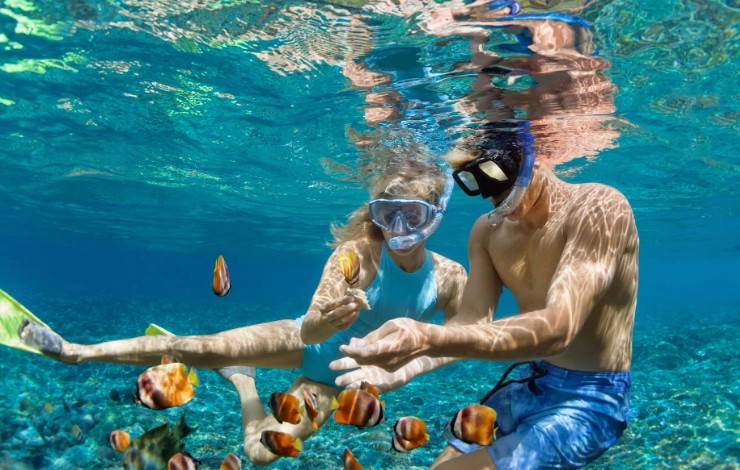
Jellyfish? Give them a wide berth. Some are harmless, some are not. It's not worth the risk. Sea urchins have sharp spines. Watch where you put your feet if you're in shallow water.
Remember: The goal is to observe without disturbing. A calm, non-threatening presence often rewards you with better sightings, as animals are less likely to flee.
Special Situations and Common Questions
Let's tackle some specific things people worry about. These are the questions that pop up after you've read the basics.
Snorkeling with Kids
This can be magical, but it requires extra layers of caution. A child's comfort and energy levels change fast.
- Gear is Paramount: Their mask must fit perfectly. Spend the money on a good kids' mask. A leaky mask will make them hate the experience instantly.
- Start in a Pool: Let them get used to breathing through a snorkel in a calm, shallow pool. Make it a game.
- Shallow, Protected Areas Only: Choose sandy-bottom lagoons with minimal current. Stay in water where they can always stand up.
- Constant, Touch Supervision: One adult per child, staying within arm's reach. Your job is not to snorkel; your job is to watch them. Use a flotation device designed for kids.
- Keep it Short: 20-30 minutes is plenty for a first time. End on a high note, before they get cold or tired.
Snorkeling from a Boat
Boat trips access amazing sites, but add new variables.
- Listen to the Briefing: The captain/guide will point out entry points, current direction, landmarks, and the time you need to be back. Listen.
- Watch the Ladder: Getting back on the boat can be tricky with fins on. Practice the technique they show you: approach the ladder backwards, take one fin off, hand it up, then the other.
- Stay Within the Designated Area: Boats often drop you in a specific spot for a reason. Don't wander off beyond the visible boundaries.
- Surface Awareness: Be very careful when surfacing. Look up, listen, and put a hand over your head before you come up to avoid bumping into the boat hull or another snorkeler.
Quick-Fire Snorkeling Safety FAQs
Putting It All Together: Your Safety Mindset
Look, the ocean is incredible. Snorkeling opens a door to a world most people never see. The best snorkeling safety tips we've talked about aren't about creating fear; they're about building competence. When you know how to choose your gear, assess conditions, work with a buddy, and handle common situations, you replace uncertainty with capability.
You start to notice the subtle signs – a shift in the wind, a change in the water's texture, the behavior of the fish. You become a participant in the environment, not just a passive observer floating through it. And that's when the real magic happens. You stop worrying about what could go wrong and start fully experiencing what's going right: the silent ballet of marine life, the play of light through the water, the sheer wonder of it all.
So go ahead, plan that trip. Get excited. But take an hour to really think about these principles. Pack your common sense along with your sunscreen. The ocean rewards respect with experiences you'll remember for a lifetime. Now get out there and see it safely.
Reader Comments