Let's be honest. The wrong snorkeling gear can turn a dream trip into a frustrating, leaky mess. You're bobbing on the surface, water trickling into your mask, your fins feel like concrete blocks, and you're spending more time fiddling with equipment than watching fish. It happens all the time. I've seen it from the Bahamas to Bali—people struggling with ill-fitting rental masks or gear that just doesn't match their ability.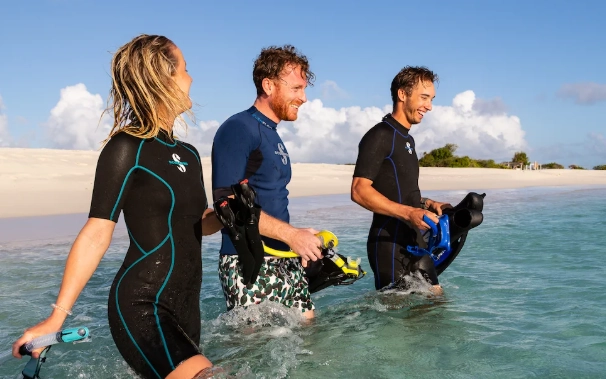
The good news? Getting it right isn't complicated. You don't need to be a pro. You just need to know what to look for at your stage. This guide cuts through the marketing hype. We'll walk through the exact gear choices for beginners, confident swimmers, and seasoned snorkelers, based on what actually works in the water, not just on a product page.
What You'll Find in This Guide
- The Essential Snorkeling Gear Trio: What You Actually Need
- Snorkeling Gear for Beginners: Prioritizing Comfort and Safety
- Intermediate Snorkeling Gear: Upgrading for Performance and Travel
- Advanced Snorkeling Gear: Specialized Kit for Demanding Conditions
- How to Choose Snorkeling Gear: A Step-by-Step Decision Framework
- Common Snorkeling Gear Mistakes (And How to Avoid Them)
- Your Snorkeling Gear Questions Answered
The Essential Snorkeling Gear Trio: What You Actually Need
Forget the fancy gadgets for a second. Everything revolves around three core pieces: the mask, the snorkel, and the fins. Get these right, and 90% of your problems disappear.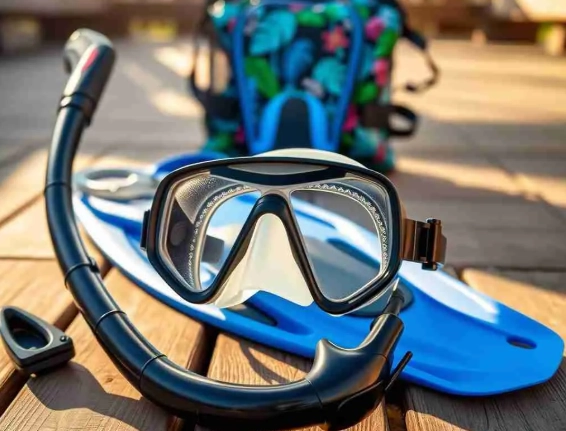
The mask is your window. Its job is to create an air pocket so you can see clearly underwater. A leaky mask is a trip-ruiner. The snorkel is your breathing tube. It lets you float face-down and breathe without lifting your head. The fins are your propulsion. They turn your slow kicks into efficient movement, saving your energy so you can explore longer.
Everything else—rash guards, defogger, mesh bag—is supportive gear. Important, but secondary.
Snorkeling Gear for Beginners: Prioritizing Comfort and Safety
If you're new to snorkeling, your goal isn't to look like Jacques Cousteau. It's to feel safe, comfortable, and confident so you can actually enjoy the experience. Your gear choices should reflect that.
The Beginner's Mask: Fit Over Features
Go to a store if you can. I know online is tempting, but mask fit is personal. Your face shape is unique. The single biggest mistake beginners make is buying a mask based on looks or a friend's recommendation without testing the seal.
Here's the test no one does but should: place the mask gently on your face without using the strap. Inhale slightly through your nose. If it sticks and stays put by suction alone, you've got a contender. Now check if the skirt (the soft silicone part) presses evenly around your face, especially across the brow and under the nose. No gaps. Don't crank the strap tight to make it seal—that's a headache waiting to happen. A good fit feels secure with gentle pressure.
Look for a low-volume mask. This means the air space inside the mask is smaller. Why? It's easier to clear if water gets in (you just exhale through your nose), and it sits closer to your face, reducing drag. Brands like Cressi and Aqua Lung make excellent, affordable low-volume models perfect for starters.
The Beginner's Snorkel: Keep It Simple (Dry-Top is Your Friend)
You'll see snorkels with splash guards, purge valves, and flexible sections. For a beginner, a simple dry-top snorkel is the most reliable. The dry-top has a floating valve at the top that seals the tube when you dive below the surface, preventing water from rushing in. When you surface, it opens automatically.
Avoid the cheapest dry-top snorkels—the mechanism can fail. Mid-range options from reputable brands are worth the extra $10. The tube should be wide enough for easy breathing but not so large it creates excessive “dead air” space. A flexible lower section (where the mouthpiece attaches) is a nice bonus to reduce jaw fatigue.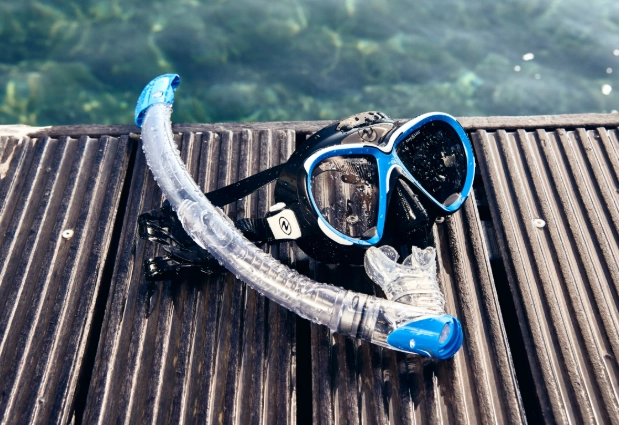
The Beginner's Fins: Full-Foot and Flexible
For warm-water, casual snorkeling, full-foot fins (like big swimming slippers) are ideal. You wear them barefoot or with thin neoprene socks. They're easier to get on and off, lighter to travel with, and perfect for swimming from a beach.
The key for beginners is flexibility. Stiff fins are powerful but will cramp your calves. You want a fin blade that bends easily with a gentle kick. This promotes a relaxed, flutter kick and prevents exhaustion. Look for shorter blades—they're more maneuverable and require less effort.
Intermediate Snorkeling Gear: Upgrading for Performance and Travel
You've been a few times. You're comfortable in the water, maybe you've done some shore entries over rocky areas, or you want to cover more distance. Your gear can now evolve to match your growing skills.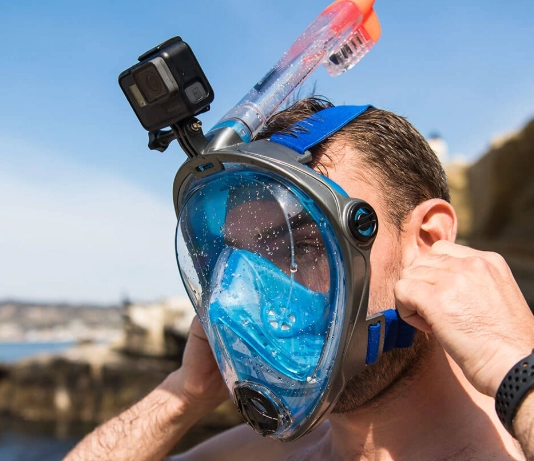
The Intermediate Mask: Refining the View
You might appreciate a mask with a wider field of view (often called “panoramic” or “wide vision” masks). These have curved side lenses that let you see more peripherally—great for spotting marine life. Just remember, sometimes wider lenses can mean a slightly larger volume.
Consider a mask with a silicone skirt in black or dark colors. It reduces internal glare and light reflection, improving contrast underwater. It’s a small detail that makes a noticeable difference on bright days.
The Intermediate Snorkel: Streamlining and Reliability
You might stick with a dry-top, but you can look for more streamlined models. Some intermediate snorkelers prefer a semi-dry snorkel. These have a larger splash guard (a canopy over the top) that deflects waves but doesn't have the sealing dry-top mechanism. They are simpler, have fewer parts to fail, and are easier to clear with a sharp exhale if submerged. It's a matter of preference—try both if you can.
The Intermediate Fins: The Move to Open-Heel
This is a big upgrade. Open-heel fins have an adjustable strap and are worn with booties. Why switch?
Protection: Booties protect your feet from hot sand, sharp rocks, and coral during entry/exit.
Power: These fins typically have longer, stiffer blades than full-foot fins, offering more propulsion per kick.
Adjustability: You can adjust the strap for a perfect fit, even if your feet are cold or swollen.
Look for fins described as “snorkeling” or “recreational” fins. They are a middle ground—more power than beginner fins but not as stiff as scuba diving fins. Brands like Mares, Scubapro, and TUSA offer great options in this category.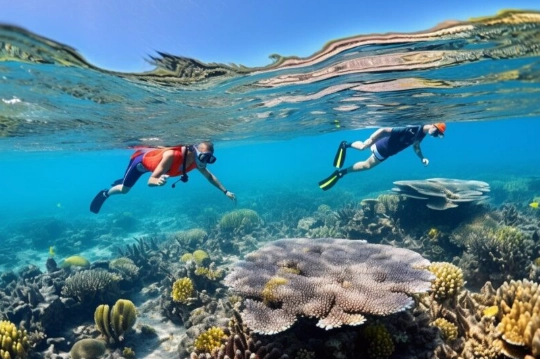
Advanced Snorkeling Gear: Specialized Kit for Demanding Conditions
You're chasing strong currents, doing long surface swims, or freediving down to 10-15 meters to get a closer look. Your gear needs to be a high-performance tool, not just recreational equipment.
The Advanced Mask: Minimal Volume, Maximum Fit
Freedivers and serious snorkelers use ultra-low-volume masks. These hug the face tightly, minimizing the air space you need to equalize during dives and reducing drag. Models like the Cressi Superocchio or the Oceanic Shadow are favorites. The fit must be impeccable—there's no room for error here. Often, these masks have a single lens for an unobstructed view and a super-soft silicone skirt for a deep-water seal.
The Advanced Snorkel: Minimalism or Specialization
Many advanced snorkelers ditch the dry-top for a simple J-shaped snorkel (a basic tube with a mouthpiece). Why? Fewer points of failure, less drag, and it's easier to clear with a powerful blast after a deep dive. It requires more skill, as you must manually blow out water when you surface.
Alternatively, for long-distance surface swimming, a front-mounted snorkel (like those used by combat swimmers or in some freediving disciplines) can be more hydrodynamic, but they have a steep learning curve.
The Advanced Fins: Power and Efficiency
This is where you see long, stiff blades. Freediving fins (which can be very long) or powerful snorkeling fins like the Mares Avanti Quattro+ are common. The stiffness converts leg strength directly into thrust. These are almost always open-heel and require strong leg muscles and proper kicking technique to use effectively without cramping.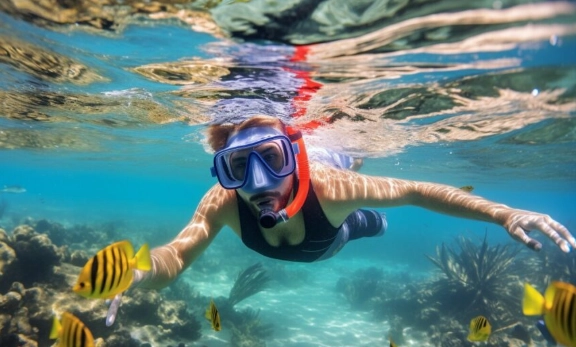
Material matters too. Advanced fins come in plastic, fiberglass, or even carbon fiber—each offering a different balance of flex, power, and price (carbon fiber being the top tier).
How to Choose Snorkeling Gear: A Step-by-Step Decision Framework
Lost in the options? Use this table as a cheat sheet to narrow down your focus based on your primary snorkeling style and skill level.
| Your Profile & Goal | Mask Priority | Snorkel Type | Fin Type | Budget Focus |
|---|---|---|---|---|
| First-Timer / Family Vacation Calm bays, from a boat or beach. |
Comfort & Leak-Proof Fit (Low-Volume) | Dry-Top Snorkel | Flexible Full-Foot Fins | Value Set ($80-$150) |
| Confident Traveler Various locations, some currents, rocky entries. |
Wider View, Dark Skirt | Semi-Dry or Reliable Dry-Top | Open-Heel Fins + Booties | Mid-Range Upgrades ($150-$300) |
| Active Explorer / Freediver Strong currents, deep surface swims, diving down. |
Ultra-Low Volume, Perfect Seal | Simple J-Snorkel | Long-Bladed Snorkeling/Freediving Fins | Performance Investment ($300+) |
Your location dictates a lot. Snorkeling in cold water? You'll need a wetsuit and open-heel fins with thick booties. Tropical travel? Lightweight full-foot fins might be perfect. Always consider the water temperature and typical entry/exit points (sandy beach vs. rocky shore) before buying.
Common Snorkeling Gear Mistakes (And How to Avoid Them)
I've guided enough trips to see patterns. Here are the big ones.
1. Buying a Mask Without a Suction Test. We covered this. It's the #1 error. Just do it.
2. Choosing Stiff Fins Because They "Look Pro." Over-finning is real. If your legs are burning after 10 minutes, your fins are too stiff for your fitness level. Flexibility first, power second.
3. Skipping the Defog Ritual. Spit in your mask, rub it around the lens, give it a quick rinse. It works better than most commercial solutions. Not doing it guarantees a foggy view five minutes in.
4. Forgetting a Rash Guard. This isn't vanity. A long-sleeve rash guard or UV shirt prevents sunburn on your back (a major blind spot), protects from minor jellyfish stings and coral scrapes, and keeps you warm. The National Oceanic and Atmospheric Administration (NOAA) consistently highlights sun protection as critical for water safety. It's the most overlooked piece of gear.
5. Neglecting Gear Maintenance. Rinse everything with fresh water after every use, especially if you've been in saltwater or a chlorinated pool. Salt crystals degrade silicone and plastic. Dry your gear in the shade, never in direct sun, which makes silicone brittle. Store it loosely in a mesh bag, not crammed in a tight suitcase.
Your Snorkeling Gear Questions Answered
Can I use swimming goggles for snorkeling?
How much should I spend on my first set of snorkeling gear?
What's the single most important feature in a snorkeling mask for a beginner?
Are full-face snorkeling masks safe for everyone?
The right gear unlocks the underwater world. It's the difference between fighting your equipment and floating effortlessly, completely absorbed in the blue. Start with fit and comfort, match your kit to your actual skill and typical trips, and remember that even a simple, well-chosen setup is infinitely better than the fanciest, ill-fitting one. Now go find your window to the sea.
Reader Comments