What to Expect in This Guide
Let's be honest. You're searching for the best manta ray night snorkel Kona can provide, and you're bombarded with options. Every tour operator claims to be the top choice. How do you even decide? I've been there, floating in that dark Pacific water, waiting. The first time I went, I picked a tour almost at random. It was fine, but later, talking to other folks on different boats, I realized I missed out on some things. Some tours just have a better setup, better guides, a better vibe. That's why I'm writing this. Not just to list operators, but to give you the real scoop on what makes a Kona manta ray night snorkel genuinely great, so you don't have to guess.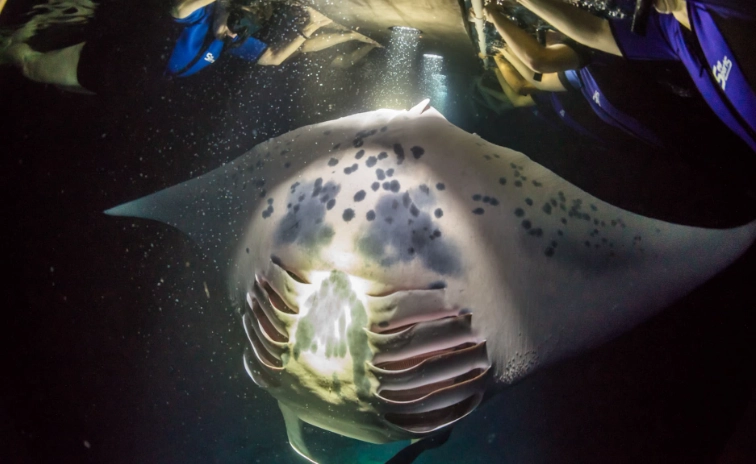
This isn't a scientific paper. It's a chat from someone who's done it, talked to the captains and marine naturalists, and watched a lot of happy (and sometimes disappointed) snorkelers come back to the dock. We'll break down what to look for, compare the top contenders, and answer every nagging question you have. Because swimming with these underwater birds—their wings can span up to 15 feet—in the pitch black, lit only by underwater lights, is one of the most surreal and beautiful things you can do on this planet. You deserve to get it right.
What Makes a Night Snorkel with Mantas the "Best"?
Before we get to names and boats, let's talk about criteria. The "best" tour isn't just the cheapest or the one with the fanciest boat. It's the one that maximizes your chance of an incredible, safe, and respectful encounter. Here’s what truly matters.
Key Factor #1: The Location & Manta Traffic. Not all spots are equal. Tours go to specific "cleaning stations" or areas where plankton (manta food) congregates under the lights. The best manta ray night snorkel Kona operations know which site has the most reliable activity that night. They often communicate with each other. A good captain will check reports and maybe even scout earlier. Some sites are closer to shore, calmer. Others are deeper, with stronger currents. A great operator picks the optimal site for conditions, not just the most convenient one for them.
Key Factor #2: The Guide & Crew. This is huge. The guide isn't just there to drive the boat. A fantastic marine naturalist will educate you on the spot—explaining manta biology, their unique wing markings (like fingerprints!), and the local population (the Big Island's are mostly reef mantas, Mobula alfredi). They'll give a crystal-clear safety briefing. More importantly, in the water, they manage the "manta ray ballet." They'll position the floating light board, guide snorkelers to hold on properly (you're basically holding a buoyant raft with lights underneath), and ensure everyone stays calm and follows the rules. A passive guide can lead to a chaotic experience.
On my second trip, the guide, Sarah, was a marine biologist. While we were holding onto the light board, waiting, she whispered facts about each manta that swooped in. "That's Lefty, see the notch in her cephalic fin?" It transformed the experience from just seeing animals to meeting individuals. That level of engagement is gold.
Key Factor #3: Group Size & Vessel. Do you want a big, stable catamaran with 40 people, or a small raft with 12? There's no single right answer. Bigger boats are more comfortable for the ride, often have restrooms, and feel less cramped. Smaller rafts get to the site faster, feel more adventurous, and sometimes allow for a more intimate feel. However, in the water, everyone is looking at the same light board. A huge group means more splashing and potential commotion. The best operators, regardless of boat size, strictly limit the number of people in the water at one time, often rotating groups.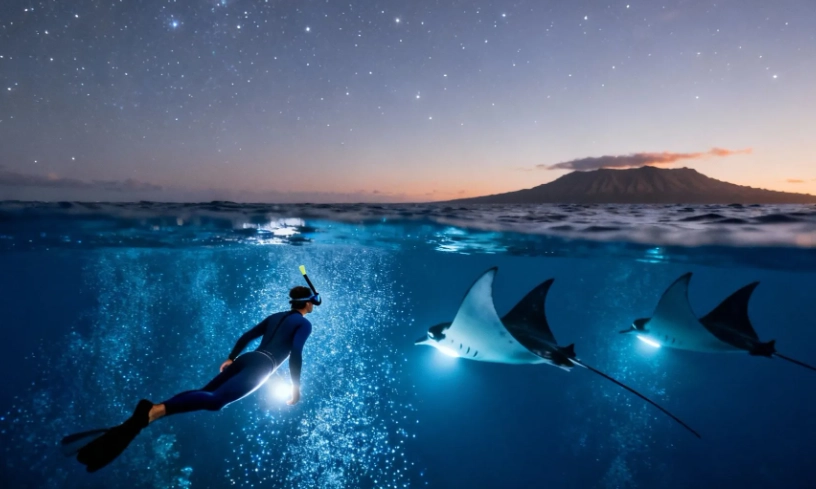
Key Factor #4: Gear & Safety. High-quality, well-maintained snorkels, masks, and fins that actually fit. Full-length wetsuits (not shorties) are non-negotiable for most people—you'll be floating still for 30-45 minutes, and the water, while not freezing, can suck the heat right out of you. They should also provide buoyancy aids (pool noodles or snorkel vests) for anyone who wants them. Safety is paramount; a thorough briefing on what to do if you drift away or feel uncomfortable is a must.
A Quick Rant on "Guarantees": You'll see "manta ray guarantee" or "see mantas or go again free." This is standard, and it's good. But understand it. It means if no mantas show up at all, you get a raincheck. It doesn't mean you'll get a refund if only two show up instead of ten. Mantas are wild animals. No one controls them. A guarantee is a sign of a confident operator, but view it as a safety net, not a promise of a circus.
Top Contenders for the Best Kona Manta Ray Tour
Based on years of chatter, online reviews that seem authentic (not just the generic 5-star ones), and personal and anecdotal experience, here are the operators consistently in the conversation. Think of this not as a rigid ranking, but a breakdown of styles.
| Operator Style | Best For... | What Sets Them Apart | Considerations |
|---|---|---|---|
| The Premium, Education-Focused Outfitter (e.g., Operators affiliated with marine research) | Learners, photographers, those who want deep context. The eco-conscious traveler. | Guides are often marine biologists or deeply certified naturalists. They contribute data to research projects like The Manta Trust. Briefings are incredibly thorough. They emphasize minimal impact and manta ID. | Can be pricier. The focus on education might be less exciting for kids just wanting to splash and see big animals. |
| The Small-Graft Adventure Crew (e.g., Zodiac-style raft tours) | Smaller groups, adrenaline seekers, those who dislike crowded boats. Younger, fitter crowds. | Fast, nimble, get to the site quickly. Often the first or last in the water, avoiding the biggest crowds. Feel more "wild." Guides are usually very hands-on and energetic. | Less comfort. No bathroom on board. Can be a bumpy, wet ride. Not ideal for those with back issues or who need easy boarding. |
| The Large, Stable Vessel Operation (e.g., Classic snorkel catamarans) | Families with kids, older snorkelers, anyone who values comfort and space. First-timers who want stability. | Smooth, stable ride. Plenty of space to move around. On-board restrooms. Often include extras like hot drinks after. The briefing and in-water management can be very professional due to high volume experience. | Can feel impersonal. You're with a lot of people. Boarding the light board in the water might involve a short wait in a line. |
| The Photographer's Special (Some operators offer this as an add-on) | Anyone with a GoPro or camera. You want good shots, not just memories. | They provide floatation handles for cameras, sometimes have an in-water guide who helps position people for the best angles, and give specific tips for shooting in low light. They understand the frustration of blurry manta pics. | Might cost extra. The group may be more focused on filming than just experiencing. |
So, who's the absolute best? It depends entirely on you. A family of four with young teens might find the large vessel perfect. A couple of adventurous friends might thrive on the small raft. For me, the educational focus tipped the scales. I wanted to know what I was seeing.
The search for the best manta ray night snorkel Kona style is really a search for the best fit.
The Nuts and Bolts: What to Expect Minute by Minute
Let's walk through a typical evening, so there are zero surprises.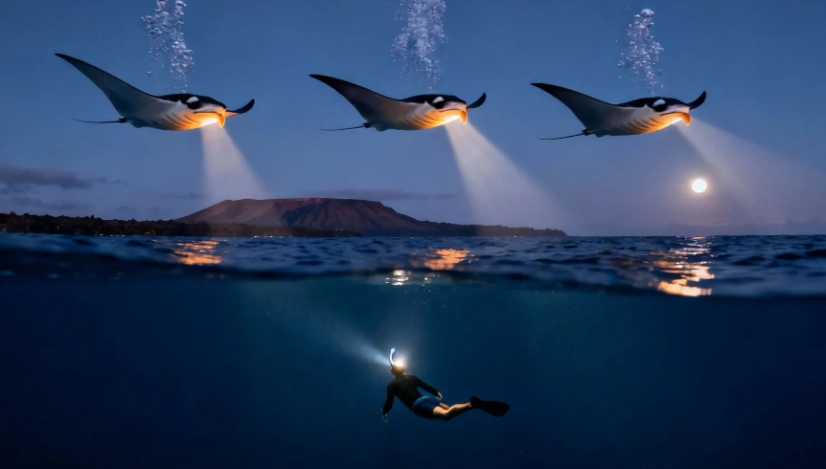
Before Sunset: Check-in & Gearing Up
You'll check in at a shop or dock, usually in the Kailua-Kona area. Sign waivers (they're serious about these). You'll get fitted for a wetsuit, snorkel, mask, and fins. Pro tip: If you're even slightly prone to seasickness, take medication *well* before this point. The waiting around on a rocking boat before you get in the water is when it hits people. I learned this the hard way once. Not pretty.
The Boat Ride & Briefing
The ride to the site is usually short, 10-20 minutes. As it gets dark, the guide gives the full briefing. Listen. Even if you're an expert snorkeler. They'll explain the "light board"—a giant floating rectangle with powerful LEDs strapped underneath. You'll hold onto the board's edges, face down in the water. They'll demonstrate the "manta approach": mantas come to feed on the plankton attracted to the lights. They do barrel rolls right underneath you. Your job is to hold on, stay flat, and not kick. Kicking can hurt a manta. They'll have a strict no-touch policy, which is for the mantas' protection (their protective mucus layer).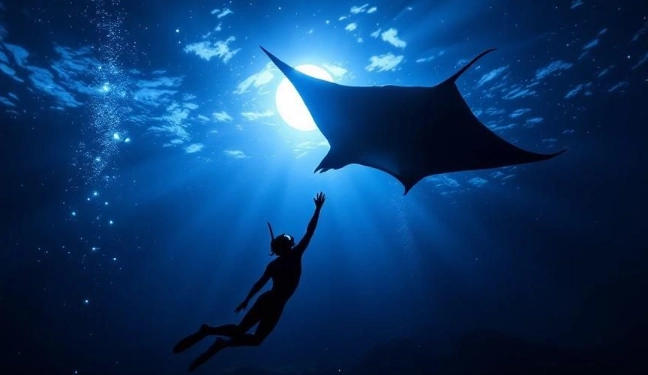
The #1 Rule: Do NOT stand on or touch the coral. Many sites are near reef edges. If you need to rest, signal a guide and they'll help you back to the boat. Coral is fragile and takes decades to grow. This is a major point for eco-friendly operators.
In the Water: The Magic (or the Wait)
You'll slip into the water, which feels surprisingly warm with the wetsuit. You swim to the light board and find a spot. Then you wait, face in the water, breathing through the snorkel. The lights create a glowing column in the deep blue. It's peaceful, alien. And then... a shadow appears. A giant, dark shape glides into the light. It's silent, graceful, massive. It loops, turns, its white belly facing you as it filters plankton. More might come. Sometimes it's one or two. On epic nights, it's five or six, a graceful, swirling dance. You're so close you can see the patterns on their bellies, the gill slits, the curious eyes looking back at you. Time stops. The 30-45 minutes flies by.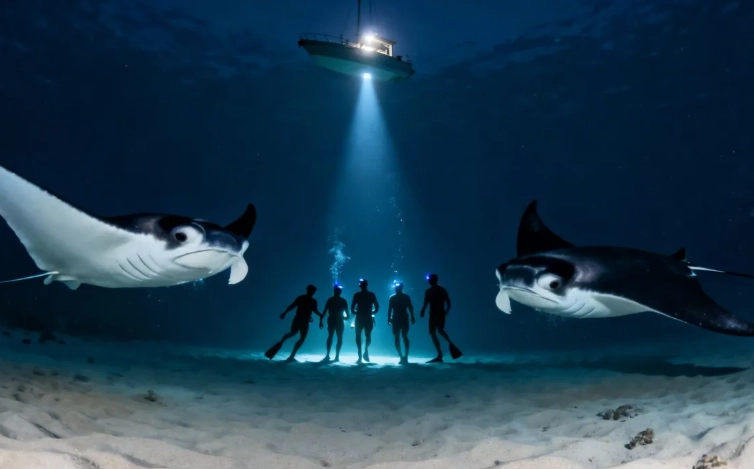
Or, sometimes, you wait. And wait. The mantas are elsewhere. It happens. The crew might try a second site. This is where a good crew's attitude matters—keeping spirits up, sharing stories. This is also why that guarantee exists.
After the Swim: The Return
Back on the boat, there's usually hot chocolate, water, maybe snacks. There's a buzz—everyone sharing what they saw, comparing GoPro footage. The ride back is usually quiet, everyone tired and happy. You'll get help rinsing off gear.
Your Burning Questions, Answered
- Under the wetsuit: A swimsuit. That's it. No cotton t-shirts—they get cold.
- For after: A warm, dry change of clothes, including a hoodie. You'll be damp and the night breeze is cool.
- Must-haves: A towel (big one), any seasickness meds, a waterproof camera (GoPro on a wrist strap is ideal).
- Leave on shore: Valuables, non-waterproof watches, anything you fear losing overboard.
1. Group Style: Big boat comfort or small raft adventure?
2. Priority: Deep learning or just the wow factor?
3. Practicalities: Need a bathroom on board? Have young kids or mobility concerns?
Then, read recent reviews. Look for comments about guide knowledge, boat condition, and how no-show manta situations were handled. Book directly with the operator if you can, and don't be afraid to call and ask questions. Their response can tell you a lot.
Making it More Than Just a Snorkel: The Eco-Angle
Choosing the best manta ray night snorkel Kona experience is also about choosing an operator that protects the resource. This is a successful example of wildlife tourism done right—it provides an economic incentive to protect the mantas and their habitat. Good operators follow the Hawaii Division of Aquatic Resources guidelines and often go beyond them.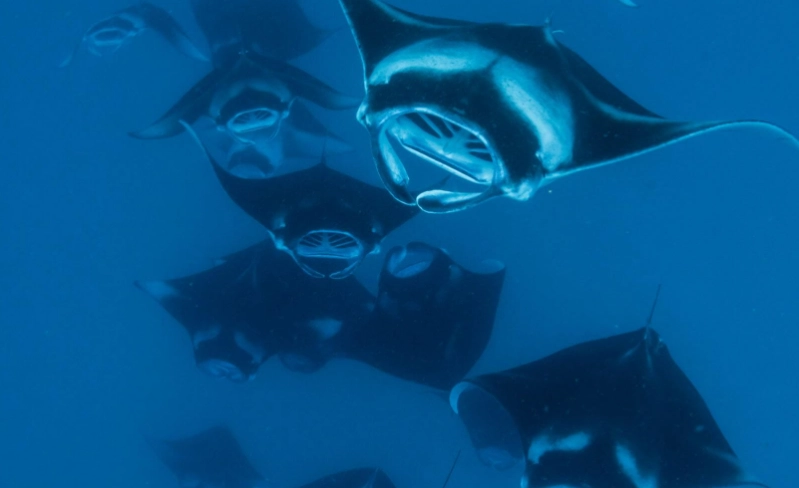
Look for operators who:
- Talk about research partnerships (like with the Manta Trust or local universities).
- Use reef-safe sunscreen policies (or provide it).
- Have a clear, strict no-touch, no-chase policy.
- Participate in beach clean-ups or citizen science.
Your dollars support these practices. It makes the experience feel better.
So, there you have it. The best manta ray night snorkel Kona offers isn't a single company name. It's the tour that matches your style, run by passionate people who prioritize the animals' well-being as much as your enjoyment. Do a little homework using this guide, book with confidence, and get ready for one of the most memorable nights of your life. Just remember to look up from your GoPro every once in a while and take it in with your own eyes. The video never does it justice.
Reader Comments