Quick Navigation
- Why Your Brain Hates the Snorkel (And How to Make Peace)
- The Foundation: Diaphragmatic Breathing (Belly Breathing)
- Your Snorkeling Breathing Exercise Toolkit
- The Snorkeler's Breath Training Plan: A Weekly Schedule
- Troubleshooting Common Breathing Problems
- Advanced Considerations: Beyond the Basics
- Frequently Asked Questions (The Stuff You Actually Google)
- Wrapping It Up: Your Breath is Your Best Gear
Let's be honest. Your first time snorkeling probably wasn't the serene, weightless glide you saw in the brochure. More like a frantic, noisy gurgle, right? Your heart hammers, the snorkel tube feels like it's sucking your soul out, and you're convinced you'll inhale the entire Pacific Ocean. I've been there. I remember bobbing in the Red Sea, more focused on not dying than the coral. It's a common story, and it all boils down to one thing: we forget to learn how to breathe.
It sounds silly. Breathing is automatic. But stick your face in water, add a weird J-shaped tube, and suddenly your most basic instinct turns against you. This isn't about holding your breath like a freediver. It's the opposite. It's about finding a calm, sustainable rhythm that lets you forget about breathing entirely and just enjoy the show below.
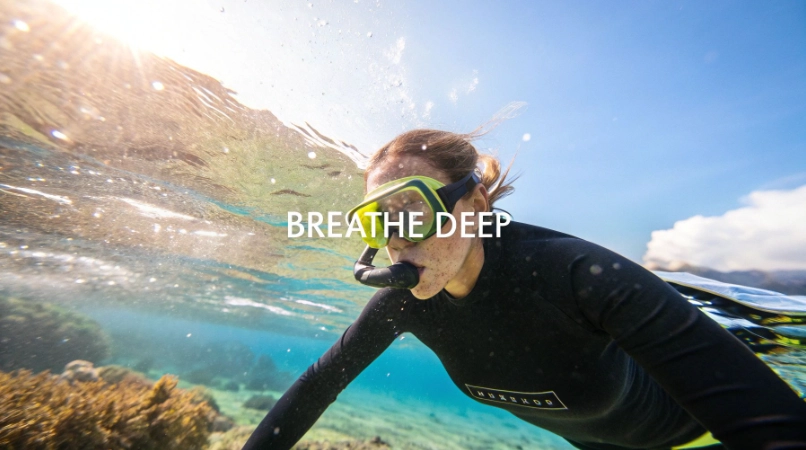 Mastering your breath is the single biggest upgrade you can make to your snorkeling game.
This guide is for anyone who's ever felt that pang of anxiety with a snorkel in their mouth. We're going deep on snorkeling breathing exercises. Not just a list of techniques, but the why behind them, how to weave them into your routine, and how to troubleshoot the panic before it starts. This is the stuff that transformed snorkeling from a stressful activity into my favorite meditation.
Why Your Brain Hates the Snorkel (And How to Make Peace)
Before we jump into exercises, let's understand the enemy. When you snorkel, you're asking your body to do something profoundly unnatural: breathe through a long, narrow tube while floating face-down in an environment where breathing is normally fatal. Your primal brain goes on high alert.
The main issues are:
- Increased Dead Air Space: The snorkel tube holds stale air (rich in CO2) from your last exhale. When you inhale, you get a mix of fresh air and this stale air first. Your brain senses the higher CO2 and can trigger a "air hunger" panic, making you breathe faster and shallower. A vicious cycle.
- Water Anxiety: Just being in water, especially deep or open water, can spike stress hormones. Stress leads to rapid, chest-heavy breathing.
- The Dreaded Splash Guard: That little valve at the top? It adds resistance. It's a good thing—it keeps water out—but it makes inhalation feel slightly harder, which can freak out new snorkelers.
So, effective snorkeling breathing exercises don't just train your lungs. They train your nervous system to stay calm under these weird conditions. The goal is to shift from panicked, upper-chest breathing to slow, deep, diaphragmatic breathing.
The Foundation: Diaphragmatic Breathing (Belly Breathing)
This is the cornerstone of all breathwork, on land and sea. If you only learn one thing, make it this. Diaphragmatic breathing engages your diaphragm, a large muscle below your lungs, pulling air deep into the lower lobes of your lungs where gas exchange is most efficient. It's slower, uses less energy, and sends powerful "calm down" signals to your brain.
- Lie on your back, knees bent. Place one hand on your chest, the other on your belly.
- Inhale slowly and deeply through your nose, focusing on making the hand on your belly rise. The hand on your chest should move very little.
- Exhale slowly through pursed lips (like you're whistling), feeling your belly fall. Aim for an exhale that's twice as long as your inhale (e.g., 4 seconds in, 8 seconds out).
The American Lung Association recognizes diaphragmatic breathing as a core technique for improving lung efficiency and managing stress-related breathing patterns, which is exactly what we're dealing with in snorkeling. You can read more about its benefits on their breathing exercises page.
Your Snorkeling Breathing Exercise Toolkit
Now, let's get specific. Here's a progression of exercises, from foundational to advanced. Don't rush. Master each step on land, then in a pool, then in calm open water.
Stage 1: The Dry Run (No Gear Needed)
Exercise 1: The 4-7-8 Method for Pre-Snorkel Calm
This is a nerve-tamer. Great for on the boat before you jump in.
- Exhale completely through your mouth.
- Inhale quietly through your nose for a count of 4.
- Hold your breath for a count of 7.
- Exhale forcefully through your mouth (whoosh sound) for a count of 8.
- Repeat 4 cycles.
It slows your heart rate and forces a long, controlled exhale. Don't do this while actively snorkeling—just as a prep tool.
Exercise 2: Pursed-Lip Breathing Simulation
This is the rhythm you want in the water. Inhale deeply through your nose (count of 3). Exhale slowly and steadily through pursed lips, as if you're breathing out through a small straw (count of 6). Practice while walking or watching TV. The goal is to make this long, controlled exhale automatic.
Stage 2: Gear Integration (In the Pool or Bath)
This is the critical bridge. Put on your mask and snorkel (no fins needed). Sit in a chair, or kneel in a shallow pool end.
Exercise 3: Snorkel-Only Breath Awareness
Just breathe normally through the snorkel with your face out of the water. Listen to the sound. Feel the slight resistance. Get used to the mouthpiece. Don't change your pattern yet. Just observe. This dull step is key for desensitization.
Exercise 4: The Face-Dip Drill
Now, gently put your face in the water. Keep your eyes open. Focus on a single spot. Begin your pursed-lip breathing rhythm: slow, deep inhale through the snorkel, long, steady exhale through the snorkel. Bubbles will stream past your mask. Watch them. Let that sound and sight become your meditation anchor. Start with 30 seconds, work up to 5 minutes. If panic creeps in, lift your head. No shame.
Stage 3: Open Water Application
You're in the ocean. The fish are waiting.
Exercise 5: The Float-and-Breathe Check-In
Before you start kicking, just float face-down. Do 10 conscious breaths using your practiced rhythm. Check in: Is my jaw clenched on the mouthpiece? (Relax it). Am I breathing from my belly? (Put a hand on your stomach to feel). Is my exhale longer than my inhale? Adjust. Only then start moving.
Exercise 6: The Kick-Breath Synchronization
This is the pro move. Link your breathing to your fin kicks. A common pattern: Inhale slowly over 3-4 gentle kicks, exhale slowly over the next 3-4 kicks. This creates a hypnotic, efficient rhythm that conserves energy and oxygen. You become a slow-motion underwater locomotive.
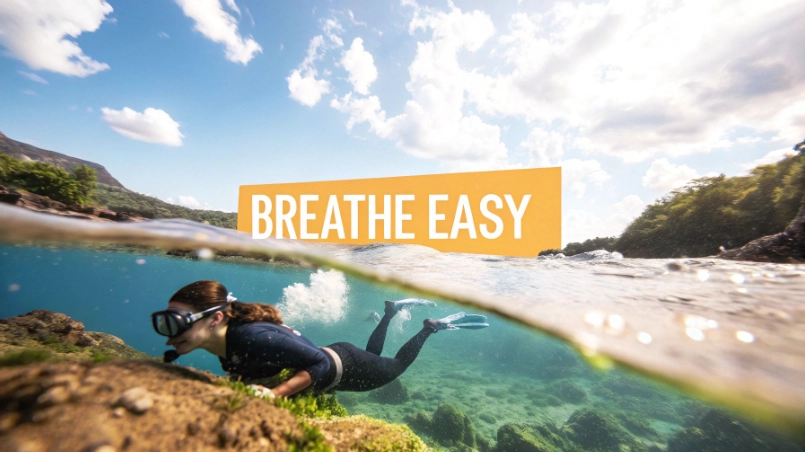 It works.
The Snorkeler's Breath Training Plan: A Weekly Schedule
Consistency beats intensity. Here’s a simple plan you can follow for 3-4 weeks before a big trip.
| Day | Dry Land Practice (5-10 min) | Wet Practice (If Possible) | Focus Goal |
|---|---|---|---|
| Monday | Diaphragmatic Breathing (Lying down) | Shower/Bath: Face in water, hold breath, exhale bubbles through nose. | Comfort with face immersion. |
| Tuesday | 4-7-8 Method for stress | None | Activating parasympathetic nervous system. |
| Wednesday | Pursed-Lip Breathing while walking | Pool/Snorkel in Bathtub: Snorkel-Only Breath Awareness. | Building the target exhale rhythm. |
| Thursday | Rest or gentle diaphragmatic breathing | None | Recovery & integration. |
| Friday | Diaphragmatic Breathing (Sitting up) | Pool/Bath: The Face-Dip Drill (2-3 minutes). | Linking rhythm to gear & water. |
| Weekend | Visualization: Imagine calm snorkeling. | Open Water (or deep pool): Full gear practice, Float-and-Breathe Check-In. | Real-world application & confidence building. |
Troubleshooting Common Breathing Problems
Even with practice, things can go sideways. Here’s a quick fix guide.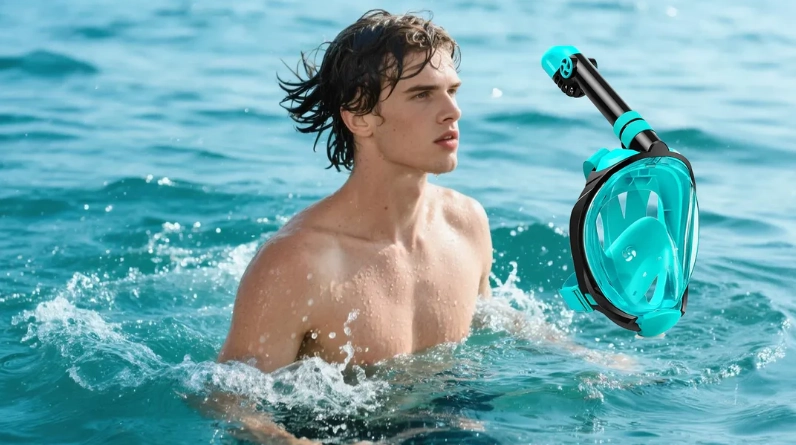
Symptoms: Lightheadedness, tingling fingers, panic.
Fix: STOP. Lift your head. Focus on a long, slow exhale. Hum as you exhale—it automatically lengthens it. Get your rhythm back before putting your face down.
Symptoms: Gurgling, the feeling of inhaling liquid.
Fix: Stay calm. You have a purge valve for a reason. Give a sharp, forceful exhale (a blast) to clear most of the water. If a little remains, it's okay—you won't inhale it if you are exhaling as you surface. Practice this clearing technique in a pool until it's second nature. PADI's guide on snorkeling basics covers this essential skill well.
Symptoms: Sore jaw muscles, headache.
Fix: You're biting down too hard. Your teeth should just rest on the bite tabs. Consciously relax your jaw every few minutes. Consider a snorkel with a softer, more ergonomic mouthpiece. I made this mistake for years—a better mouthpiece was a game-changer.
Advanced Considerations: Beyond the Basics
Once you've nailed the calm, rhythmic breathing, you can explore further. These concepts borrow from freediving, but they're useful for any snorkeler wanting more time below.
Air Conservation: The slower and deeper you breathe, the less energy you use and the longer your air (in the tube and your lungs) lasts. It's not about holding your breath, but about maximizing the efficiency of each breath. Your snorkeling breathing exercises are directly training this.
Equalization While Snorkeling: If you dive down even a few feet to get a closer look, you need to equalize your ears. You must do this before you feel pain. The key is to do it on an exhale. As you gently kick downward, pinch your nose through your mask skirt and gently try to exhale through it (the Valsalva maneuver). You'll feel a pop. This is much easier if you're already in a calm breathing cycle. The organization DAN (Divers Alert Network), while focused on scuba, has authoritative medical advice on equalization techniques that apply to breath-hold diving as well.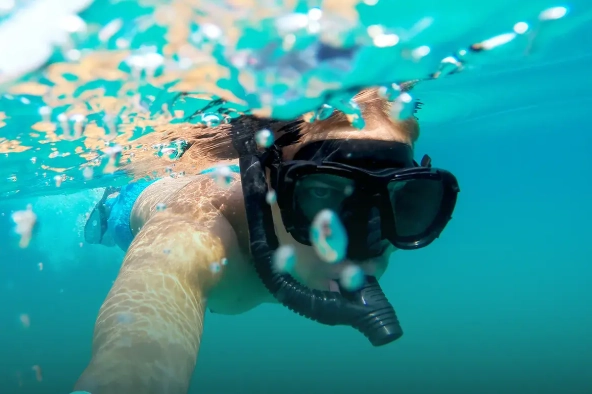
Frequently Asked Questions (The Stuff You Actually Google)
Should I breathe through my nose or mouth when snorkeling?
Mouth, 100%. Your nose is inside the mask. Breathing through it will fog up your mask instantly and can create a suffocating feeling. The mouthpiece is designed for mouth breathing. Your snorkeling breathing exercises train this specific pathway.
How do I stop my mask from fogging if I can't breathe through my nose?
Good antifog gel or spray is essential. Also, rinse the mask with a tiny bit of baby shampoo before the trip (rinse well!). The real trick? Never touch the inside of the lens with your fingers—oils from your skin cause fog. This is a gear tip, but it directly impacts breathing comfort. A foggy mask causes anxiety, which ruins breathing rhythm.
Is it normal to feel dizzy when I first start?
It can be, especially if you're breathing too fast (hyperventilating) or not exhaling fully (building up CO2). It's also a sign of possible overexertion. If you feel dizzy, stop, float upright, and breathe slowly with your head out of water until it passes. If it persists, get out of the water. Listen to your body.
Can I use these exercises if I have asthma or mild COPD?
Diaphragmatic and pursed-lip breathing are often recommended by pulmonary therapists for people with asthma and COPD to improve lung emptying and reduce shortness of breath. However, you must consult your doctor before snorkeling. Snorkeling can be a great activity, but it must be done with caution and proper management. Never snorkel alone, and always have a rescue inhaler (if prescribed) readily accessible on the boat or shore. The American Lung Association is a key resource for understanding breathwork in the context of lung health.
My child panics with a snorkel. Any tips?
Forget the ocean at first. Make it a game in the bathtub or pool. Have them just put their lips on the mouthpiece and blow bubbles in the water with the snorkel. No face immersion needed initially. Use a full-face snorkel mask? I'm personally not a huge fan for adults due to CO2 buildup concerns, but for a very anxious child who just can't get past the mouthpiece, a reputable brand's kids' full-face mask might be a gateway tool to get them comfortable looking underwater. Always supervise closely and choose a model with a safety-certified design that separates the inhale/exhale chambers.
Wrapping It Up: Your Breath is Your Best Gear
You can buy the most expensive mask, the sleekest fins, but if you haven't trained your breathing, you're missing the most critical piece of equipment. The beauty of snorkeling breathing exercises is that they cost nothing. They require no fancy gear. Just a bit of your time and attention.
The payoff is immense. It's the difference between a stressful, exhausting swim and a truly immersive, peaceful exploration. It's the moment you stop fighting the water and start floating with it, your breath a quiet metronome pacing your journey through an alien world.
 Breathe slowly. Breathe deeply. The ocean will wait for you.
Start with five minutes of belly breathing today. Your next snorkeling adventure will thank you for it.
Reader Comments