You're dreaming of tropical fish, coral castles, and that weightless feeling. But when you start planning, you hit a wall: should you go snorkeling or scuba diving? It's not just a question of depth. It's about budget, time, fitness, and what you really want from the experience. I've spent over a decade guiding both, and I've seen the confusion firsthand. Let's cut through the noise.
This isn't about which one is "better." It's about which one is better for you, right now. We'll strip it down to the brass tacks—cost, training, gear, and that magical feeling of being underwater.
What's In This Guide?
What’s the Real Cost Difference? (It's More Than You Think)
Let's be honest: cost matters. The gap here is massive, and it's the first deal-breaker for many.
Snorkeling is your budget-friendly gateway. On a tropical vacation, you can rent a mask, snorkel, and fins for about $10-$25 for the day. A guided boat tour to a prime reef might run you $50-$100, including gear. If you fall in love and want your own setup, a reliable, mid-range mask, snorkel, and fin set can be bought for $100-$200, lasting you years. There's no formal training cost.
I tell my friends to at least buy their own mask. A perfect fit that doesn't fog is 80% of a good snorkeling experience. Rent the fins if luggage space is tight.
Scuba diving is an investment. The initial certification (like PADI Open Water Diver) is the big ticket. It typically costs between $500 and $1000, depending on location. That covers manual, pool sessions, and the required open water dives. After that, every dive trip has costs: boat charters ($80-$150 per two-tank dive), full gear rental ($50-$100 per day), and often, a required guide if you're newly certified. It adds up fast.
Here’s the kicker many miss: the real cost of scuba isn't just the course. It's the ongoing commitment. To stay safe and comfortable, you need to dive somewhat regularly. If you only dive once every two years on vacation, you'll likely need a refresher course each time ($150-$300). Snorkeling? You can pick it up again in minutes after a long break.
Who Can Do Each Activity? Training & Physical Requirements
This is where assumptions get people into trouble.
Snorkeling: Almost Everyone
You don't need a certificate. You need basic comfort in water. If you can float and paddle around, you can snorkel. Non-swimmers can participate in very shallow, calm areas using a flotation aid. I've guided families where grandparents and young kids shared the same reef shallows. The barrier to entry is incredibly low.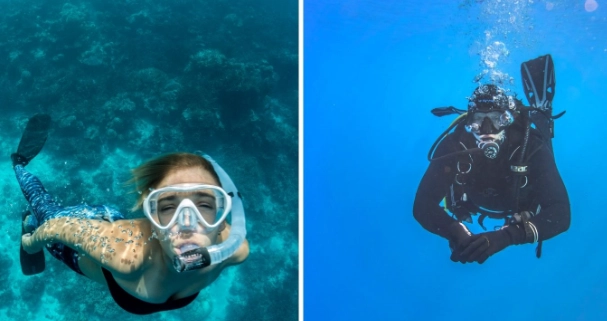
The "training" is about technique, not safety certification: learning to breathe slowly through your mouth, clear your snorkel with a sharp exhale, and defog your mask with a little spit (the old diver's trick that actually works).
Scuba Diving: A Certified Skill
To scuba dive independently, you must be certified. Agencies like PADI and NAUI run global programs. You'll need to pass a basic medical questionnaire (screening for issues like asthma, heart conditions, or recent surgeries). You'll also need to demonstrate rudimentary swimming skills, like treading water for 10 minutes and swimming 200 meters.
The course teaches you the physics and physiology of diving—why you must never hold your breath, how to equalize your ears, how to manage buoyancy. It's a real course with exams, both written and practical. This is non-negotiable for safety. A "Discover Scuba Diving" experience lets you try it in a pool or very shallow ocean with an instructor holding onto you, but it's not a substitute for certification.
How Deep Can You Really Go? The Experience Compared
Depth defines the worlds you can access.
Snorkeling keeps you on the surface, looking down. Your range is typically where sunlight brightly penetrates, the top 3-10 feet of the ocean. This is where coral reefs are most vibrant and many fish species feed. You'll see parrotfish, angelfish, maybe a turtle coming up for air. The experience is like flying over a bustling city. It's social—you can easily talk to your buddy. You're in constant contact with the world above.
Scuba Diving takes you into that city. You become part of the environment. A recreational open water diver is certified to 18 meters (60 feet), with advanced courses going to 30 meters (100 feet). At depth, light changes, colors shift (reds and oranges vanish first), and you encounter different life: bigger reef sharks resting in caves, larger schools of fish, intricate coral formations. The silence is profound, broken only by your bubbles. Time slows down. It's a fully immersive, almost meditative experience.
My first dive to 80 feet on a wall in Fiji, I saw a school of barracuda hanging motionless in the blue. That feeling of being a guest in a vast, silent space is something snorkeling can't replicate. But the next day, snorkeling the same reef's crest in brilliant sunshine with my non-diver partner, sharing the excitement of spotting an octopus—that was its own perfect joy.
A No-Nonsense Gear Breakdown
| Gear Component | Snorkeling | Scuba Diving |
|---|---|---|
| Primary Life Support | Your own lungs via a snorkel tube. Simple. | A regulator connected to a high-pressure tank filled with compressed air. Complex. |
| Buoyancy Control | Your body, maybe a flotation vest. You're positively buoyant. | A Buoyancy Control Device (BCD) with an inflator/deflator hose. You achieve neutral buoyancy (weightless). |
| Exposure Protection | Swimsuit, maybe a rash guard or thin "skin" suit. | Wetsuit (3mm-7mm) or drysuit in cold water. Essential for warmth at depth. |
| Weight System | None. | Weight belt or integrated weights to counteract wetsuit buoyancy. |
| Instrumentation | None required. | Depth gauge, timer/computer, submersible pressure gauge (SPG). Mandatory for safety. |
| Footwear | Fins (often full-foot). | Open-heel fins with booties. |
The complexity difference is stark. Scuba gear is life-support equipment. You are responsible for monitoring it. Snorkeling gear is simple sports equipment. If your snorkel fills with water, you stand up or blow it out. If your scuba regulator fails at depth, you must switch to a backup. This isn't to scare you—redundancies are built in—but to highlight the responsibility shift.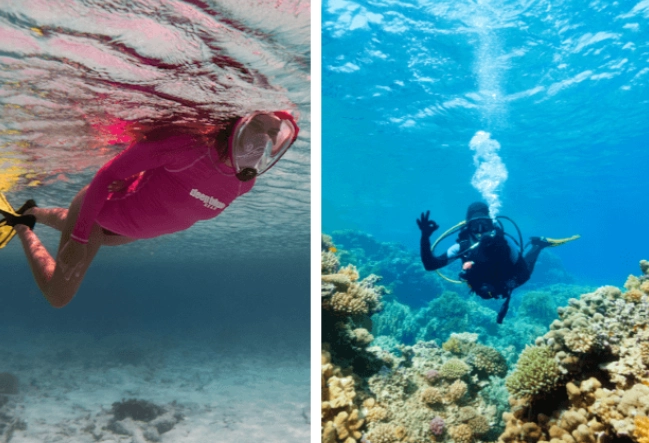
Making Your Choice: A Simple Checklist
Ask yourself these questions:
Choose Snorkeling if:
- Your budget is tight or you're unsure about committing to a new expensive hobby.
- You have limited time on vacation (no 3-4 days for a course).
- You want a social, easy-going activity the whole family can do together.
- You're uncomfortable with the idea of complex gear or confined spaces.
- You're happy seeing the stunning, sunlit top of the reef.
Choose Scuba Diving if:
- You're ready to invest significant time and money into a new skill.
- You crave total immersion and the unique silence of the underwater world.
- You want to explore shipwrecks, deeper reefs, and encounter larger marine life.
- You enjoy technical learning and are comfortable with structured training.
- You see yourself doing this repeatedly on future trips.
Still stuck? Do this: book a fantastic snorkeling trip for your next holiday. If you come back obsessed, dreaming of going deeper, then sign up for a certification course at your local dive shop before your next vacation. It's the perfect progression.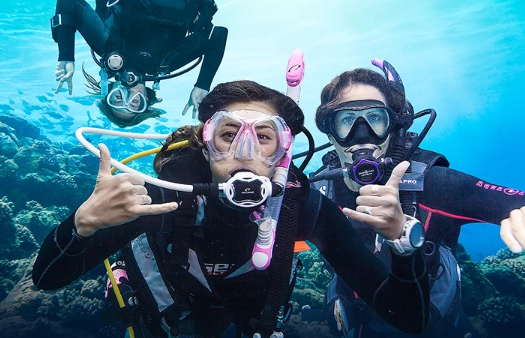
Your Questions, Answered
I'm not a strong swimmer. Can I still snorkel or scuba dive?
Snorkeling is very accessible for non-swimmers. You can use a flotation vest or noodle and stick to calm, shallow areas like a sandy lagoon. For scuba diving, basic swimming competency is a requirement for safety certification. You'll need to demonstrate you can swim 200 meters and tread water for 10 minutes. If swimming is a major concern, start with a Discover Snorkeling program before considering scuba.
Is scuba diving scary for someone with mild claustrophobia?
It depends on the trigger. The ocean is vast, not confined, which helps many people. The sensation of breathing underwater is rhythmic and can be calming. The potential issue is the mask covering your face. Try this: wear a snorkel mask in a pool first. If that feeling is manageable, a try-dive in a controlled environment with an instructor is the best next step. Communicate your concerns clearly—good instructors are trained to handle this.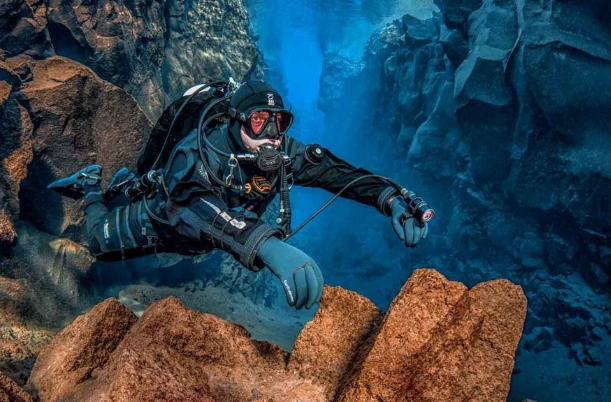
What's the one piece of gear most beginners get wrong for snorkeling?
The snorkel. Most cheap sets come with a simple J-shaped tube, a 'dry snorkel' with a splash guard, or worse, a 'full-face' mask. The J-tube lets water in easily. Dry snorkels have a valve that can fail. Full-face masks have been linked to CO2 buildup risks (organizations like DAN - Divers Alert Network have issued warnings). The best choice for beginners is a semi-dry snorkel. It has a simple splash guard at the top that deflects water but no complex valve to jam. Pair it with a separate, well-fitting dive mask.
How long does it take to get certified for scuba diving, realistically?
The PADI Open Water Diver course, the global standard, typically requires 3-4 full days. It's not just about time; it's about competency. You'll do knowledge development (online or in class), confined water skill sessions (like a pool), and 4 open water dives. Some resorts offer 'zero-to-hero' courses over 4-5 days, but that's intense. A better pace is to do the theory and pool work at home, then complete the open water dives on vacation. This spreads out the learning and cost.
Which activity is better for underwater photography?
They serve different purposes. Snorkeling is fantastic for wide-angle shots of the reef surface, sunbeams, and animals near the surface (like turtles). The light is best here. Scuba diving allows for close-up macro photography of tiny critters and wide-angle shots of large scenes like walls or wrecks. However, scuba photography adds another layer of complexity—you're managing buoyancy, air, and now a camera. Start by snorkeling with a simple waterproof camera or GoPro. If you get the bug, move to scuba later.
Reader Comments