Let's be honest. You're floating over a coral reef, surrounded by a kaleidoscope of fish, and you have no idea what you're looking at. Is that a parrotfish? A wrasse? Something that might be friendly or something that prefers its space? That moment of wonder mixed with confusion is where marine life identification snorkeling begins. It's not just about seeing pretty fish; it's about understanding the characters in this underwater drama. I remember my first time in the Red Sea, mistaking a perfectly harmless Napoleon wrasse for something out of a monster movie. I wish someone had given me a few straightforward pointers back then. This guide is exactly that—a practical, no-fluff manual to turn your next snorkel from a passive float into an active discovery session.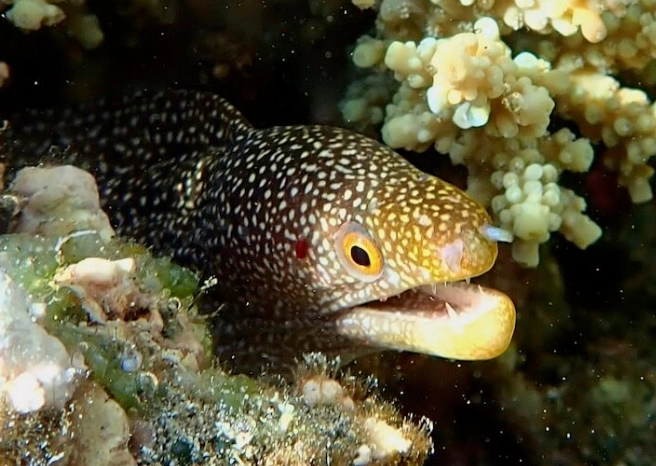
Your Quick Dive Map
- What is Marine Life Identification Snorkeling?
- How to Prepare for Your Identification Snorkel Trip
- Essential Gear for Marine Life Identification
- A Step-by-Step Guide to Identifying Marine Life Underwater
- Top Global Destinations for Marine Life Identification Snorkeling
- Common Marine Life Identification Mistakes (And How to Avoid Them)
- Marine Life Identification Snorkeling FAQ
What is Marine Life Identification Snorkeling?
It's the active practice of observing, recognizing, and learning about the animals and plants you encounter while snorkeling. Think of it as birdwatching, but with fins and a mask. The goal isn't to memorize a thousand Latin names overnight. It's about building a framework—knowing the major groups, recognizing key behaviors, and using simple tools to fill in the blanks. This shift in mindset transforms the experience. Instead of just seeing "a bunch of fish," you start to see the grazers (like parrotfish crunching on coral), the predators (like lurking groupers), and the cleaners (like tiny wrasses at their stations). The reef becomes a living, interconnected community, not just a postcard.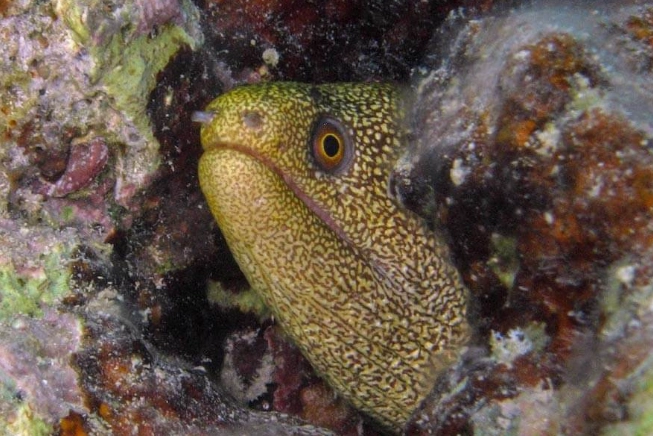
How to Prepare for Your Identification Snorkel Trip
Good identification starts on dry land. Rushing into the water without a clue is a surefire way to feel overwhelmed.
Research Your Destination's Cast of Characters
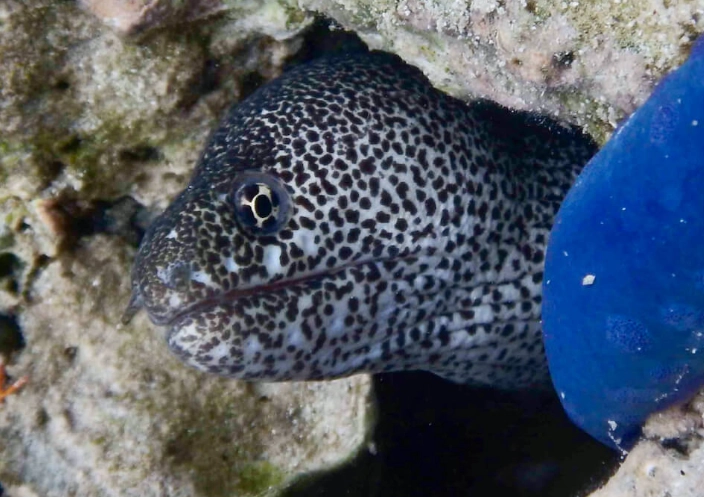
Every ocean region has its stars. Before you go, spend an hour online. Search for "common snorkeling fish [Your Destination]." Look for PDF guides from local marine parks or tourism boards—they're often the most accurate. For example, the Great Barrier Reef Marine Park Authority has excellent species ID materials. Don't just look at pictures; read a sentence or two about common behavior. Knowing that surgeonfish often swim in large schools, or that moray eels peek from crevices, helps you know where and how to look.
Learn the Basic Categories (Forget Species at First)
Beginners try to identify every fish to species. Experts start with families. Get comfortable with these broad groups first:
- Butterflyfish: Usually disc-shaped, brightly colored, often in pairs. The "poster children" of the reef.
- Angelfish: Deeper bodies, spiny gill covers, often more solitary.
- Parrotfish: Beak-like teeth (you can sometimes hear them crunching!), often bulky. They change color and sex during their lifetime, which is wildly confusing but fascinating.
- Wrasses: Sleek, torpedo-shaped, constantly on the move. Range from tiny neon cleaners to huge Napoleons.
- Surgeonfish/Tang: Oval, compressed bodies with sharp spine(s) near the tail (the "scalpel").
Nail these five, and you'll already be identifying 60% of the common reef fish you see.
Essential Gear for Marine Life Identification
Your standard snorkel kit works, but a few additions make identification infinitely easier.
- A Waterproof ID Slate or Book: This is non-negotiable. Don't rely on your memory. A simple PVC slate with common species printed on it, paired with a pencil, lets you tick off what you see. Brands like Rite in the Rain make great ones. I've used cheap laminated sheets that disintegrated—invest in a good one.
- Prescription Mask or Diopter Lenses: If you wear glasses, seeing blurry fish is pointless. Getting a mask with your prescription changed my snorkeling life. It's worth every penny.
- GoPro or Underwater Camera: Not for Instagram. It's your research tool. Snap a quick photo of that unknown fish, then look it up later when you're back on the boat. Trying to remember intricate patterns underwater is futile.
- Floating Keychain Guide: These little plastic booklets are brilliant. They float, they're tough, and they show 50 common species. Perfect for a quick glance.
A Step-by-Step Guide to Identifying Marine Life Underwater
Okay, you're in the water. Here's your field process, honed from years of trial and error.
1. Size and Shape First. Is it round like a pancake (ray), long and snake-like (moray eel), or a classic fish shape? Size matters—compare it to your hand or fin.
2. Look at the Mouth and Fins. This is huge. A pointed beak? Parrotfish. A small, puckered mouth that picks at things? Butterflyfish. Long, trailing fins? Lionfish (give it space!).
3. Color and Pattern Are Last. This is the rookie trap. Water filters out reds and oranges as you go deeper, and many fish can change colors. A blue fish at 3 meters might be brown at 10 meters. Instead, note the pattern: stripes (vertical or horizontal?), spots, a mask over the eyes? Patterns are more reliable.
4. Observe Behavior. Is it alone or in a school? Is it pecking at the coral, sifting sand, or hovering still? Behavior often points directly to a family.
5. Use Your Slate, Snap a Photo, Move On. Don't spend 5 minutes chasing one fish. Note its code (A3 on your slate) or take a photo. The goal is observation, not pursuit. Harassing wildlife is a sure sign of a novice.
Top Global Destinations for Marine Life Identification Snorkeling
Some places are simply better classrooms than others. You want clear water, healthy reefs, and a high density of approachable, diverse life.
>Well-managed, countless guided tours. The reef is relatively shallow, and operators are experts at pointing out life.>Shore snorkeling paradise. You can spend hours in knee-deep water identifying dozens of species. The "diver's" island that snorkelers love.>Protected marine life conservation area. The fish are abundant and used to snorkelers. Mandatory educational video covers conservation and identification basics.>Crystal clear water with incredible visibility. Coral reefs start right at the shoreline in many resorts. Rich in colorful, photogenic fish.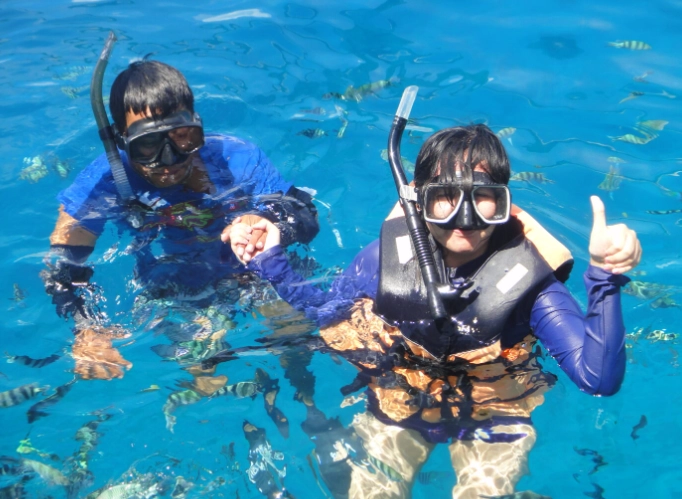
| Destination & Location | Best Time to Go | Star Species for ID Practice | Why It's Great for Beginners |
|---|---|---|---|
| Raja Ampat, Indonesia (West Papua) |
October - April | Walking sharks, Mandarin fish, countless reef fish | Unmatched biodiversity. The "species capital" of the world. Shallow, calm bays are perfect for slow exploration. |
| Great Barrier Reef, Australia (Cairns & Port Douglas) |
June - October | Giant Clam, Maori Wrasse, Clownfish, Green Turtle | |
| Bonaire, Caribbean (Leeward Antilles) |
Year-round | Parrotfish, Tarpon, Seahorses, Frogfish | |
| Hanauma Bay, Oahu, Hawaii (USA) |
Morning hours (less crowded) | Humuhumunukunukuapua'a (State fish), Parrotfish, Trumpetfish | |
| The Red Sea, Egypt (Sharm el-Sheikh & Hurghada) |
March - May, Sept - Nov | Lionfish, Napoleon Wrasse, Anthias, Moray Eels |
Common Marine Life Identification Mistakes (And How to Avoid Them)
I've made these, and you probably will too. Here's how to skip the frustration.
Mistake 1: Chasing the Rare, Ignoring the Common. Everyone wants to see the octopus or the seahorse. But spending all your time looking for hidden critters means you miss the intricate social dynamics of the common damselfish right in front of you. Learn the common stuff first—it builds your foundational knowledge.
Mistake 2: Over-Reliance on Color. I mentioned it, but it's worth repeating. A juvenile parrotfish looks nothing like an adult. Many fish have different juvenile and adult color phases. Use shape, fin placement, and behavior as your primary clues.
Mistake 3: Getting Too Close. In your enthusiasm, you might hover right over a fish. Your shadow scares it, and it darts away. You learn nothing. Observe from a respectful distance. Let the animal behave naturally—that's when you see the best identifying behaviors.
Mistake 4: Not Looking at the Small Stuff. The reef's macro life is a whole other world. Take a moment to hover over a coral head and look for tiny shrimps, crabs, and blennies. A magnifying glass attachment for your mask can open up this universe.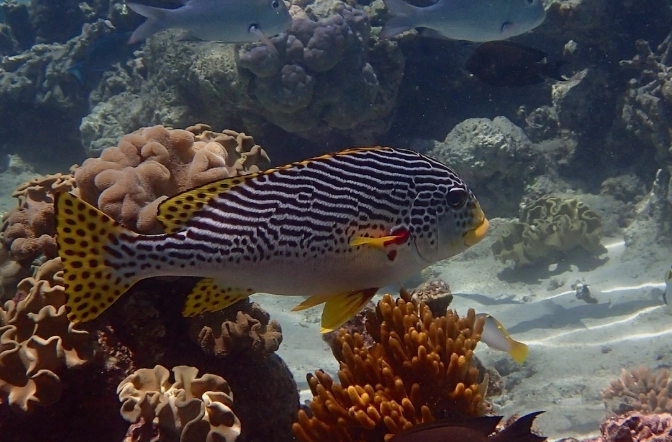
Marine Life Identification Snorkeling FAQ
How can I identify fish if they swim away too fast?
Stop chasing them. Find a promising spot—a coral head, a sandy patch near seagrass—and float still for 2-3 minutes. Breathe slowly. The fish will return and ignore you. Fast swimmers are often schooling fish like jacks or trevallies; note their silvery, streamlined shape as a group identifier rather than trying to see individual markings.
What's the one piece of gear most snorkelers forget for marine ID?
A simple dive light, even in daytime. Shadows under coral ledges and overhangs hide incredible detail. Shining a light into a crevice can reveal the intricate patterns of a moray eel or the delicate arms of a brittle star that you'd completely miss in the shadow.
I'm snorkeling with my kids. How can I make marine life ID fun for them?
Turn it into a scavenger hunt. Before you go in, make a list with pictures (not names) of 5-8 common things: "a striped fish," "a fish with a beak," "a blue starfish," "a spiky sea urchin." Give them a waterproof slate to check off. It focuses their attention and teaches observation without the pressure of names. They'll spot things you miss.
Are there any dangerous marine animals I should absolutely know before trying to identify things?
Yes, but the rule is simple: look, don't touch. Learn to recognize these three broadly: Stonefish (looks like a rock or lumpy coral, found resting on the bottom), Lionfish (beautiful, with long, flowing venomous spines), and Sea Urchins (those long-spined black ones hurt). Give rays a wide berth—don't swim directly over them. If you can't identify it, assume it's best observed from a respectful distance.
How does getting better at marine ID actually help the reef?
When you know what you're looking at, you care more. You understand that the parrotfish is essential for healthy coral growth by eating algae. You recognize that the triton snail is a natural predator of the crown-of-thorns starfish. This knowledge turns you from a passive tourist into an informed advocate. You're more likely to support conservation efforts, choose eco-friendly operators, and practice proper buoyancy to avoid damaging the very ecosystem you're learning to appreciate.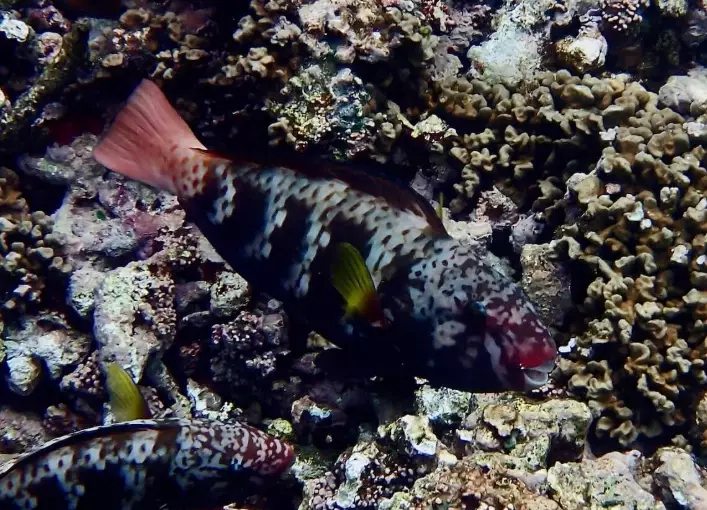
Reader Comments