Let's be honest. You've seen the photos. That perfect circle of deep blue in the middle of the Caribbean Sea, a UNESCO World Heritage Site, featured in countless documentaries. Snorkeling the Great Blue Hole in Belize is on many a bucket list. But between the dream and the reality lies a bunch of practical questions nobody seems to answer clearly. Is it worth it just to snorkel? How do you even get there? What do you actually see?
I've been out there multiple times, on different boats, in different conditions. I've talked to the captains, watched other snorkelers struggle, and seen the magic when everything clicks. This guide isn't just a rehash of tourist brochures. It's the straight talk you need to decide if this trip is for you and how to make it incredible, not just a checkmark.
Your Blueprint for the Blue Hole
The Logistics: Getting to the Great Blue Hole
First things first. The Great Blue Hole is located about 60 miles (97 km) east of Belize City, smack in the middle of the Lighthouse Reef Atoll. You cannot drive there. You cannot take a cheap ferry. Access is exclusively by boat or small aircraft.
For snorkelers, a boat tour is your only realistic option. Most tours depart from three main hubs:
| Departure Point | Travel Time to Blue Hole | Best For... | Approx. Tour Cost (USD) |
|---|---|---|---|
| San Pedro, Ambergris Caye | 2 - 2.5 hours | Travelers already staying on the islands, preferring a slightly shorter open-water crossing. | $250 - $400 |
| Caye Caulker | 2.5 - 3 hours | A more laid-back, budget-conscious crowd. Tours can be slightly cheaper. | $230 - $380 |
| Belize City | 3+ hours | Day-trippers not staying on the cayes. The longest and often roughest ride. | $220 - $350 |
The Time & Money Reality Check
This is a full-day, offshore commitment. We're talking 8-10 hours minimum. You'll spend 4-6 hours just in transit. The cost isn't just for the snorkeling; it's for the fuel, crew, and logistics of getting a boat 60 miles out to sea and back. If you get seasick easily, this is your first hurdle. The crossing can be very rough.
What to Really Expect on a Snorkeling Tour
Here's the part most blogs gloss over. A typical "Great Blue Hole Snorkeling Tour" is rarely just about the Blue Hole. In fact, you often spend less time at the Hole itself than at other stops. The standard itinerary looks like this: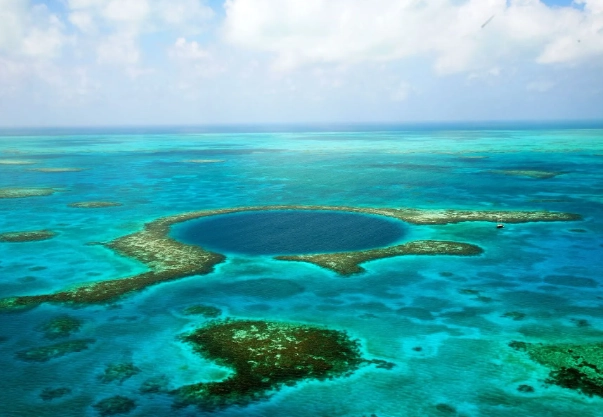
Morning (6:00 AM - 10:00 AM): Brutally early pickup. Long, bumpy boat ride across open ocean. Drink the ginger ale they offer.
Stop 1: The Great Blue Hole (10:30 AM - 11:30 AM): You arrive. The scale is breathtaking. The boat anchors on the rim where the depth is "only" about 40 feet. You get in. The water is incredibly clear and deep blue. You'll see some coral formations on the rim and maybe a few fish. But you won't see the famous stalactites—those are at 130+ feet, far beyond snorkeling depth. The main sensation is one of awe and vastness, not a bustling coral garden. After 45-60 minutes, you get back on the boat.
Stop 2: Half Moon Caye Wall (Lunch & Snorkel) (12:00 PM - 2:00 PM): This is usually the better snorkeling spot. A sheer wall dropping into the abyss, teeming with life. You'll see more color, more fish, and often nurse sharks and turtles here. Lunch is served on the boat or the beautiful island.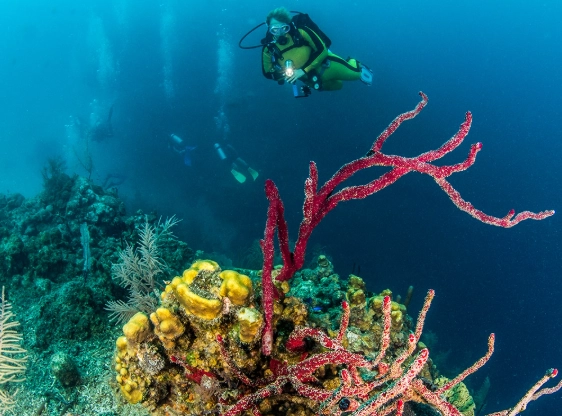
Stop 3: The Aquarium (Optional) (2:30 PM - 3:00 PM): A shallow, protected site inside the atoll for a relaxed final dip.
Afternoon (3:30 PM - 6:00 PM): The long, often sleepy, ride back.
The Underwhelming Truth (And Why It's Still Worth It)
If you go expecting a kaleidoscope of fish right in the Hole, you might be disappointed. The magic of snorkeling the Blue Hole is experiencing the geography. It's floating over the edge of a 400-foot deep sinkhole, seeing the dark blue give way to abyssal black. It's a geological wonder, not a traditional reef snorkel. The real reef action comes later at Half Moon Caye. Knowing this upfront manages expectations and lets you appreciate each stop for what it is.
What Marine Life Can You See While Snorkeling?
Your sightings depend entirely on the stop. Let's break it down.
At the Blue Hole Rim: Don't expect a ton. You might see:
- Schools of small reef fish (chromis, grunts).
- Occasional larger pelagic fish cruising the edge (barracuda, horse-eye jacks).
- Healthy but sparse coral formations (elkhorn, star coral) on the shallow parts of the rim.
The vibe is more "serene and massive" than "busy and colorful."
At Half Moon Caye Wall: This is the biodiversity jackpot.
- Guaranteed Nurse Sharks: They sleep under coral ledges. You'll see them.
- Green and Hawksbill Turtles: Very common grazing on the sea grass or swimming along the wall.
- Southern Stingrays: Gliding over the sandy bottom.
- Massive schools of snapper, creole wrasse, and other reef fish.
- Eagle rays and reef sharks are possible but less common.
How to Choose the Right Snorkeling Tour
Not all tours are created equal. Your experience hinges on the operator. Here’s what to scrutinize:
- Boat Size & Type: Larger boats (40+ ft) handle the open-ocean swell better, crucial for comfort. Speedboats are faster but can be a rougher, wetter ride. Ask for photos.
- Group Size: A max of 15-20 snorkelers is ideal. More than 25, and it feels crowded in the water. Some budget operators pack 30+ people.
- Guide-to-Guest Ratio: Do they have multiple guides in the water? One guide for 15 people is useless. Look for operators that promise 1 guide per 6-8 guests.
- Inclusions: Lunch, drinks (water, soda), snorkel gear, park fees ($80 USD for the Blue Hole Marine Monument) should all be included. Confirm this. A cheap tour that charges $80 extra at the dock isn't cheap.
- Safety Gear: Do they carry oxygen, a first-aid kit, and a VHF radio? This is non-negotiable for an offshore trip.
My personal, non-sponsored advice? Spend a little more. Operators like Amigos del Mar (San Pedro) or Frenchie's Diving (Caye Caulker) have strong reputations for a reason—better boats, better crews, better guides. Read recent reviews, not just the 5-star ones. Look for comments about boat condition and guide attentiveness.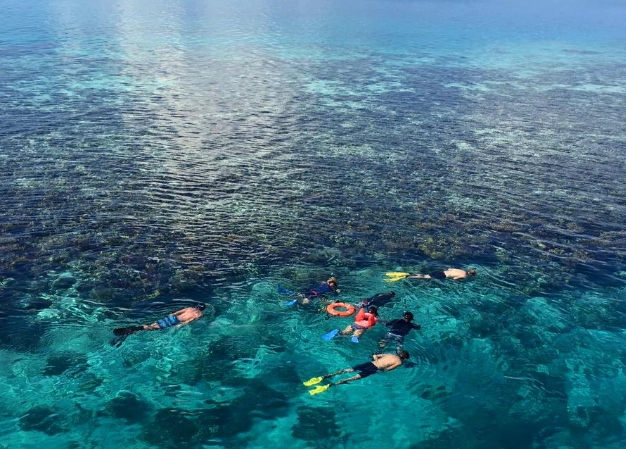
Expert Tips & Tricks Most Guides Won't Tell You
After a few trips, you pick things up.
1. The Current Whisperer: At the Blue Hole rim, there can be a sneaky current. Before you jump in, watch the water for 60 seconds. See which way the seaweed or other snorkelers are drifting? Swim upstream first. That way, your relaxed float brings you back to the boat.
2. Defog Like a Pro: Spit and rinse is okay. Baby shampoo is better. But the local guide trick? A tiny drop of liquid dish soap rubbed on the inside of your mask, then thoroughly rinsed. It lasts all day. Thank me later.
3. The Footwear Mandate: You must wear something on your feet. The boat deck gets scorching hot. The ladder can have sharp bits. The island might have prickly plants. Old sneakers or proper water shoes are essential.
4. The Seasickness Pre-Game: Take medication the night before, not the morning of. It needs to be in your system. Bring more for the ride back. The morning crossing is often calmer than the afternoon return when the wind picks up.
5. The Camera Caution: That GoPro on a floating handle? In the Blue Hole's deep, featureless water, your footage will be...blue. The best footage comes from the shallower, colorful walls of Half Moon Caye. Focus your filming energy there.
Your Burning Questions, Answered
Is snorkeling the Great Blue Hole worth it for non-divers?
It depends on your priorities. If your goal is world-class, up-close reef snorkeling with tons of fish, there are better, closer, and cheaper spots in Belize (like Hol Chan Marine Reserve). If your goal is to witness one of the planet's most iconic natural wonders from the water, to feel the scale of it, and combine it with fantastic snorkeling at Half Moon Caye, then absolutely. Think of it as a pilgrimage for ocean lovers.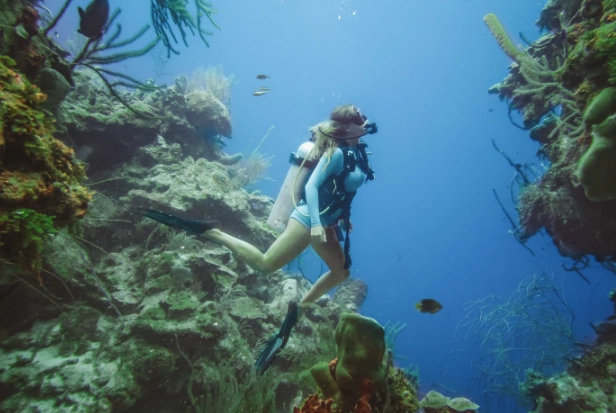
I'm a strong swimmer. Can I snorkel away from the group at the Blue Hole?
No reputable guide will allow this, and you shouldn't want to. The Blue Hole is over 400 feet deep. Strong currents can appear unexpectedly, and the boat is a tiny speck in a vast ocean. Staying near your group and the boat is a basic safety rule. The guides know the safe zones on the rim.
What's the best time of year to go for calm seas and clear water?
The prime window is typically April through June. The rainy season (and potential for storms) has usually passed, but the peak summer crowds haven't fully arrived. The water is calmest. September to November is the riskiest due to higher chances of tropical weather. Always check the marine forecast with your operator 24 hours before.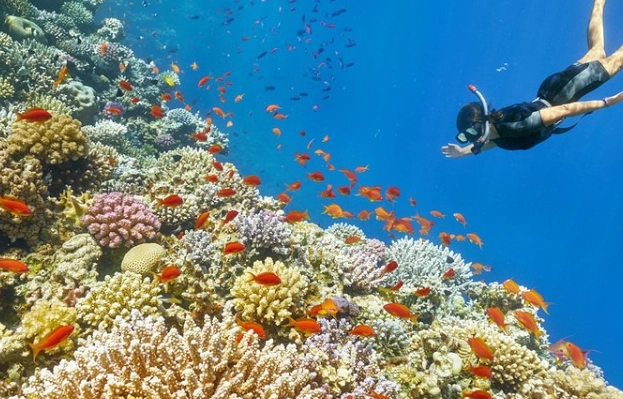
Can I visit the Great Blue Hole independently without a tour?
Practically, no. You'd need to charter a private boat, which would cost thousands of dollars. You also need permits from the Belize Audubon Society, which manages the site as a protected monument. The tour operators handle all of this. The organized tour is the only viable way for 99.9% of visitors.
My friend says they saw sharks in the Blue Hole while snorkeling. Is that common?
It's possible but not an everyday occurrence. The most common shark to see in the shallower rim area is the Caribbean reef shark, but they are shy. The nurse sharks everyone talks about are primarily at the Half Moon Caye snorkel stop. Seeing a shark in the deep blue of the Hole itself is rare for snorkelers and would be a lucky, fleeting glimpse of a passing pelagic species.
So, should you do it? If you understand what the day entails—the early start, the long boat ride, the fact that the Hole itself is more about grandeur than fish—and you're still drawn to it, then yes. It's an adventure. You're going to one of the most remote and famous natural landmarks on Earth.
Book with a quality operator, manage your expectations, prepare for the sea, and get ready for a story you'll tell for years. Just remember to pack the seasickness pills.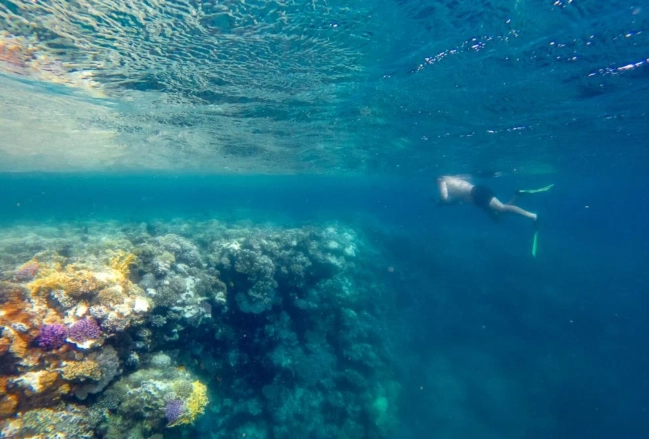
Reader Comments