Let's cut to the chase. You can't just grab your ocean snorkeling kit and jump into a river. Well, you can, but you'll have a bad time. The gear matters more in freshwater, and the stakes are higher.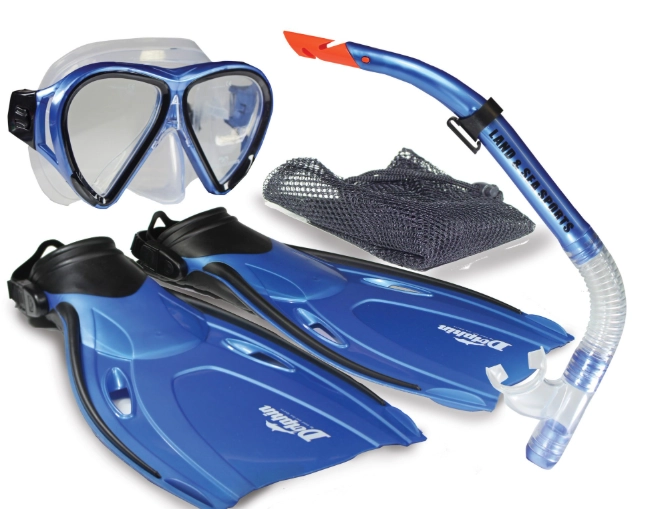
A river doesn't care if you're comfortable. It has rocks, currents, and often less visibility. Your gear is your primary interface with that environment. Choosing the right snorkeling gear for river snorkeling isn't about buying the most expensive stuff—it's about matching the equipment to the specific challenges of moving water.
What You'll Find in This Guide
The Mask: It's All About the Seal
Here's something most guides don't mention. That perfect mask fit you achieve in your bathroom or at the dive shop? It changes in freshwater. The temperature difference causes the silicone to contract slightly, just enough to break that perfect seal you thought you had.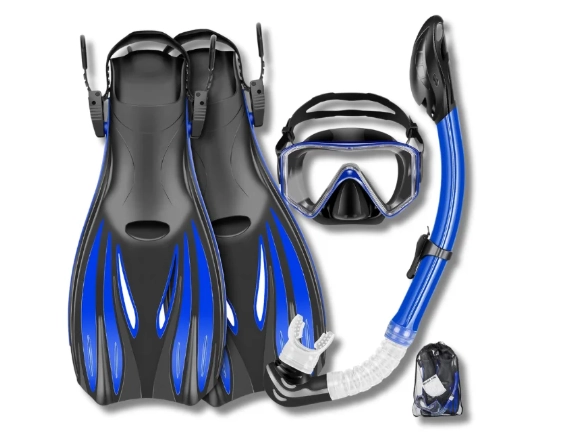
I learned this the hard way on the Bow River in Montana. My trusted ocean mask started leaking within minutes. Not a dramatic flood, just a persistent trickle that clouded my vision and forced me to surface every few minutes to clear it. The water was 12°C (54°F), and that trickle felt like an ice pick on my forehead.
The solution isn't complicated, but it's specific:
You need a mask with a silicone skirt, not the cheaper PVC versions. Silicone is more flexible and conforms better to the temperature changes. Look for masks marketed for "temperate" or "cold water" use—they often use softer, more pliable silicone.
But here's the real secret, the one that took me years to figure out: Test the seal with your mouth, not your nose.
Everyone says to do the suction test by inhaling through your nose. That works for static water. In a river, you'll be breathing harder, potentially through your mouth if you're fighting a current. A small leak you might miss with a nose test becomes obvious when you're breathing heavily. Place the mask on your face, hold it in place, and breathe in through your mouth. If the seal holds against that negative pressure, you're good.
And for god's sake, don't use anti-fog in a river. Most of those chemicals aren't designed for freshwater and can leave a residue that actually makes fogging worse. If you need something, a tiny drop of baby shampoo rinsed out works far better than any commercial product I've tried.
Mask Skirt Color: A Surprisingly Big Deal
Ever wonder why most rental masks are clear or light blue? It's because they look clean in the shop. In a river, a clear skirt creates a stark visual contrast against the often darker, tannin-stained water or the riverbed. This can be distracting and make it harder to spot fish or features.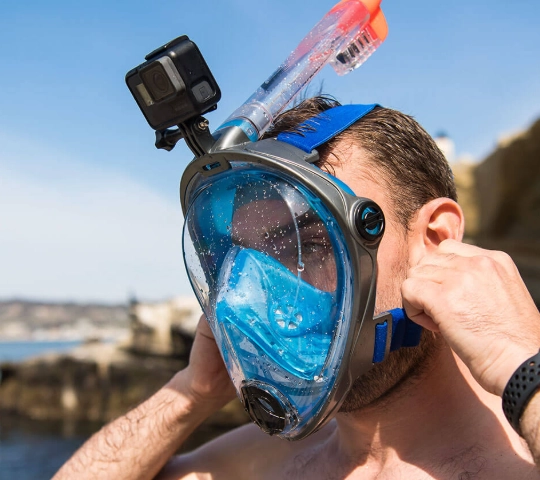
I now swear by a dark skirt—black or dark blue. It minimizes light reflection from inside the mask, reduces that "tunnel vision" effect, and lets your eyes adjust to the natural light filtering through the water. It sounds trivial, but it makes a huge difference in spotting those camouflaged trout.
Snorkel Types: Why a Dry-Top Snorkel is Non-Negotiable
This is the piece of gear where beginners make the most subtle and costly mistake. They assume any snorkel works. In the ocean, if you get a mouthful of water, it's salty and you notice immediately. In a river, the water is often silty, filled with fine particles, and can taste like mud or vegetation.
A dry-top snorkel (sometimes called a splash guard or dry valve) has a mechanism at the top that seals when the snorkel is submerged. This prevents water from entering the tube when you're navigating a rapid section, diving under a low branch, or if a wave from a passing boat hits you.
Let me paint a picture. You're floating peacefully, watching a school of smallmouth bass. A slight current pushes you into an overhanging branch. Without thinking, you jerk your head down. With a traditional "wet" snorkel, you now have a mouthful of murky river water. With a dry-top, you might just get a few drops on the outside of the tube.
That difference is between continuing your snorkel or having to surface, clear the tube, and potentially lose sight of the fish. In colder water, it's also the difference between staying in longer or getting chilled from repeated water ingestion.
The dry-top isn't about keeping you completely dry—that's impossible. It's about reducing the frequency and volume of water entry. Think of it as a seatbelt for your airway.
Now, the controversial opinion: Semi-dry snorkels are worse than useless for rivers. They're designed for surface waves in the ocean, not for the dynamic, multidirectional splashes of a river. The valve can get clogged with fine silt, rendering it ineffective. A simple, reliable dry-top with a large bore (for easier breathing) is what you want.
Fins: The Control vs. Power Trade-Off
Ocean snorkeling fins are long, flexible, and designed for maximum power in a stable, predictable environment. River fins face a different set of demands.
You're not just swimming forward. You're maneuvering around rocks, adjusting to currents, and sometimes even walking backwards in shallow sections. This requires control over precision.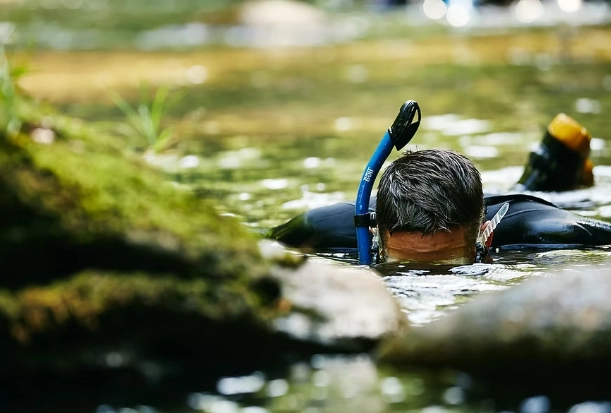
Shorter, stiffer fins give you that control. They allow for quicker direction changes and more powerful, short bursts of speed. This is crucial when you need to avoid an obstacle or fight a small eddy.
My go-to river fin is the Mares Avanti Quattro or something with a similar design: a closed heel with an adjustable strap. The closed heel protects your foot from rocks when you're walking in shallow areas. The adjustable strap ensures a snug fit that won't slip off in a current.
Long, flexible ocean fins feel like you're wearing flippers on your hands. They're great for covering distance in a straight line, but they're terrible at quick turns. In a river, you need to be agile.
Fin Material Matters More Than You Think
And then there's the material. Stiff plastic or composite is better than soft, flexible rubber in a river. The stiffness translates your leg power more efficiently into thrust, which you need to overcome resistance.
But here's the kicker—a common mistake is choosing fins that are too stiff. If your fins are so stiff that your calves cramp within 30 minutes, they're too stiff. You need a balance. You should be able to flex the fin blade with moderate effort. If it feels like you're trying to bend a brick, find something softer.
Booties: The Most Forgotten Item That Can Ruin Your Day
I never used to wear booties. I thought they were for scuba diving or cold water snorkeling. Then I spent a day on the Snake River without them.
My feet were torn up from walking on the rocky bottom to access different pools. Even the smallest, smoothest pebbles become abrasive after hours. And that's not even considering the potential for sharp rocks, broken glass, or other debris you can't see.
River booties serve three main purposes:
- Protection: From sharp objects and abrasive surfaces.
- Thermal insulation: Even in summer, riverbeds can be surprisingly cold.
- Traction: A good pair has a rugged sole for walking on slippery rocks.
The ones I use now are the 3mm neoprene socks with a separate hard-soled boot. This system gives you the flexibility of a sock with the protection of a shoe. The neoprene also adds a layer of warmth.
Don't make my mistake and get the integrated boot-and-fin combo unless you're doing very technical, fast-moving water snorkeling (which is a whole different topic). For 90% of river snorkeling, a separate bootie and fin setup is far more versatile and comfortable.
The Safety Layer: Gear You Don't See But Need to Consider
We've covered the basics you interact with directly. Now let's talk about the less obvious but equally important gear.
Wetsuit Thickness: It's Not Just About Warmth
Most people choose a wetsuit based on the water temperature alone. That's a good start, but in a river, you need to consider abrasion resistance as much as warmth.
A river bottom is rarely smooth sand. It's rocks, gravel, branches, and sometimes even old fishing line or barbed wire. A 3mm wetsuit provides a crucial layer of protection against scrapes and cuts.
But here's the non-consensus view: Consider a farmer john style (shorty) wetsuit for most river snorkeling. A full wetsuit can be restrictive and overheat you on a sunny day, even in cool water. The farmer john gives you core warmth without restricting your arm movement as much. I've found I'm more mobile and comfortable in one, which means I can stay in longer and enjoy it more.
Gloves: Yes, You Probably Need Them
I used to think gloves were only for cold water. Then I grabbed a submerged log to steady myself against a current and got a handful of splinters. Gloves protect your hands from sharp objects, provide a better grip on rocks or ropes if needed, and also add a bit of warmth.
Thin neoprene gloves are sufficient for most situations. They don't need to be thick—just enough to offer protection without losing dexterity.
Putting It All Together: A Real-World Gear Checklist
Let's move from theory to practice. Here's a checklist of the essential gear, broken down by priority and specific river conditions.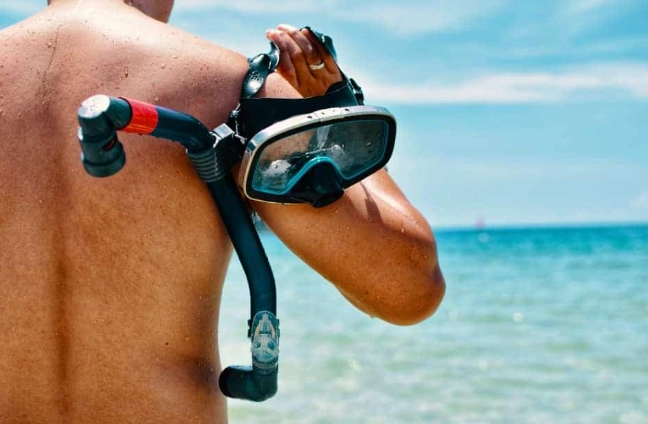
Essential Gear (Don't Even Think About Skipping)
- Mask with silicone skirt (temperate/cold water preferred)
- Dry-top snorkel (large bore diameter for easier breathing)
- Short, stiff fins (closed heel with adjustable straps)
- 3mm neoprene booties (separate from fins)
- 3mm wetsuit (farmer john or full suit depending on temperature)
Nice-to-Haves (Depending on Your River):
- Dive skin or rash guard: For protection against the sun and minor scrapes.
- Hood: For thermal protection in colder water or if you're prone to headaches from cold.
- Gloves: Thin neoprene for protection.
How to Pack Your Gear for a River Trip
Packing for a river is different from packing for the ocean. You're often hiking to access different parts of the river, so weight and space matter more.
I use a simple dry bag system with multiple smaller bags inside:
- One bag for my mask, snorkel, and fins. These are my most critical items and need to be easily accessible.
- One bag for my wetsuit and booties. These are bulky but can be compressed.
- One bag for everything else. This includes towel, water, snacks, first-aid kit.
The key is to keep the weight on your back comfortable and balanced. You'll be surprised how much more enjoyable the hike is when you're not struggling with an awkward load.
Common Mistakes and How to Avoid Them
We've covered what to get. Now let's talk about what not to do based on common mistakes I've seen (and made myself).
Mistake #1: Using an old, stretched-out mask strap. Over time, the silicone stretches and loses its elasticity. This leads to a poor seal. Replace your mask strap every year or two, even if it looks fine. It's a cheap insurance policy against leaks.
Mistake #2: Not rinsing your gear in freshwater after use. Rivers often contain silt, fine sand, and organic matter that can clog your gear's valves and mechanisms. A quick rinse in clean water can prevent this. I keep a small spray bottle with fresh water in my car for this purpose.
Mistake #3: Storing your gear wet in a sealed bag. This is a recipe for mold and mildew. Always dry your gear completely before storing it. Hang your wetsuit inside out to dry, and leave your mask and snorkel out in the open air.
Mistake #4: Not adjusting your gear for the conditions. A mask that fits perfectly in warm saltwater might leak in cold freshwater. Always do a pre-dive check in the actual water temperature you'll be experiencing.
Final Thoughts: It's About the Experience, Not the Gear
At the end of the day, the best snorkeling gear for river snorkeling is the gear that you forget you're wearing. It should fit well, function reliably, and not distract you from the experience of exploring the underwater world.
Don't get so caught up in the technical details that you forget why you're out there. To see fish, explore new environments, and have fun.
Start with the essentials, learn what works for you, and then upgrade as you go. You don't need to break the bank to have a great time in the river.
Reader Comments