Let's be real. The dream is to glide effortlessly over a coral reef, not to wrestle a pair of clown-sized flippers into an already bursting suitcase. I've been there. I once traveled with standard-sized fins, convinced I needed the power. They took up a third of my bag, annoyed airport staff, and frankly, were overkill for the calm bays I was visiting. That trip taught me the first rule of travel snorkeling: the best fin is the one you'll actually bring. The quest for the best snorkel fins for travel isn't about finding the most powerful fin in the world. It's about finding the perfect balance between packability and performance.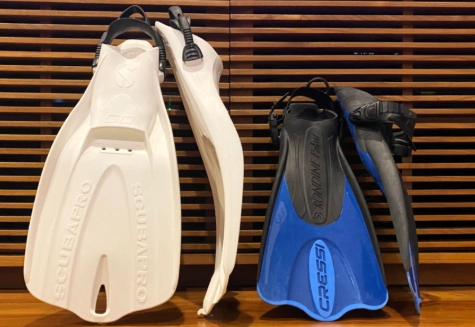
Your Quick Guide to Travel-Friendly Fins
Why Travel Fins Are a Different Beast
Your everyday snorkel fin is built for one thing: propulsion. A travel snorkel fin has a dual mission. It must perform in the water, but it also has to survive—and simplify—the journey to the water. This means three non-negotiable travel-specific factors come into play, hard.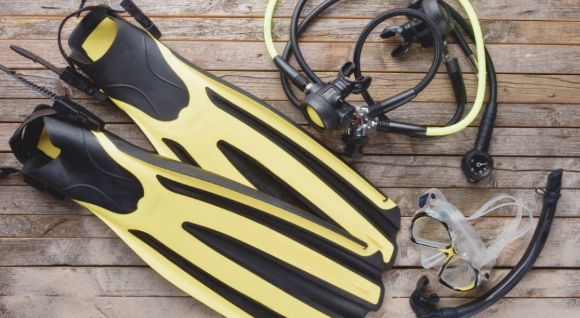
Weight: Airlines are ruthless with weight limits. Every ounce counts, especially if you're hopping on small island planes. A heavy fin can push your bag into overweight fee territory faster than you can say "liquid allowance."
Size and Shape: This is the big one. Long, rigid blades are packing nightmares. The ideal travel fin is shorter and often designed to be more flexible or even slightly curved to fit the contours of your luggage. Think of it as the difference between packing a tennis racket versus a compact umbrella.
Durability vs. Bag Abuse: These fins will get squished, pressed, and tossed. They need to be tough enough to handle baggage handlers, yet the materials (like specialized plastics or composites) can't be so stiff they snap under pressure. It's a delicate dance.
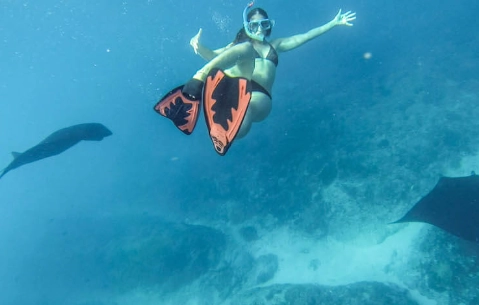
How to Choose the Right Travel Fins?
Forget the marketing fluff. When you're comparing options, put these five criteria on a mental checklist.
1. The Weight & Dimensions Test
Look up the specs. A good travel fin pair should weigh under 3.5 lbs (1.6 kg). The length is crucial—anything under 22 inches (56 cm) is in the sweet spot. Some champs dip below 20 inches. I keep a note on my phone with my bag's interior dimensions. If the fins are longer than my bag is wide, they're out.
2. Blade Technology: Short Doesn't Mean Weak
This is where brands innovate. Look for:
Channels/Rails: Grooves on the blade that direct water flow, increasing efficiency.
Split Blades/Vents: Reduces resistance on the up-kick, making kicking easier and less tiring.
Flex Zones: A blade that's stiff near the foot pocket but flexible at the tip provides a good power-to-effort ratio.
3. Material Matters
Most are thermoplastic or composite. Higher-end travel fins might use a stiffer polymer for the core with softer rubber edges. Avoid anything that feels cheap and brittle. A little flex is good for packing; too much and you'll feel like you're kicking through jelly.
4. The Comfort Factor
If they hurt, you won't use them. Full-foot pockets should fit like a snug sneaker—not tight, not loose. Look for soft, seamless edges around the foot opening. Blisters are the quickest way to ruin a snorkeling day. If you have wide feet, brands like Cressi or Mares often have more accommodating fits.
5. Your Snorkeling Style
Be honest. Are you a "float and look" snorkeler or a "cover ground" explorer? For the former, an ultra-light, short fin is perfect. For the latter, you might need to sacrifice a little packability for a mid-length fin with more blade area to handle mild currents.
What About Full-Foot vs. Open-Heel Fins for Travel?
This debate is central to travel. Full-foot (slipper) fins are the default champions for warm-water travel. They're lighter, pack completely flat, and you don't need to pack separate booties. Just slide them on and go.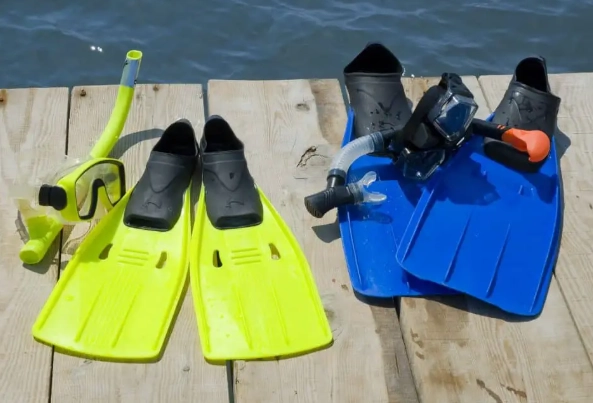
Open-heel fins with adjustable straps seem more versatile, but for travel, they introduce complexity: you need booties (more weight, more space), and the strap/buckle mechanism can be bulkier. However, they're essential if you're snorkeling from rocky shores, in cooler water, or if you have ankle/foot issues. The key is finding an open-heel model specifically designed to be compact.
My rule? For 90% of tropical beach vacations, start your search with full-foot fins.
Top Travel Fin Contenders: A Side-by-Side Look
Based on years of testing, packing, and snorkeling, here are the models that consistently deliver. This isn't about ranking one over all, but highlighting the best tools for different jobs.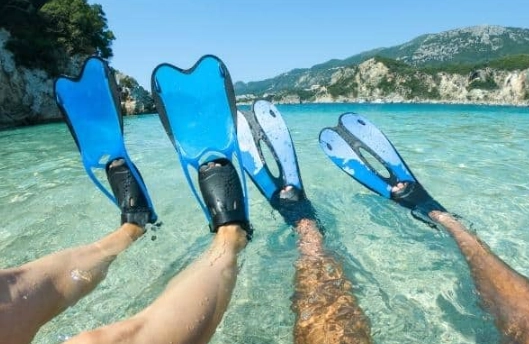
| Fin Model | Key Travel Feature | Best For | Note from Experience |
|---|---|---|---|
| Cressi Palau SAF | Ultra-light (≈2.2 lbs/pair), very short blade. | First-timers, floaters, minimalists. The easiest to pack. | Shockingly light. Power is adequate for calm conditions, but don't expect to fight a current. |
| Mares Avanti Superchannel | Excellent channel design for power in a mid-length blade. | Snorkelers who want performance without full-size bulk. | The classic "do-it-all" travel fin. Not the smallest, but the power-to-size ratio is superb. |
| Scubapro GO Travel Fin | Hinged, split-blade design. Very efficient kick. | Efficient kickers covering longer distances. | The hinge action feels weird at first but really reduces leg fatigue. Packs relatively flat. |
| TUSA Imprex Tri-Ex | Tri-material construction (stiff center, soft sides). | Those seeking a precise, powerful feel from a compact fin. | Feels more responsive than many. The quality is top-notch, reflected in the price. |
| Oceanic Accel | Open-heel design with a focus on compactness. | Travelers who need booties or an adjustable fit. | One of the few open-heels that genuinely tries to be travel-friendly. Strap system is low-profile. |
Packing Pro-Tips: Making Space for Fun
Buying the fins is half the battle. Packing them is the other. Here's my field-tested method:
Strategy 1: The Foundation Layer. Lay your suitcase flat. Place the fins blade-down along the two long outer edges, with the foot pockets facing inward toward the center. You've just created a U-shaped cavity. Pack your rolled clothes, shoes, and toiletries inside this cavity. The fins act as a protective shell.
Strategy 2: The Stuff Sack Hack. Use the foot pockets! They're perfect for stuffing with socks, underwear, or a rolled-up swimsuit. It stabilizes the fin's shape and uses every cubic inch.
What never works: Tossing them in last on top of everything. You'll close the bag, sit on it, and still fail. Pack them first, as part of your bag's structure.
Your Burning Questions, Answered
The bottom line? The best snorkel fins for travel remove friction from your adventure. They're the ones that slip into your bag without a second thought and then propel you seamlessly into another world. By prioritizing the right mix of size, weight, and smart design, you're not just packing a piece of gear—you're guaranteeing a better experience from your doorstep to the reef's edge.
Reader Comments