If you're reading this, you've probably logged enough hours in the water to know the difference between a fun splash and a serious session. You chase drop-offs, handle mild currents, and maybe even duck-dive to get a closer look. The rental gear or your first starter kit? It's starting to feel like a limitation, not a tool.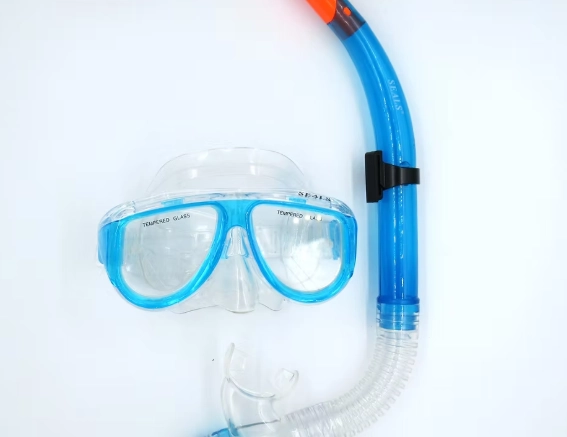
The gear for advanced users isn't just about higher price tags or flashy colors. It's engineered for specific performance criteria: minimal drag, maximum efficiency, reliability under pressure, and comfort for hours, not minutes. Let's skip the fluff and talk about what actually matters when the water gets interesting.
What You'll Find Inside
The Mask: It's All About Volume & Seal
Forget field of view for a second. The single most important spec for an advanced mask is low internal volume.
Why? Equalization. Every time you dive down, the water pressure compresses the air in your mask. To avoid a painful "mask squeeze," you need to exhale a tiny bit of air from your nose into the mask to equalize that pressure. A mask with a large air space (high volume) requires more air to equalize. A low-volume mask needs just a puff. This conserves your precious breath-hold air and makes equalization faster and easier, especially on repeated dives.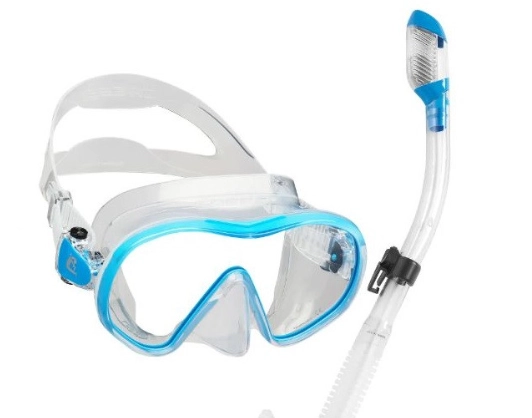
How to spot a low-volume mask: The lenses sit close to your eyes. The skirt doesn't bulge outwards. Try this: place the mask on your face without the strap, inhale gently through your nose, and let go. A good low-volume mask will stay suctioned to your face with very little effort. If it falls off, the seal or volume isn't ideal.
Skirt Material & Fit: The Comfort Killer Everyone Ignores
Here's a mistake I see constantly: people crank the mask strap way too tight because the seal leaks. The problem usually isn't the strap tension—it's the skirt.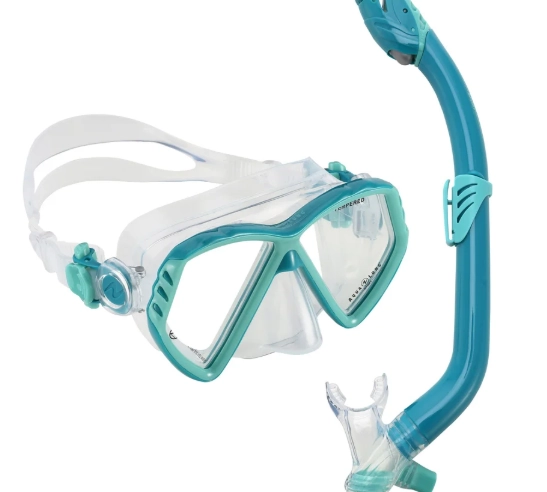
High-end masks use soft, pliable silicone (often graded by its "durometer," a measure of hardness). This silicone molds to the unique contours of your face—the bony bridge of your nose, your cheekbones—with minimal pressure. Cheap masks use stiffer PVC or hard silicone. They feel okay in the shop, but after 45 minutes in the water, the pressure points become agony, leaving deep red marks.
My personal rule? I'll pay a premium for a mask with a dual-feather-edge silicone skirt. The difference in all-day comfort is not subtle.
The Great Snorkel Debate: Dry, Semi-Dry, or Simple?
This is where "advanced" doesn't always mean "most features." Let's break down the real-world use.
| Type | Best For | Advanced User Caveat |
|---|---|---|
| Dry Snorkel (Sealing top valve) | Surface snorkeling in choppy water, places with lots of splash or small waves. Keeps water out effortlessly. | The purge valve at the bottom can be a failure point. Adds buoyancy and drag on the side of your head. Can be annoying during frequent dives as the mechanism resets. |
| Semi-Dry Snorkel (Splash guard) | A good middle ground. Reduces water intake from surface waves but has no sealing mechanism to fail. | Less drag than a dry snorkel. You still need to clear it with a sharp exhale if a wave goes over the top, but that's a fundamental skill you should have anyway. |
| Simple J-Snorkel / Flexible Snorkel | Snorkelers who dive frequently below 6-8 feet. Freedivers. Minimalists who hate extra gear. | Lightest, least drag, most reliable (nothing to break). Requires confident blast clearing. The flexible lower section is crucial for tucking it into your mask strap without it pulling. |
My take? Many advanced snorkelers I know, myself included, migrate back to a simple, flexible snorkel or a semi-dry. The dry snorkel's benefits are fantastic for beginners or pure surface touring, but its drawbacks become apparent when you're diving more than you're floating. That purge valve? Sand and grit love to jam it.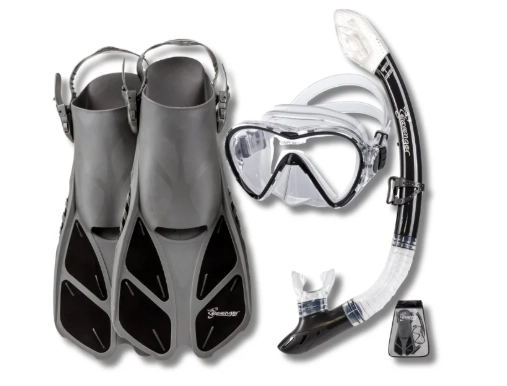
Fin Selection: Converting Leg Power into Thrust
Fins are your engine. The right pair turns moderate effort into smooth, powerful propulsion. The wrong pair leaves you tired and lagging behind the group.
For advanced use, you're choosing between full-foot pockets (like a slipper) and open-heel fins with adjustable straps (worn with booties).
Full-Foot Fins: More efficient transfer of power. Lighter, simpler, less to adjust. Best for: Warm water, from a boat or sandy beach, where you don't need to walk far. Your feet need to fit the pocket perfectly—no pinching.
Open-Heel Fins with Booties: Versatility king. The neoprene booties protect your feet from rocks, hot sand, and coral during entry/exit. The adjustable strap gives a secure fit even if your foot isn't the perfect shape. Best for: Shore entries over rocky terrain, cooler water, or if you have foot issues that need a custom fit.
Blade Stiffness and Length: The Power Curve
Softer fins are easier on the calves but flex too much, wasting energy. Very stiff fins offer massive thrust but require strong legs and can cause cramps.
For most advanced snorkelers, a medium or medium-stiff blade is the sweet spot. It loads up with energy on the up-kick and delivers a solid push on the down-kick. Longer blades (think freediving fins) provide more thrust per kick but are less maneuverable. A medium-length fin (21-24 inches) offers a great balance for most scenarios, including mild currents.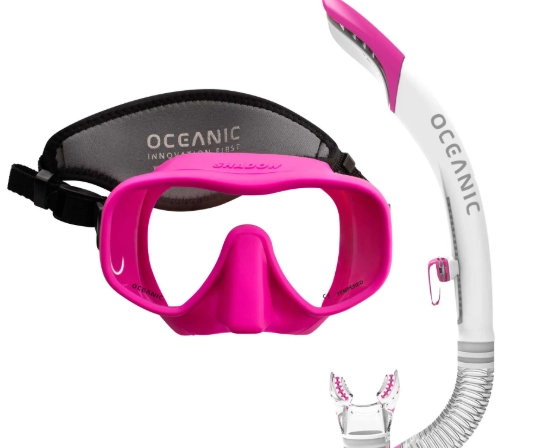
Remember, technique matters more than gear. A long, slow, fluid flutter kick from the hips will always beat a frantic, bent-knee bicycle kick, regardless of fin.
Putting It All Together: A System, Not Just Pieces
Advanced gear is about synergy. A low-volume mask pairs perfectly with a simple snorkel, reducing drag profile. Stiff fins demand good technique to unlock their potential.
Think about your most common scenario:
Scenario: The Tropical Reef Boat Trip. You're dropped off at a site with mild current. You'll be in for 60-90 minutes, doing a mix of surface observation and 10-15 foot dives to see something special.
System Choice: Low-volume mask. Simple flexible snorkel. Full-foot, medium-stiffness fins. This combo minimizes drag, maximizes diving efficiency, and is simple to manage on a crowded boat deck.
Scenario: Rocky Shoreline Exploration. You're hiking in, scrambling over volcanic rock to enter the water. The bottom is uneven, and water is slightly cooler.
System Choice: Your most comfortable mask (still low-volume if possible). Semi-dry snorkel (waves can be unpredictable near shore). Open-heel fins with 3mm booties. The booties are non-negotiable here for safety and comfort.
Invest in a mesh gear bag that drains. Rinse everything in fresh water after every use, especially after ocean swimming. Salt and sun are the fastest killers of silicone and plastics.
Advanced User FAQs (The Nitty-Gritty)
Reader Comments