Let's cut straight to it. The difference between a recreational snorkeler and a competitive one isn't just fitness or technique. It's in the gear bag. I've seen too many strong swimmers show up with bulky, colorful tourist gear and wonder why they're getting gapped by competitors who look like they're barely moving. The right snorkeling equipment for snorkeling competitions isn't about luxury; it's about physics. It's about shaving off grams of weight and millimeters of drag over hundreds of strokes. This guide is what I wish I'd known before my first race, where my foggy mask and floppy fins added minutes I couldn't afford to lose.
What's Inside This Guide
Competition vs. Recreational: It's a Different Sport
Think of it like comparing a mountain bike to a road bike. Both have two wheels, but one is built for comfort on rough trails, the other for pure speed on pavement. Recreational snorkeling gear is designed for all-day comfort, easy clearing, durability against rocks and boats, and wide field of vision for sightseeing.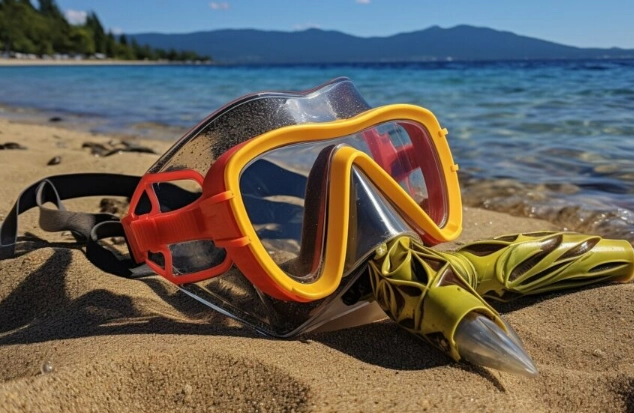
Competition gear has one job: minimize hydrodynamic drag and maximize efficiency. Every curve, every material, every strap is analyzed for its impact on water resistance. A wider mask might give a better view, but it creates more drag. A dry-top snorkel prevents water entry, but its complex valve mechanism can restrict airflow. In a race, you're not looking at fish; you're head-down, following a line or a competitor's bubbles. Your gear needs to disappear and become an extension of your body.
The Drag Tax: A poorly fitting mask strap or a snorkel with a bulky purge valve can create tiny vortices of turbulent water. Over a 400-meter surface swim, that constant "pulling" sensation isn't in your head—it's wasted energy literally dragging you back. Good competition gear aims to make your movement through the water as laminar (smooth) as possible.
The Core Gear Breakdown: Mask, Snorkel, Fins
The Mask: Your Window, Not a Windshield
Forget the panoramic view. A competition mask is low-volume. This means the space between the lens and your face is minimal. Why? Less air space means less buoyant force trying to lift the mask off your face (allowing a looser, more comfortable fit) and less volume to clear if it floods. The skirt (the silicone part) is typically black or dark to reduce internal glare and light reflection that could distract you or alert competitors to your head movements.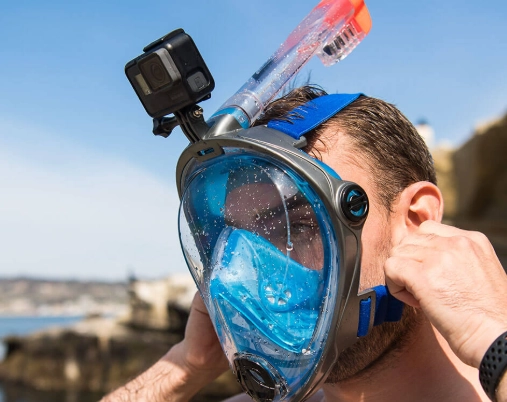
The frame is often integrated or minimal. I made the mistake of using a framed mask early on; the extra edge caught water and created a slight but noticeable hum at higher speeds. Look for models labeled "low volume" or "competition" from brands like Aqua Sphere, Barracuda, or Cressi. The fit is non-negotiable—place it on your face without the strap, inhale slightly through your nose, and it should stay suctioned on. No pinching on the bridge.
The Snorkel: The Breathing Straw
This is where purists and modernists clash. The traditional J-tube snorkel (no valves) is the lightest and has the least airflow restriction. But it requires a sharp exhale to clear. The semi-dry top (a simple splash guard) is a popular compromise. The full dry-top snorkel with a float valve that seals when submerged? Most elite competitors avoid it. The mechanism adds weight at the highest point on your head, can fail, and the valve does restrict airflow a tiny bit.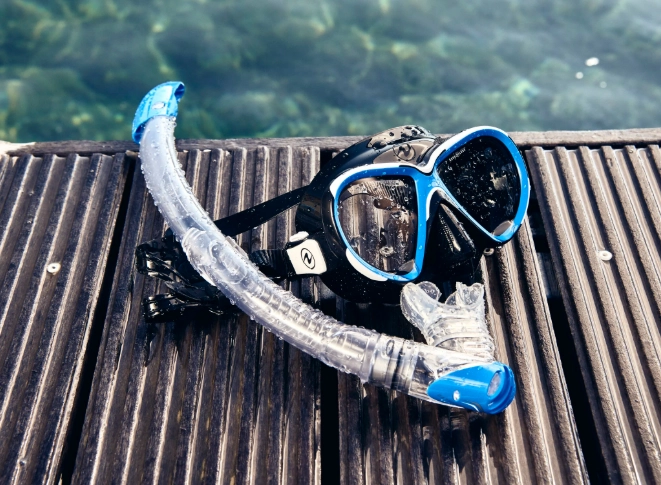
My go-to is a simple, flexible J-tube with a silicone mouthpiece that I've molded by boiling it and biting down. The barrel diameter is crucial—too wide and it's hard to clear, too narrow and you feel like you're breathing through a coffee stirrer. A diameter of around 2-2.5 cm is the sweet spot. The mouthpiece should sit comfortably without making you jaw ache after 20 minutes.
The Fins: Your Engine
This is your single biggest performance variable. Recreational fins are short, flexible, and designed for maneuverability. Competition fins are long, stiff blades designed to translate leg power into forward thrust with maximum efficiency.
| Feature | Competition Fin | Recreational Fin |
|---|---|---|
| Blade Length | Long (75cm+) | Short to Medium (40-60cm) |
| Stiffness | Stiff to Very Stiff | Soft to Medium |
| Material | Composite (fiberglass, carbon fiber), stiff polymer | Flexible rubber, silicone |
| Foot Pocket | Snug, anatomical, often full-foot | Loose, comfortable, often open-heel with strap |
| Primary Goal | Maximize thrust per kick, minimize fatigue | Comfort, ease of use, safety |
A critical tip most miss: Don't just buy the stiffest carbon fiber fin because it's expensive. If your ankle flexibility or leg strength isn't there, a fin that's too stiff will shorten your kick, cause cramps, and slow you down. Start with a stiff polymer fin, then graduate to fiberglass, then maybe carbon. Brands like Leaderfins, Molchanovs, and Cetma are staples in the competition world.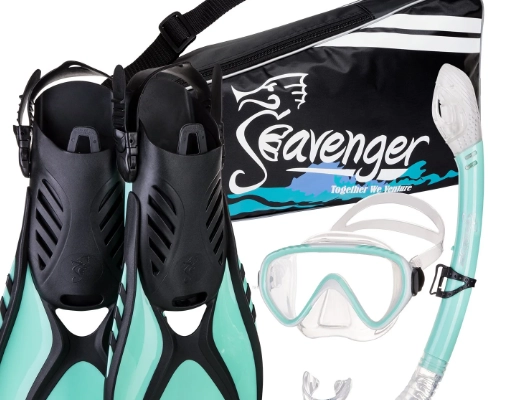
The Secondary Essentials: Suit, Cap, Goggles
You might not always need these, but when you do, they're critical.
Wetsuit/Skin: Even in warm water, a thin (0.5mm-1mm) smoothskin suit or swimskin isn't just for warmth. It provides compression (which some believe aids muscle efficiency) and, most importantly, drastically reduces skin friction drag. The difference in how you slip through the water is palpable. Ensure it's a perfect fit—any bagginess creates drag pockets.
Silicone Cap: This isn't just for long hair. It streamlines your head shape, reduces drag from hair, and provides a bit of thermal insulation. Make sure it covers your ears smoothly.
Swim Goggles (for training): You'll do most of your training in a pool. Low-profile racing goggles are key. They should fit snugly in your eye sockets without excessive pressure. Tinted for outdoor pools, clear for indoor. This is personal—try on many pairs.
Dialing It In: Setup, Fit, and Maintenance
Buying the gear is step one. Making it race-ready is step two.
Mask Prep: New masks have a silicone film on the lens from manufacturing. Scrub the inside of the lens with a soft paste of baking soda and water or use a gentle flame (lighter) passed quickly over the glass (be extremely careful) to prevent fogging. Never use toothpaste, it's abrasive.
Fin Strap/Rigging: If using open-heel fins, replace the standard rubber straps with spring straps. They last longer, don't over-stretch, and are easier to get on and off. For full-foot fins, ensure there's no space in the heel—your foot should feel securely locked in.
The Snorkel Keeper: This little piece is vital. It should hold the snorkel firmly against the mask strap, but not so tight that it kinks the snorkel barrel. Position it so the mouthpiece naturally finds your mouth when you tilt your head slightly forward.
Maintenance: Rinse everything with fresh water after every session, especially in salt or chlorinated water. Store fins flat, not on their edges. Check silicone for dryness or cracks monthly. A 10-minute maintenance routine doubles the life of your gear.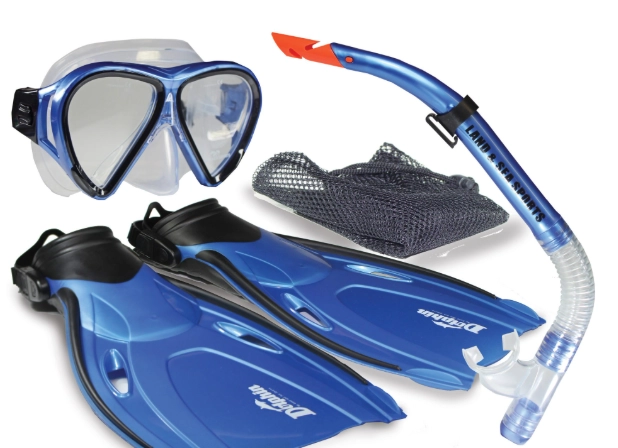
Your Top Gear Questions Answered
Can I use my regular snorkeling gear for a competition?
You can, but you'll be at a significant disadvantage. Recreational gear prioritizes comfort and durability, while competition gear is engineered for minimal drag and hydrodynamic efficiency. The differences in weight, strap design, and material flexibility directly impact your speed and energy expenditure over a race distance. Think of it like running a marathon in hiking boots versus racing flats.
How often should I replace my competition snorkel and mask?
It's less about a fixed timeline and more about performance degradation. Inspect your silicone for stiffness or micro-cracks monthly. If the seal isn't perfect or the purge valve feels sluggish, it's time. For the snorkel, submerge the barrel and check for tiny bubbles escaping from the mouthpiece joint or top valve—a sure sign of wear. Many serious competitors have a primary set and a broken-in backup set ready for race day.
What's the biggest gear-related mistake new competitors make?
Buying the stiffest, longest fins they can find, thinking more power equals more speed. This often leads to leg cramps and a slow, inefficient kick cycle. The correct fin stiffness matches your leg strength and kick technique. A fin that's too stiff will fatigue you quickly, destroying your pace in the later stages of the race. It's better to err on the side of a slightly softer, more manageable fin that you can control for the entire distance.
Is a full-foot or open-heel fin better for competitions?
This is a hot debate. Full-foot fins offer a direct connection and are often lighter, preferred for pool or calm-water races. Open-heel fins with boots provide ankle support and are mandatory if the race involves any entry/exit over rough terrain (like a beach start). The key is the fit: a full-foot fin must be snug without cramping toes, and an open-heel system must have zero heel lift inside the boot. Test both in training before deciding.
Ultimately, the best snorkeling equipment for snorkeling competitions is the gear that feels like it's not there. It's the mask that doesn't leak or fog, the snorkel that lets you forget about breathing, and the fins that feel like an extension of your legs. It takes research, investment, and a lot of testing in the water. Don't buy everything at once. Start with fins, then mask and snorkel. Dial in the fit. Your times will thank you.
I still have my first pair of cheap, blue recreational fins. I keep them as a reminder of where I started. Now, when I slip on my competition setup, the difference is night and day. It's not magic—it's just better physics. And in a race, physics wins every time.
Reader Comments