Quick Guide
- Why This Question "Can I Go Snorkeling If I Can't Swim?" Is So Common (And Critical)
- The Non-Negotiable Prerequisites: Your Safety Checklist
- The Essential Gear List: Beyond the Mask and Snorkel
- The Step-by-Step Technique: How to Snorkel Without Swimming Skills
- Top Destination Picks for Non-Swimmer Snorkeling
- Answering Your Big Questions (FAQ)
- The Ethical Side: Protecting Yourself and the Reef
- Final Reality Check & Encouragement
Let's tackle this head-on. You're scrolling through pictures of tropical fish and crystal-clear water, and the thought hits you: Can I go snorkeling if I can't swim? Maybe you've always wanted to see a coral reef up close, but the idea of being in deep water makes your heart race. Or perhaps a friend is planning a trip and you don't want to be left on the boat.
I get it. I've been there with friends and family who are terrified of water. The desire to be part of the adventure is huge, but the fear is real.
The short answer is yes, but with massive, non-negotiable caveats. Snorkeling without knowing how to swim is like hiking a steep trail without proper boots—possible in the right conditions with the right gear and guidance, but inherently riskier. This isn't about selling you a dream; it's about giving you the honest, practical roadmap to do it as safely as possible.
This guide won't just say "yes you can" and leave you hanging. We're going to dig into the how, the where, the what-if scenarios, and the gear that makes the difference between a magical experience and a panic attack. We'll cover everything from the psychology of being in water to the specific flotation devices that actually work.
Why This Question "Can I Go Snorkeling If I Can't Swim?" Is So Common (And Critical)
First off, it's a brilliant question to ask. It shows you're thinking about safety, which is the absolute most important part of the equation. Snorkeling is often marketed as this easy, accessible activity—just strap on a mask and float! But that marketing glosses over a fundamental skill: basic water comfort.
The core activity of snorkeling involves floating face-down, breathing through a tube, and propelling yourself. If you can't swim, you lack the foundational skills for self-propulsion and, more importantly, the instinctual confidence and ability to right yourself if you get into an awkward position.
The biggest danger for a non-swimmer isn't drowning from going under—it's panic. A leaky mask, a mouthful of seawater, or just the sudden realization you're over deep water can trigger a fight-or-flight response. A swimmer can tread water, float on their back, and calm down. A non-swimmer might flail, inhale water, and quickly exhaust themselves. This is the scenario we must plan to avoid entirely.
So, can you go snorkeling if you can't swim? You can, but you are choosing a managed, controlled version of the experience. Your goal isn't to become a free-diver; it's to have a safe, enjoyable glimpse into the underwater world.
The Non-Negotiable Prerequisites: Your Safety Checklist
Before you even look at booking a trip, you need to check these boxes. Missing any one of them is a deal-breaker.
1. You Must Be Comfortable in Water Up to Your Chest
This is the bare minimum. If you panic in a swimming pool where you can stand, the open ocean is not for you. You need to be okay with water on your face, in your ears, and the sensation of buoyancy. I'd strongly recommend spending time in a pool first. Just get used to putting your face in, blowing bubbles, and floating with assistance. This builds crucial familiarity.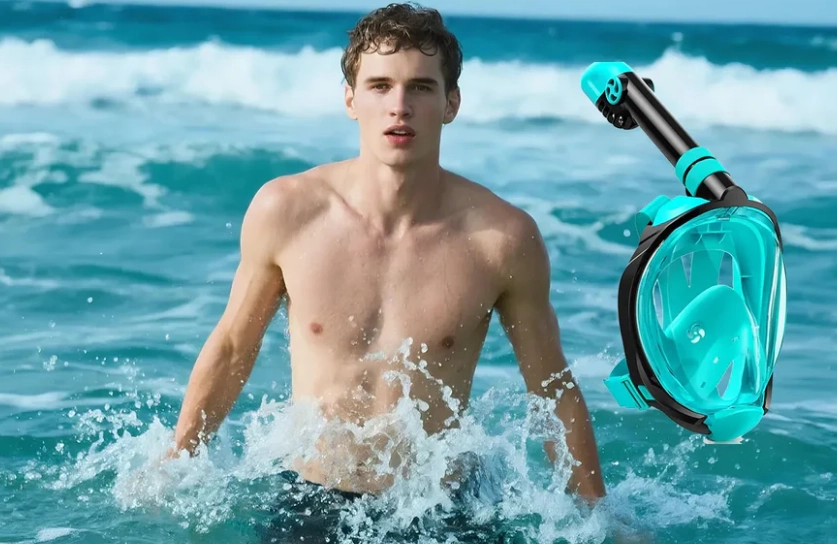
2. You Must Use a High-Quality Flotation Device (Not Just Any Life Jacket)
Forget the bulky, orange Type II life jackets you see on ferries. For snorkeling, you need something designed for the activity.
- Full-Face Snorkel Mask with Integrated Vest: Some modern full-face masks come with a built-in inflatable vest. A quick puff into a valve inflates it, lifting your head clear of the water. This is a great option as it's always attached. However, do your research—some full-face masks have had safety concerns regarding CO2 buildup. Look for reputable brands with separate inhalation/exhalation chambers.
- Snorkel Vest (Snorkeling Sausage): This is an inflatable belt or collar worn around the waist or neck. You orally inflate it for buoyancy. It's less restrictive than a jacket and allows for a more natural snorkeling position. This is my top recommendation for beginners.
- Professional-Grade Flotation Belt: Used by many tour operators, these are wide, foam-filled belts that keep you very high in the water. They are incredibly buoyant and stable.
I took a friend who couldn't swim snorkeling in Hawaii. We rented a professional flotation belt from a reputable shop. The difference was night and day. With a cheap pool noodle, she was anxious and unstable. With that proper belt, she was horizontal, relaxed, and could focus on the fish, not on staying afloat. It was worth every extra penny.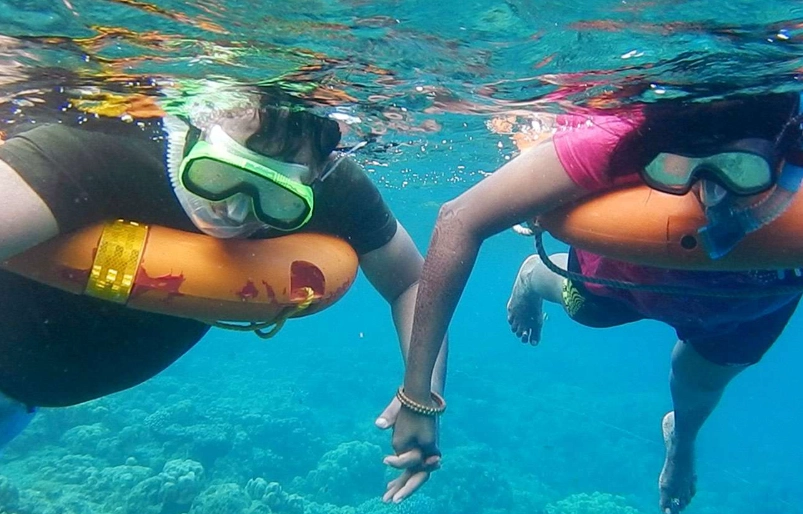
3. You Must Have a Dedicated, Capable Buddy (Who IS a Strong Swimmer)
This is not a "maybe" rule. It is the rule. Your buddy's sole job is to watch you. They should be within an arm's reach at all times, especially in the beginning. They are your anchor, your guide, and your emergency plan. Never go alone. Never go with another non-swimmer. This buddy system is emphasized by safety organizations like the Professional Association of Diving Instructors (PADI) for all water activities.
4. You Must Choose the Absolute Right Location
This is where most dreams go wrong. You cannot go snorkeling if you can't swim just anywhere. The ideal spot has:
- Very Calm, Protected Water: Think bays, lagoons, or areas shielded by reefs. No waves, no current. Glassy conditions are the goal.
- Sandy, Gentle Entry: You need to be able to walk in from a beach, not jump off a boat or clamber over sharp rocks.
- Shallow Depth: The holy grail is waist-to-chest-deep water (for you) that extends far out, over interesting coral or sand. You want to be able to stand up at any moment if you feel the need.
- No Boat Traffic: Obvious, but crucial.
The Essential Gear List: Beyond the Mask and Snorkel
Getting the gear right is 80% of the battle for a non-swimmer. Here’s what you need, ranked by importance.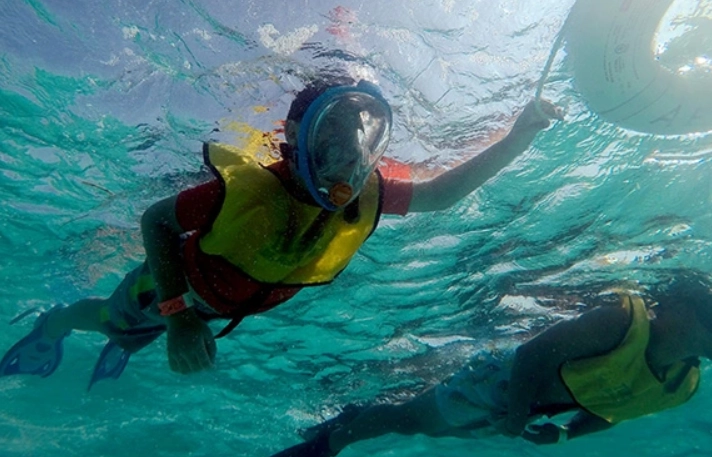
| Gear Item | Why It's Critical for Non-Swimmers | Pro Tips & What to Avoid |
|---|---|---|
| Primary Flotation Device (Snorkel Vest/Belt) | Your main safety net. Provides constant, reliable buoyancy so you don't have to think about floating. | Avoid cheap, thin vests. Look for robust, orally-inflatable ones with an over-pressure valve. Test inflation/deflation on land. |
| Mask & Snorkel | A leaky mask causes panic. A poor snorkel lets in water. | Fit is everything. Press mask to face without strap; inhale slightly; it should stick. Choose a snorkel with a splash guard and purge valve. Consider a dry-top snorkel. |
| Rash Guard or Wetsuit Top | Protects from sunburn (sunscreen harms coral) and provides a tiny bit of extra buoyancy and warmth. | Long-sleeve is best. Even a thin 0.5mm neoprene top adds confidence and prevents jellyfish stings. |
| Fins | They are your propulsion. Without swimming skills, fins give you the power to move efficiently with minimal effort. | Full-foot fins (like boots) are easier for beginners. Practice the flutter kick on the surface before putting your face in. |
| Water Shoes | For walking in and out over rocks or coral without cutting your feet. | Essential for rocky entries. Don't rely on fins for walking. |
Gear Practice Session: Once you have your gear, find a calm, shallow pool or beach. Practice everything: putting on the flotation device, inflating it, deflating it. Put on the mask and snorkel and just breathe while standing in chest-deep water. Get used to the sound of your breath. This rehearsal is priceless for reducing day-of anxiety.
The Step-by-Step Technique: How to Snorkel Without Swimming Skills
Okay, you have the gear, the buddy, and the perfect spot. Here's exactly how to do it.
- Gear Up on Dry Land. Put everything on—flotation device inflated, mask defogged (use baby shampoo or proper defogger), snorkel attached, fins in hand.
- Walk In Backwards with Fins. Holding your buddy's shoulder for stability, walk backwards into the water until it's about waist-deep. Put your fins on in the water.
- The Initial Float. Hold your buddy's hand or a stationary float. Lean forward into a horizontal position. Let the flotation device do its work. Just breathe through the snorkel. Look down. Get comfortable floating.
- Master the Kick. With straight legs and relaxed ankles, practice a slow, gentle flutter kick. Your power comes from the hips, not the knees. The goal is minimal, efficient movement.
- Stay Horizontal and Breathe Slowly. Keep your body straight like a plank. Look down at the bottom. Breathe deeply and slowly in through your mouth, out through your mouth. The loud Darth Vader sound is normal! Slow breathing prevents hyperventilation.
- Communicate Constantly. Have hand signals with your buddy: Thumbs up = I'm okay. Thumbs down = I want to go back/stand up. Hand on head = Problem. Look at each other frequently.
- Stay in Ultra-Shallow Water. Do not be tempted to follow fish into deeper areas. The magic is often in the shallow reefs anyway. The ability to simply stand up is your psychological safety lever.
The moment you realize you're floating effortlessly, looking at a school of neon fish, and you haven't thought about "not swimming" for five minutes—that's the win. That's the whole point.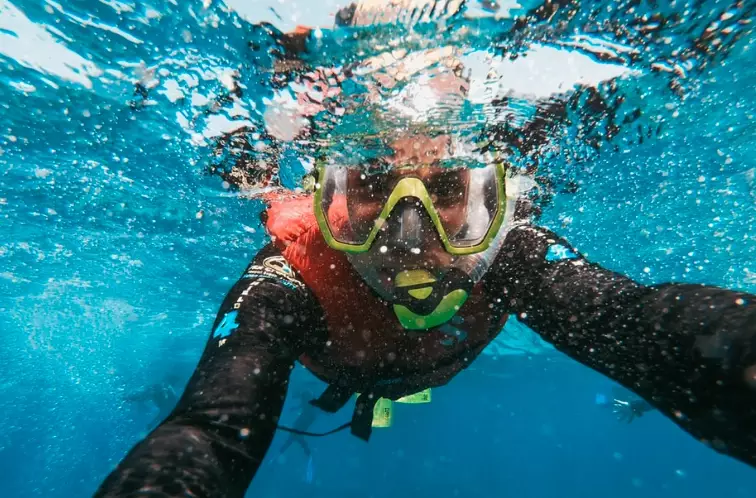
Top Destination Picks for Non-Swimmer Snorkeling
Not all tropical beaches are created equal. Here are some famous spots known for their calm, shallow, accessible snorkeling—perfect for answering "can I go snorkeling if I can't swim?" with a confident yes.
| Destination | Specific Spot | Why It Works for Non-Swimmers |
|---|---|---|
| Maui, Hawaii | Kapalua Bay, Napili Bay | Protected coves with sandy entries. Water is often calm as glass. Fish come right into waist-deep water. You can literally sit on the sandy bottom and watch them. |
| Riviera Maya, Mexico | Akumal Bay | Famous for sea turtles. The bay is wide, shallow, and protected by an offshore reef, minimizing waves. You can wade out a long way. |
| Bonaire | Any of the "beach" dive sites (e.g., Pink Beach) | The entire leeward coast is a protected marine park with a fringing reef. You walk in from a shore that slopes gently. Incredibly calm conditions year-round. It's a snorkeler's paradise by design. |
| Florida Keys, USA | John Pennekamp Coral Reef State Park (from a guided tour boat to a shallow site) | While boat-based, many operators go to specific "beginner" mooring balls in 4-6 feet of water over coral patches. You descend a ladder into water you can stand in. The guided structure adds safety. |
| Great Barrier Reef, Australia | Platform-based tours from Cairns (e.g., Reef Magic, Sunlover) | These are massive, stable platforms anchored on shallow reef. You step off a platform into roped-off, lifeguard-patrolled areas that are often only chest-deep. It's the most controlled reef experience possible. |
A quick note on tours: When booking, call them directly. Don't just book online. Explain clearly: "I cannot swim. Do you have flotation belts? Do you go to sites shallow enough to stand? Do you have dedicated guides for beginners?" A good operator will be honest and accommodating. A bad one will say "sure, no problem" to get your booking. Be wary of the latter.
Answering Your Big Questions (FAQ)
What if water gets in my snorkel?
This will happen. It's normal. With a standard J-snorkel, you give a short, sharp exhale (a blast) to clear the water out the top. With a dry-top snorkel, a float valve should seal it before much water enters. Practice this in a pool first. The key is not to jerk your head up in panic, which can make you swallow water. Just stay calm, blow, and resume breathing.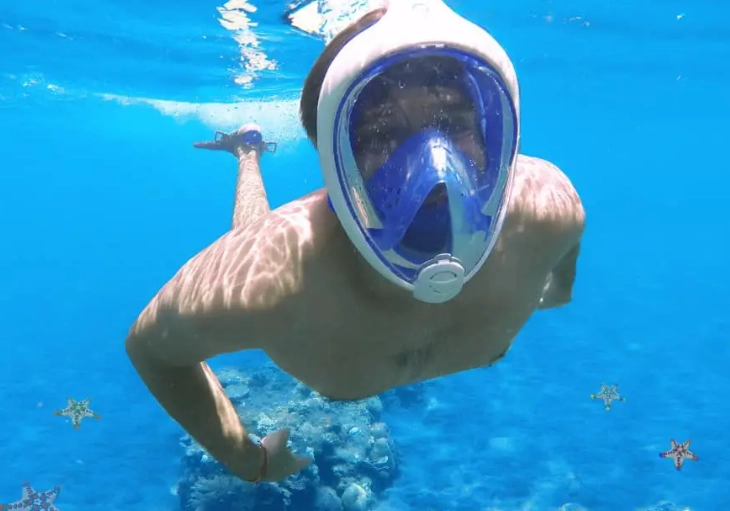
What if my mask fogs up or leaks?
Fogging is solved by good defogger and not rubbing the inside of the lens. A small leak is annoying but manageable—just let the water in, tilt your head back, lift the bottom of the mask seal, and exhale through your nose to clear it. A major leak means the fit is wrong. Adjust the strap or consider a different mask. This is why trying gear in a shop is vital.
Panic is your real enemy, not the water. Every piece of gear and every step in this guide is designed to prevent panic from ever starting.
How do I handle waves or a current?
You shouldn't be in them. Full stop. This is why location selection is your first and most important safety skill. Check weather and sea conditions religiously before you go. If there's any chop or current forecast, postpone. The National Oceanic and Atmospheric Administration (NOAA) or local coast guard websites provide reliable marine forecasts.
Can I use a life jacket instead of a snorkel vest?
You can, but it's not ideal. Standard life jackets are designed to roll you onto your back, which is the opposite of the face-down snorkeling position. They are bulky and can chafe. A proper snorkel vest or belt is designed for the activity—it keeps you horizontal and comfortable. If a life jacket is all you have, use it, but upgrade to proper gear as soon as you can.
Should I take a swimming lesson first?
Yes. A thousand times, yes. Even a few lessons focused purely on water comfort, floating, and basic treading water will transform your experience. It's the single best investment you can make. It's not about learning the crawl; it's about learning not to fear the water. This builds the confidence that gear can't provide.
The Ethical Side: Protecting Yourself and the Reef
As a visitor to the underwater world, you have a responsibility.
Never stand on or touch coral. It's a living animal, and your touch can kill it. Your flotation device should keep you buoyant enough that this isn't a temptation. If you must stand, find a bare patch of sand.
Use reef-safe sunscreen (mineral-based, without oxybenzone or octinoxate) or, better yet, cover up with a rash guard. The chemicals in regular sunscreen are devastating to coral reefs, as detailed by organizations like the Reef Environmental Education Foundation (REEF). Don't chase or touch marine life. Be a quiet observer.
Final Reality Check & Encouragement
Look, snorkeling as a non-swimmer is a managed activity. It requires more planning, more research, and more reliance on gear and others than it does for a swimmer. It has limits. You won't be free to explore deep reefs or follow a turtle into the blue. And that's perfectly okay.
The goal is access and enjoyment, not mastery. The view from the "shallow end" of a coral reef is often just as stunning, if not more vibrant, than the deep end.
So, can you go snorkeling if you can't swim? You can. If you respect the water, invest in the right gear, choose your location with obsessive care, and never go without a trusted buddy, you can absolutely have a safe and unforgettable experience. It answers the question not with a simple yes, but with a detailed plan for a "yes, if."
Start in a pool. Get comfortable. Rent good gear. Pick a calm, shallow bay. Go with someone you trust. Breathe slowly. Look down. And be amazed.
That's the real answer.
Reader Comments