In This Guide
- Why a "Professional" Underwater Camera? It's More Than Just a Label
- The Heart of the System: Camera Body & Housing
- The Unsung Hero: The Underwater Housing
- Top Professional Underwater Camera Systems in 2024
- Lighting Up the Depths: Strobes & Video Lights
- Lenses & Ports: Seeing Clearly Underwater
- Putting It All Together: Making Your Choice
Let's be honest, the moment you see those stunning underwater photos—vibrant coral reefs, a curious sea turtle staring right at you, the eerie beauty of a shipwreck—you start wondering. How do they get those shots? The phone in a plastic bag? A GoPro? Sure, they can work for a quick snorkel video. But if you're serious about underwater photography, if you want images that make people gasp, you quickly realize you need something more. You need a proper professional underwater camera.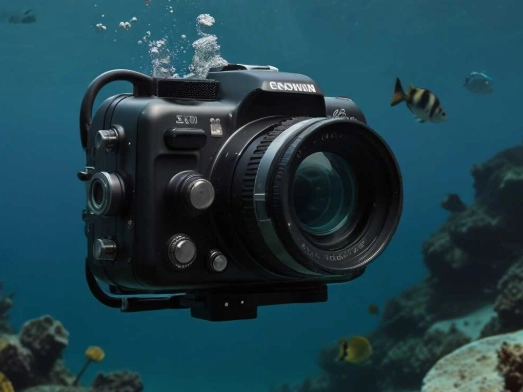
I remember my first dive with a cheap point-and-shoot in a flimsy housing. The photos were blue, blurry, and utterly disappointing. It felt like trying to paint a masterpiece with a broom. That frustration is what pushes most enthusiasts towards professional gear. But stepping into the world of professional underwater cameras can feel overwhelming. Housing? Strobes? Ports? Megapixels? It's a whole new language.
This guide is here to cut through the noise. We're not just listing specs. We're talking about what it actually feels like to use this gear, what really matters sixty feet down, and how to spend your money wisely. Whether you're a diver wanting to document your adventures, a budding underwater photographer, or a pro looking to upgrade, let's break it down together.
Why a "Professional" Underwater Camera? It's More Than Just a Label
You might ask, isn't any camera in a housing a professional underwater camera? Not really. The term "professional" here isn't just marketing fluff. It refers to a system built for the specific, punishing demands of the underwater environment and the creative needs of serious photography.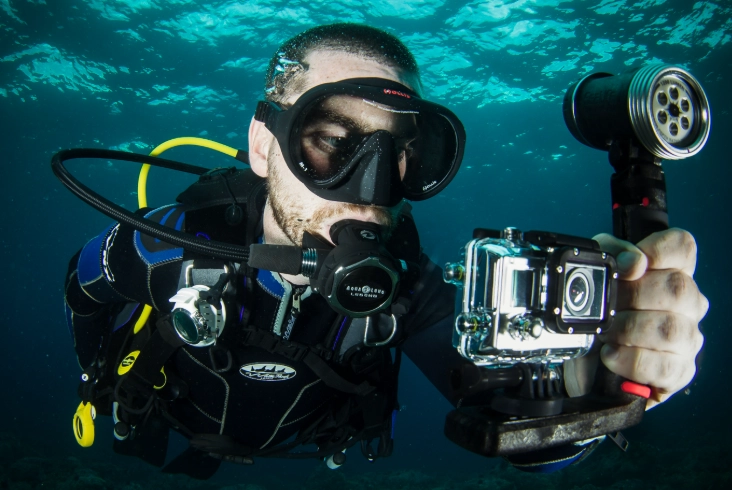
Think of it this way: A regular camera takes pictures. A professional underwater camera is a tool for solving problems—problems like crushing pressure, terrible light, fast-moving subjects, and the constant need for manual control when automation fails (which it often does underwater).
The core difference lies in the system's capability and robustness. A true professional setup gives you three things your surface kit doesn't: superior image quality in challenging light, complete creative control in an unpredictable environment, and the rugged reliability that keeps your multi-thousand-dollar investment safe. It's about getting the shot when conditions are tough, not just when they're perfect.
And let's talk about color. Water acts like a filter, sucking out reds and oranges within the first few meters. Consumer cameras often produce sad, monochromatic blue images. A professional system, paired with strobes or video lights, brings the world back to life. That's the magic you're paying for.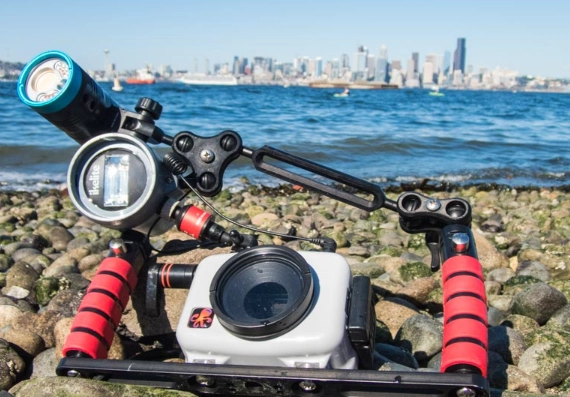
The Heart of the System: Camera Body & Housing
This is where the journey starts. Your choice of camera body dictates everything else—the housing, the ports, the cost. The market has largely shifted from traditional DSLRs to mirrorless cameras, and for good reason.
Mirrorless vs. DSLR: The Underwater Shift
For years, DSLRs like the Canon 5D series or Nikon D850 were the underwater workhorses. They're still fantastic cameras. But underwater, mirrorless cameras (like Sony Alpha series, Canon R5, Nikon Z series) offer some killer advantages.
First, size. Mirrorless bodies are generally smaller and lighter. This translates to smaller, lighter, and often more affordable housings. Packing for a dive trip becomes easier. Second, and this is a big one, the electronic viewfinder (EVF). When you're looking through the viewfinder of a DSLR in a housing, you're looking through an optical tunnel. With a mirrorless, the EVF shows you exactly what the sensor sees. You see your exposure, white balance, and histogram in real-time before you take the shot. It's a game-changer for nailing exposure underwater, where your eyes can deceive you.
I made the switch from a DSLR to a mirrorless system a few years back. The first time I saw my live histogram while framing a shy frogfish, I knew there was no going back. It removed so much guesswork. The smaller housing was just a welcome bonus on crowded dive boats.
That said, DSLRs aren't obsolete. Their optical viewfinders use zero battery, and some photographers still prefer their "feel." Battery life on DSLRs also tends to be longer. But for most people entering the market now, a mirrorless platform is the smarter, more future-proof starting point for a professional underwater camera rig.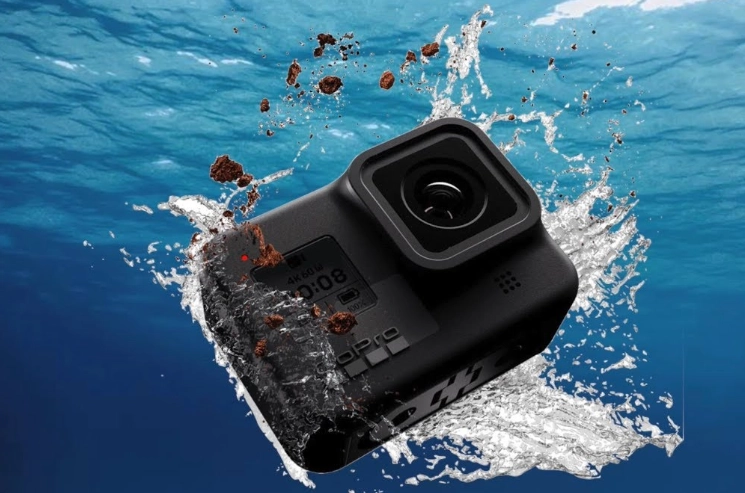
Key Camera Features That Matter Underwater
Megapixels are the most advertised spec, but they're not the most important for underwater work. Unless you're planning to print billboards, 20-30MP is more than enough. Here's what you should prioritize instead:
- Sensor Size: Full-frame sensors (like in a Sony A7IV or Canon R5) excel in low-light conditions—think deep dives, wrecks, or night dives. They give you that beautiful shallow depth of field. APS-C sensors (like in a Sony A6700 or Fujifilm X-T5) are lighter, cheaper, and the smaller sensor actually gives you more "reach" for small macro subjects. Micro Four Thirds (like Olympus/OM System OM-1) are incredibly popular underwater because the entire system—body, housing, ports, domes—is smaller and more portable, yet still delivers pro-quality results.
- Autofocus Performance: You need fast, sticky, reliable autofocus. Fish don't pose. Look for cameras with advanced subject tracking (eye-detection for marine life is becoming a real thing) and good low-light AF. Sony and Canon are currently leading this race.
- Dynamic Range: This is the camera's ability to capture detail in both shadows and highlights. Water creates high-contrast scenes (bright sunbeams, dark shadows). High dynamic range lets you recover details in post-processing.
- Video Capability: Even if you're a stills shooter, consider video. 4K is standard, but look for high frame rates (120fps for slow-mo) and good codecs. Underwater videography is exploding in popularity.
- Button Layout & Customization: You'll be operating the camera through the housing's controls. A camera with lots of customizable buttons and dials is a huge plus. You can set one button for white balance, another for focus mode, etc.
The Unsung Hero: The Underwater Housing
This is the most critical piece of your professional underwater camera system. It's also the most intimidating purchase. A housing is a precision-engineered pressure vessel. A failure here means a flooded camera. Don't cut corners.
Let's be blunt: A cheap, poorly-made housing is a ticking time bomb. It's not worth the risk to your camera or your peace of mind. Stick with reputable brands that have a long history and proven track record in underwater photography.
Top housing manufacturers include Nauticam, Ikelite, Sea&Sea, and Aquatica. Nauticam is often considered the premium choice, known for superb ergonomics, excellent optical glass ports, and extensive accessory support. Ikelite offers fantastic value and durability, often using clear polycarbonate so you can see your camera inside. It's a great choice for those on a budget who don't want to compromise on safety.
When choosing a housing, consider:
- Compatibility: It must be specifically designed for your exact camera model. A housing for a Sony A7IV will not fit an A7RV, even though they look similar.
- Control Access: Can you easily access all essential functions—shutter, aperture, ISO, playback, video record, focus controls? Test the ergonomics if possible.
- Port System: The housing brand's port system determines what lenses you can use. A versatile system (like Nauticam's) allows you to use a wide range of lenses with different port extensions and domes.
- Future-Proofing: Does the brand make accessories like vacuum check systems (to detect leaks), viewfinder magnifiers, or handles? You'll likely want to add these later.
My first housing was an Ikelite. It felt bulky, but it was tough as nails and never gave me a single scare. When I upgraded to a more complex camera, I moved to a Nauticam for its finer controls. Both were the right choice at the time.
Top Professional Underwater Camera Systems in 2024
It's impossible to name one "best" system. The best professional underwater camera is the one that fits your budget, your shooting style, and your back (carrying all this gear is no joke). Here's a breakdown of some of the most respected and common setups you'll see on dive boats.
| System Type | Example Camera Body | Typical Housing | Best For | Approx. Starting Cost (Body+Housing) |
|---|---|---|---|---|
| Full-Frame Mirrorless | Sony A7IV, Canon R5, Nikon Z8 | Nauticam, Aquatica | Wide-angle seascapes, low-light/wreck photography, maximum image quality. | $5,500 - $9,000+ |
| APS-C Mirrorless | Sony A6700, Fujifilm X-T5 | Nauticam, Ikelite, Sea&Sea | Great all-rounders, excellent for macro due to crop factor, more affordable than full-frame. | $3,500 - $6,000 |
| Micro Four Thirds | OM System OM-1 Mark II, Panasonic GH6 | Nauticam, Olympus PT-058 (for OM-1) | Macro & super macro, travel photographers, excellent image stabilization for video. | $3,000 - $5,000 |
| Advanced Compact | Sony RX100 VII, Canon G7 X III | Fantasea, Nauticam (for RX100) | Travelers who want pro-like results in a small package, excellent video. | $1,200 - $2,500 |
See that cost column? That's before lenses, ports, or lights. It's a serious investment. The Micro Four Thirds system, championed by OM System, deserves special mention. It's arguably the most popular dedicated underwater photography format. The 2x crop factor turns a 60mm lens into a 120mm macro beast, perfect for tiny critters. Their in-body image stabilization is legendary, helping get sharp shots in surge. And the whole kit packs down smaller than any full-frame equivalent. For dedicated macro shooters, it's hard to beat.
Personal Take: I shoot with a Sony full-frame system now, but I sometimes miss the sheer portability of my old Micro Four Thirds kit. On a liveaboard trip with limited luggage space, that smaller bag was a blessing. The image quality difference is noticeable on my computer screen, but for sharing online or making standard prints, the MFT shots were fantastic.
Lighting Up the Depths: Strobes & Video Lights
This is where your photos go from okay to outstanding. Natural light alone is rarely enough. Strobes (for stills) and video lights (for video/ hybrid) restore color and add dimension. They're not optional for professional work.
You'll typically want two strobes for balanced, shadow-free lighting. Key brands are Ikelite, Backscatter (their MF series is excellent), Inon, and Sea&Sea. Look for features like fast recycling times, adjustable power over a wide range, and reliable TTL (Through-The-Lens) metering if you want automation.
But here's a secret many beginners miss: learning to use strobes in manual mode is one of the best skills you can develop. It gives you consistent, repeatable results. TTL can be fooled by bright sand or a dark wreck background.
For video, constant LED lights are essential. Look for high CRI (Color Rendering Index, above 90) for accurate colors and high output (measured in lumens). Lights like the Backscatter MW4300 or Kraken Sports Hydra series are popular choices. Video lighting is a whole other art form, involving diffusion and careful positioning to avoid backscatter (the ugly snowstorm effect from particles in the water).
Lenses & Ports: Seeing Clearly Underwater
Your lens choice defines your underwater photography style. You generally need two lenses: one for wide-angle and one for macro. A mid-range zoom can be a versatile compromise.
- Wide-Angle (e.g., 16-35mm full-frame equivalent): For big animals (sharks, mantas), reefs, shipwrecks, and divers. You need a large dome port in front of these lenses to correct for the magnifying effect of water and maintain a wide field of view.
- Macro (e.g., 60mm or 90-105mm full-frame equivalent): For tiny critters—nudibranchs, shrimp, frogfish. These use flat ports. The longer the lens, the more "working distance" you have, meaning you don't have to get quite as close to skittish subjects.
The port is the glass or acrylic window on the front of your housing. It must be matched to your lens to ensure optical clarity and proper focus. This is where your housing manufacturer's port chart is your bible. Getting the wrong port can mean your lens won't focus or will have horrible vignetting.
Putting It All Together: Making Your Choice
So, how do you decide on your first (or next) professional underwater camera system? Don't start by picking a camera. Start by asking yourself questions:
- What's my budget (realistically)? Remember to budget for the complete system: Body, Housing, Port(s), Strobes/Lights, Arms, Tray, Handle, Batteries, Chargers, Memory Cards, Carry Case. It adds up fast.
- What do I love to shoot? If you get excited about tiny critters, prioritize a macro-friendly system (Micro Four Thirds or APS-C with a good macro lens). If you dream of wide ocean scenes, lean towards full-frame with wide-angle lenses.
- How will I travel with it? If you fly frequently to dive destinations, size and weight become major factors.
- Do I prefer photos, video, or both? Some cameras are stronger in one area than the other.
My final piece of advice? If possible, try before you buy. Rent a system for a dive trip. Attend a dive show where manufacturers have demo pools. Handling the gear is worth a thousand online reviews. The feel of the controls, the balance in your hands—these things matter.
Choosing a professional underwater camera is a commitment. It's complex, expensive, and requires constant learning. But when you're hovering over a reef, perfectly buoyant, your housing controls feeling like an extension of your hands, and you press the shutter to capture a moment of underwater magic that you can share with the world... there's absolutely nothing like it. It transforms how you see the ocean. It's not just about the photos you take; it's about the experience of seeing more deeply.
Start where you can. Learn relentlessly. And most importantly, get in the water. That's where the real magic happens, with or without the perfect gear.
Reader Comments