Let's be honest. Shopping for your first snorkel set is confusing. You see endless options online, all promising to be the "best." Dry top, purge valve, tempered glass, silicone skirt... it's a jargon soup. After guiding hundreds of first-timers into the water, I can tell you the best snorkel set for a beginner isn't about the most features or the highest price. It's about three things: comfort, safety, and simplicity. A set that fits well, keeps water out reliably, and lets you focus on the fish, not your gear. If I had to point a complete newbie to one solid starting point, I'd recommend looking at a full-face mask with an integrated dry snorkel system – but only if it has separate air channels for breathing and exhaling to prevent CO2 buildup. More on that critical detail later.
What's in this guide?
Why a Snorkel Set Makes Sense for Beginners
You could rent gear, sure. But here's the thing most rental shops won't tell you: a poorly fitting mask is the number one reason people hate snorkeling. It fogs, it leaks, you're constantly clearing it. You spend your vacation fiddling with a leaky piece of plastic instead of watching turtles. Owning your own set solves this. You learn one mask's fit. You get comfortable with one snorkel's feel. The muscle memory builds confidence.
A good beginner set is also designed for forgiveness. Features like a dry-top snorkel (which blocks water when you dive under) and a purge valve (to easily clear any water that gets in) are training wheels. They let you make mistakes without choking. That peace of mind is priceless when you're trying to breathe calmly while floating over a coral reef.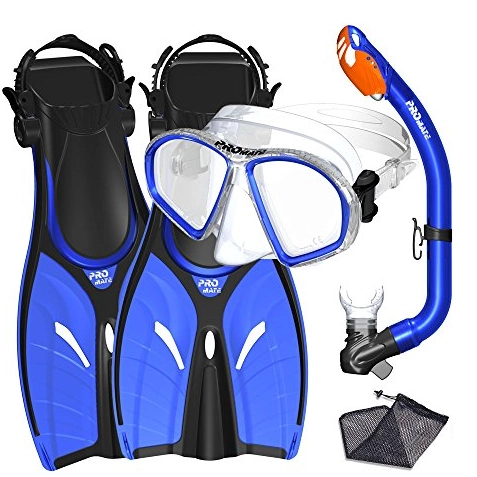
Anatomy of a Beginner Snorkel Set: What Actually Matters
Forget the marketing fluff. Let's break down the three pieces and the specs you should care about.
The Mask: Your Window to the Underwater World
The mask is the most personal piece. A leak here ruins everything. The "skirt"—the soft part that seals against your face—must be 100% silicone. Avoid PVC or rubber; they degrade, get stiff, and cause leaks. Tempered glass lenses are mandatory for safety (they shatter into dull pieces, not sharp shards).
Here's a subtle mistake almost every beginner makes: they strap the mask on too tight. A mask seals by suction, not by pressure. If you need to crank the strap to stop leaks, the fit is wrong. To test fit, place the mask on your face without the strap, inhale gently through your nose, and let go. It should stay suctioned to your face for a few seconds. If it falls, it's not sealing properly around your nose or cheeks.
Also, check the field of view. A low-volume mask (one that sits closer to your face) is easier to clear of water and offers less drag.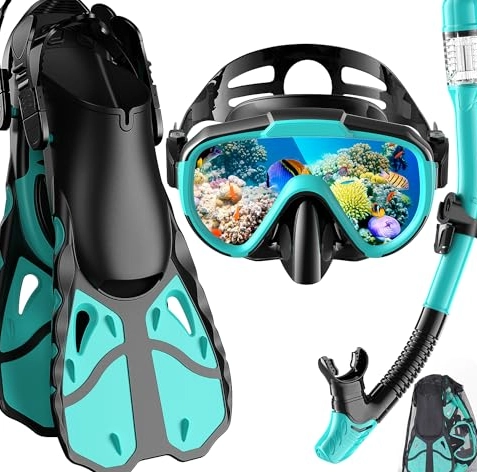
The Snorkel: Your Breathing Tube
For beginners, a dry snorkel is the only way to go. It has a mechanism at the top that seals shut when submerged, preventing water from flooding the tube. A splash guard underneath helps deflect small waves. The bottom should have a flexible silicone section (the "gooseneck") that connects comfortably to your mask strap.
The purge valve is your best friend. It's a one-way valve at the bottom of the snorkel. When you surface and exhale forcefully, any water in the tube is ejected out through this valve, making clearing effortless. Look for a large, easy-to-clean purge valve.
A common misconception? That a longer snorkel is better. Actually, a shorter, wider-bore snorkel reduces "dead air space" and makes breathing easier with less effort.
The Fins: Your Underwater Power
For your first set, get full-foot fins (like big slippers). They're for warm water snorkeling where you won't need booties. They're simpler and more comfortable for beginners. The key is flexibility. Stiff fins marketed for power are exhausting for new snorkelers. You want a fin that has a soft, flexible blade that bends easily with a gentle flutter kick.
Fit is crucial. They should feel snug but not cramp your toes. You should be able to wiggle your toes slightly. Too loose, and you'll get blisters; too tight, and your feet will cramp up.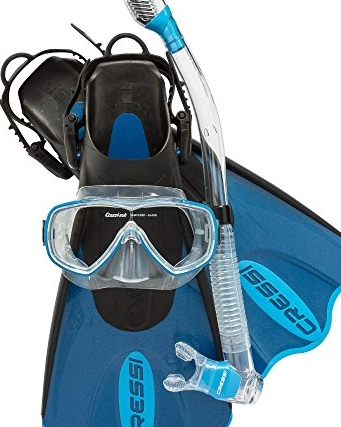
Top 3 Snorkel Sets for Beginners (2024 Breakdown)
Based on hands-on testing, user feedback, and focusing on that beginner trifecta of comfort, safety, and simplicity, here are my top recommendations. I'm excluding full-face masks from this primary list due to ongoing debates about safety and CO2 retention, though I'll address them in the FAQ.
| Set Name & Key Tech | Best For | Why It's Great for Beginners | Considerations |
|---|---|---|---|
| Cressi Palau Short Snorkel Set Dry Top Snorkel, Purge Valve, Frameless Mask |
The traveler who values compact, lightweight gear. | The mask is famously comfortable with a super-soft skirt. The snorkel is short and wide for easy breathing. The entire set packs down small. It's a no-fuss, reliable system from a trusted brand like Cressi. | The fins are basic. Perfectly fine for calm waters and beginners, but not for strong currents. The mask's frameless design can be tricky for some to fit perfectly. |
| US Divers Adult Profile Snorkel Set Dry Snorkel, Panoramic View Mask, Adjustable Fins |
The value-seeker who wants a complete, feature-rich package. | Excellent all-rounder. The panoramic mask offers a wide, confidence-boosting view. The snorkel has a reliable dry-top system. The fins have adjustable, open-heel straps and vents to make kicking easier—a feature usually found on more advanced gear. | The set is a bit bulkier to pack. Some find the purge valve on the snorkel a tad stiff initially. |
| Oceanic Shadow Snorkel Set Ultra-Dry Snorkel, Low-Volume Mask, Channel Fins |
The quick learner who might progress to freediving. | This set uses higher-end materials. The mask is a genuine low-volume design, easier to clear and equalize. The snorkel's dry-top mechanism is very effective. The fins have channels to direct water efficiently. It feels like a step up in quality. | Higher price point. The low-volume mask requires a very precise fit—try before you buy if possible. |
Notice I didn't just list features. I told you who each set is for. The Cressi Palau is my top pick for most first-timers because it removes complexity. You get a comfortable mask and a simple, effective dry snorkel. It just works.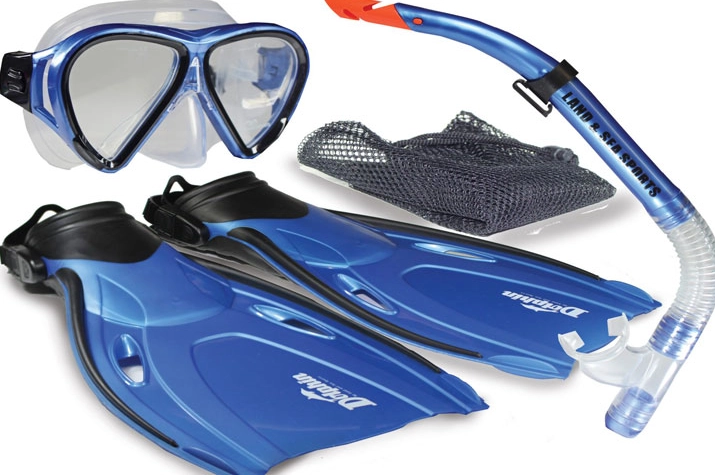
- Comfort is King: A good set feels like an extension of your body, not a piece of equipment.
- Safety Features are Standard: Dry tops and purge valves are now common in beginner sets.
- Hygiene: No sharing questionable rental gear.
- One-Size-Fits-All is a Myth: Masks are facial fingerprints. A top-rated set might not seal on your face.
- Packability: Fins take up suitcase real estate. Consider travel fins if that's a major concern.
- Maintenance: You have to rinse and dry your gear after every use. Saltwater destroys silicone and mechanisms.
How to Use and Care for Your New Snorkel Gear
Buying the set is half the battle. Using it right is the other half.
Pre-Snorkel Prep (The Anti-Fog Ritual): Lick the inside of your mask lens, rub the saliva around, and give it a quick rinse. It's gross but works better than most commercial sprays. For a store-bought option, use a dedicated mask defog gel. Never use toothpaste on new masks anymore—modern anti-fog coatings can be damaged.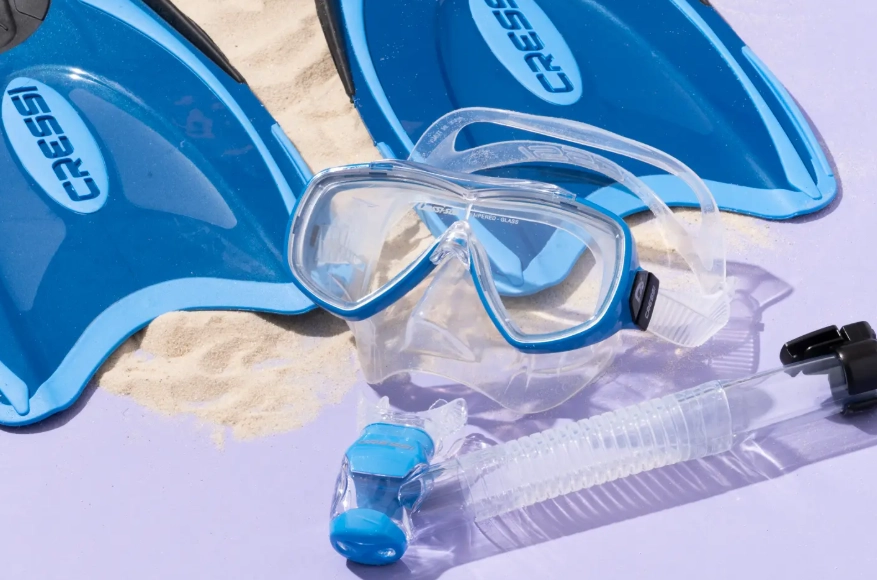
Putting it On: Place the mask on your face first, then pull the strap over your head. The strap should sit high on the back of your head, not around your neck. Insert the snorkel keeper (the little plastic piece) onto the mask strap, then attach the snorkel's flexible sleeve to it. Don't over-tighten anything.
In the Water: Breathe slowly and deeply through your mouth. If you get water in the snorkel, a sharp exhale should clear it out via the purge valve. To clear your mask of water, look up slightly, press the top of the mask frame to your forehead, and exhale forcefully through your nose. The water will be forced out the bottom.
Post-Snorkel Care (This is non-negotiable): Rinse EVERYTHING thoroughly in fresh, clean water. Soak it if you can. Pay special attention to the purge valve—get all the sand and salt out. Dry your gear in the shade, not direct sunlight. UV rays break down silicone and plastic. Store it loosely in a mesh bag, not crammed in a tight box.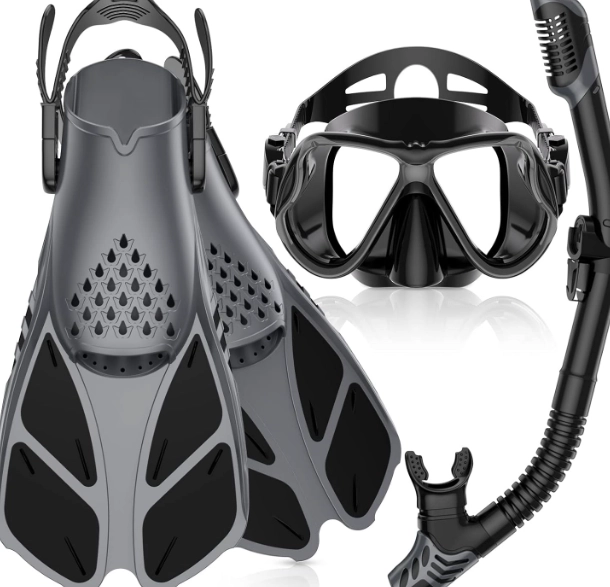
Your Beginner Snorkel Questions, Answered
The goal isn't to have the fanciest gear. It's to have gear that disappears, so all you notice is the silent world beneath you. Start with a focus on fit and simple, reliable features. Master your equipment in a pool or calm beach before heading out to the reef. That confidence in your gear is the real foundation of a great snorkeling adventure.
Reader Comments