Let's cut straight to it: you don't need to spend a fortune to start snorkeling. The idea that quality gear requires a huge investment is a myth that keeps many people on the beach. The truth is, with a bit of knowledge, you can assemble a reliable, comfortable set of budget snorkeling equipment for beginners for well under $150. I've guided dozens of first-timers, and the biggest mistake I see isn't buying cheap gear—it's buying the wrong cheap gear. This guide will walk you through exactly what you need, what you can skip, and how to spot value where others see just a low price tag.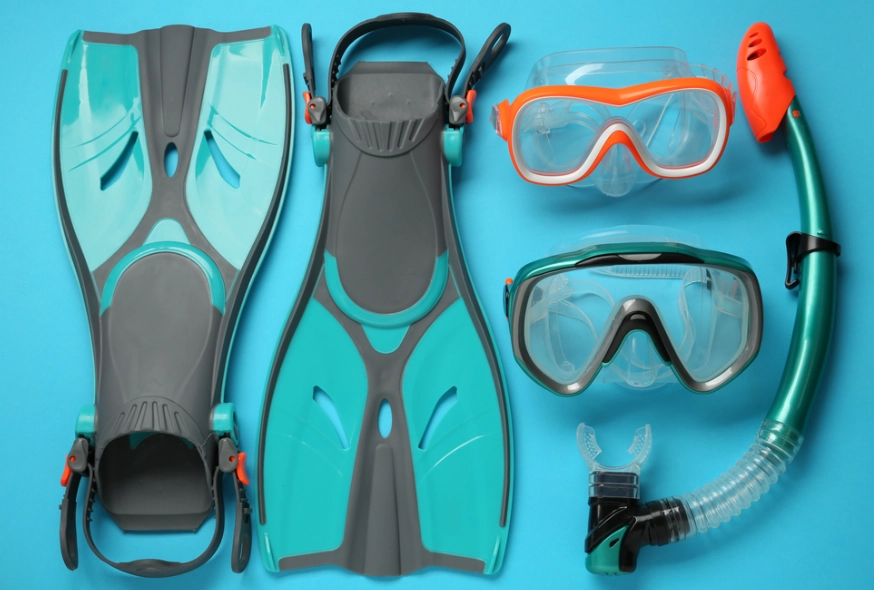
Your Quick Dive Guide
First, What Do You REALLY Need to Buy?
This is where most beginners overspend. You see packages with 15 items and think you need them all. You don't.
The Absolute Essentials: A mask and a snorkel. That's it. Everything else supports or enhances the experience, but these two are non-negotiable for safe, enjoyable snorkeling. A poorly fitting mask will flood and ruin your trip. A bad snorkel will make breathing a chore.
Pro Tip: If you're going on a one-time snorkeling tour, renting is perfectly fine. But if you plan to snorkel more than twice a year, owning your own mask and snorkel is a game-changer for hygiene, comfort, and familiarity.
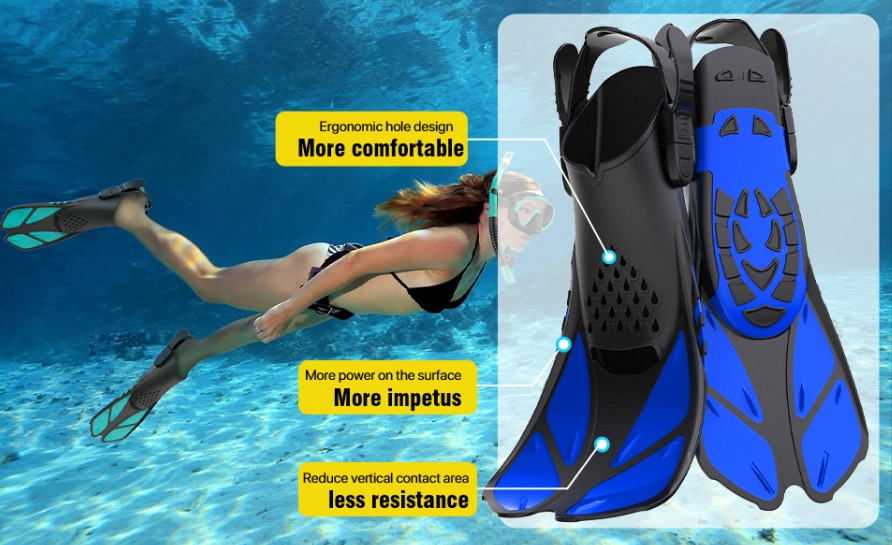
The Performance Enhancer: Fins. They're not strictly essential in calm, shallow water, but they drastically reduce effort, help you maneuver against currents, and protect your feet. For most beginners, I recommend getting a basic pair.
The "Nice-to-Haves": Snorkeling vest, gear bag, anti-fog, rash guard. We'll get to these, but don't let them clutter your initial purchase decision.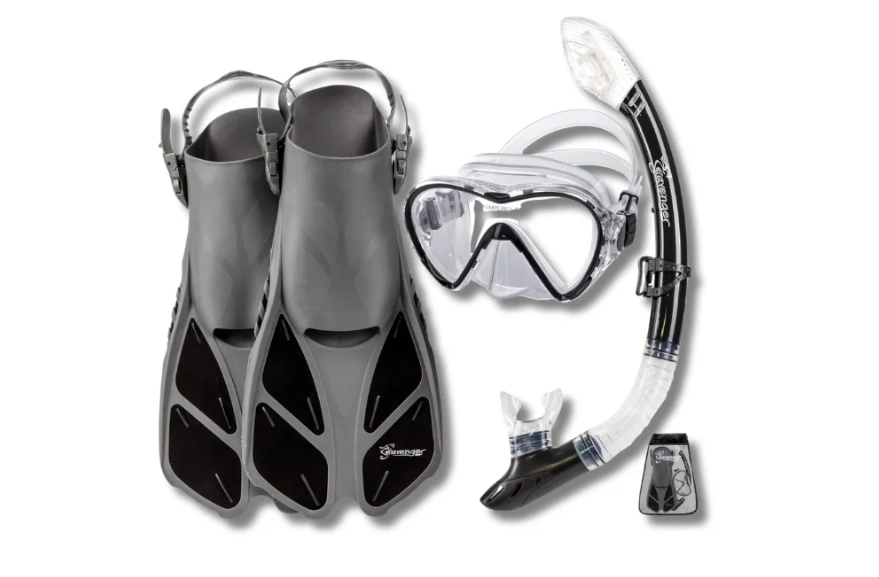
How to Choose Your First Mask and Snorkel
This is the heart of your kit. Get this wrong, and nothing else matters.
The Mask: Fit is Everything (Forget Brand Names)
Price doesn't guarantee a good fit for your face. The single most important thing is the seal. Here's how to test it, even in a store:
- Place the mask on your face without putting the strap over your head.
- Gently inhale through your nose. The mask should suction to your face and stay put when you let go.
- Check the skirt (the soft silicone part) is evenly contacting your skin. No gaps, especially across the bridge of your nose or under your eyes.
Look for tempered glass lenses. This is non-negotiable for safety. Silicone skirts are more comfortable and durable than cheaper PVC or rubber. A low-volume design (mask sits closer to your face) is easier to clear of water.
I made my first mistake here. I bought a cool-looking, expensive mask online. It leaked constantly because my nose bridge was too high for its frame. A $40 mask that fits is infinitely better than a $100 mask that doesn't.
The Snorkel: Simple is Often Better
You'll see three main types:
- Classic (J-style): Just a tube. Cheapest, least to go wrong, but requires you to clear water by exhaling forcefully. Best for calm waters and confident beginners.
- Semi-Dry: Has a splash guard at the top to prevent some water entry. A good middle-ground for beginners. This is what I usually recommend first.
- Dry Snorkel: Has a mechanism (usually a float valve) that seals the top if submerged. Prevents water entry completely. More expensive, more parts that can fail. Great for those who are nervous about water in the tube.
For a budget set, a semi-dry snorkel with a flexible lower section (purge valve at the bottom is a bonus) is the sweet spot. The flexible part lets the mouthpiece move with your jaw, reducing fatigue.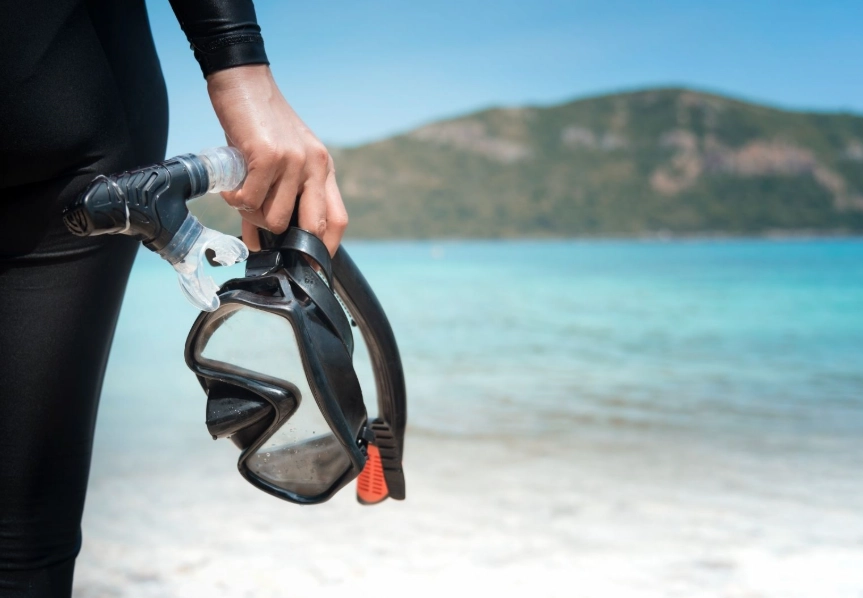
Fins: Are They Worth the Investment?
So, do you really need fins? If you're just floating face-down in a calm bay, maybe not. But if you want to explore, cover distance, or handle any mild current, they're essential. They turn exhausting kicks into efficient glides.
For beginners, look for adjustable open-heel fins with straps. They're more versatile for foot size and can be worn with booties if needed. Full-foot fins (like swim fins) are cheaper but less adjustable and can cause blisters.
Material matters less at the budget end—most will be a flexible polymer. Look for a channeled blade design, which provides more thrust per kick. You don't need long, stiff freediving fins. Shorter, more flexible fins are easier for beginners to use.
Budget about $30-$50 for a decent starter pair. It's worth it.
Other Accessories: Add-Ons as Needed
Don't buy these upfront unless you know you need them.
Snorkeling Vest: Not a life jacket, but an inflatable bladder for extra buoyancy and peace of mind. Great for weak swimmers or anxious beginners. Can often be rented.
Rash Guard / Dive Skin: A long-sleeved Lycra shirt. Protects from sunburn and minor scrapes. More versatile and often cheaper than slathering on sunscreen every hour.
Anti-Fog: Baby shampoo is the legendary budget alternative. A tiny drop rubbed on the lens, then rinsed, works wonders. Commercial anti-fog gels are more convenient but not strictly necessary.
Gear Bag: A mesh bag lets your gear drain and dry, preventing mildew. A simple one costs under $15.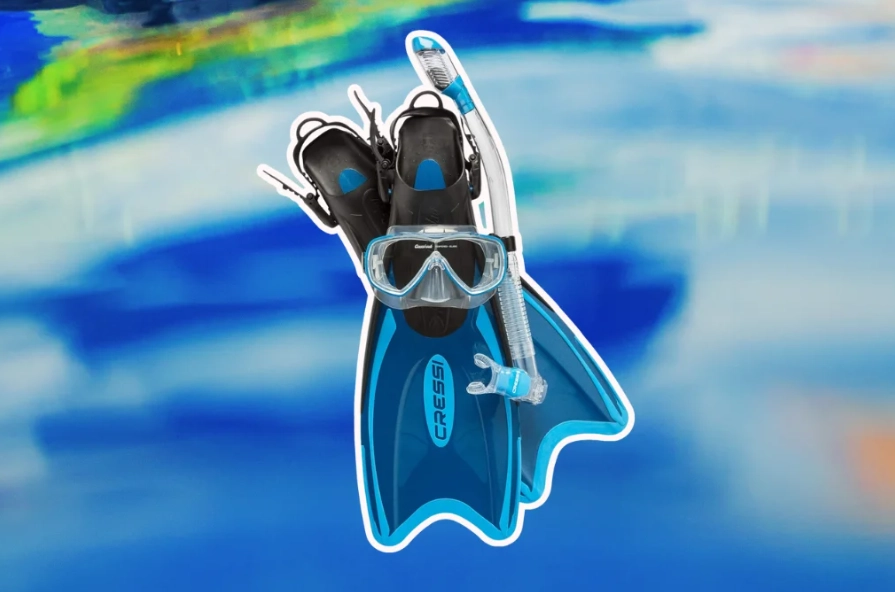
Your Budget Gear Shopping List
Here’s a concrete breakdown of what to look for and what it might cost. This is a realistic "good-better" scenario for a full beginner setup.
| Gear Type | Recommended Type for Beginners | Key Features to Look For | Budget Range (USD) | Notes |
|---|---|---|---|---|
| Mask | Low-Volume Silicone Skirt | Tempered glass, silicone skirt, good seal test | $25 - $45 | Fit trumps every other feature. Never compromise. |
| Snorkel | Semi-Dry with Flex Tube | Splash guard, flexible lower section, purge valve | $15 - $30 | Avoid overly complex dry-top mechanisms at low price points. |
| Fins | Adjustable Open-Heel | Comfortable foot pocket, flexible blade, quick-adjust straps | $30 - $50 | Try with the socks you'll wear. Stiffness should match your leg strength. |
| Accessory Pack | As Needed | Mesh bag, defogger, rash guard | $20 - $40 | Buy piecemeal. A rash guard is often the best first add-on. |
| TOTAL ESTIMATE | Full Starter Kit | Mask, Snorkel, Fins, Basic Add-ons | $90 - $165 | You can hit the lower end with careful shopping and sales. |
Where to Buy Your Gear
Online Retailers (Amazon, LeisurePro, Dive Gear Express): Huge selection, competitive prices, and easy reviews. Big downside: You can't try the mask for fit. Only go this route if you can easily return items, or you're buying a specific model you've tried before.
Local Dive Shop: This is my strong recommendation for your first mask. The expertise is invaluable. Staff can help you fit a mask properly. Prices might be slightly higher, but you're paying for the service and knowledge. Supporting them keeps this resource alive.
Big-Box Sporting Goods Stores: Hit or miss. You might find package deals, but the staff often lacks specific snorkeling knowledge. Check the mask for tempered glass (it should say on the lens) and do the fit test yourself in the aisle.
Second-Hand: Generally not recommended for masks (skirt degrades, fit is personal) or snorkels (hygiene). Fins can be a good二手 find if they're in good condition and fit well.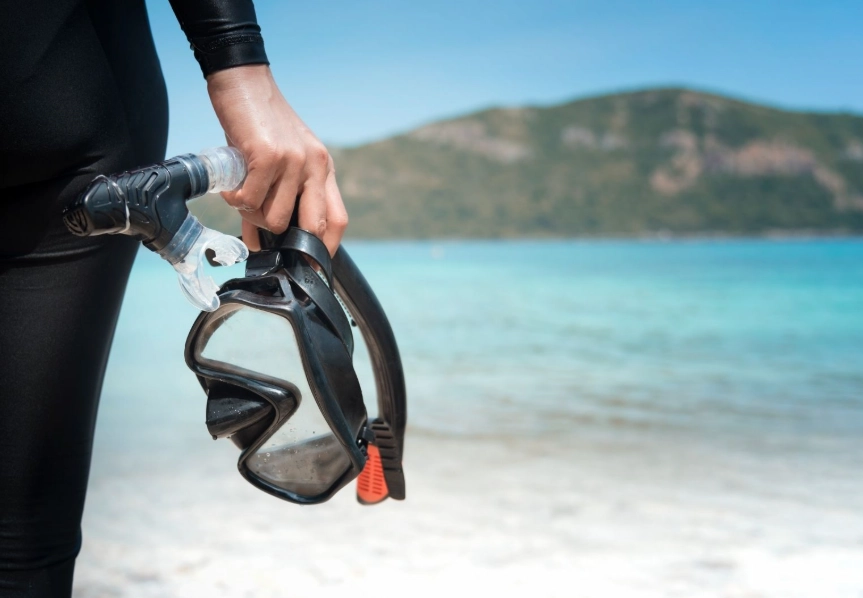
3 Subtle Mistakes Beginners Make (And How to Avoid Them)
These aren't the "always check your gear" basics. These are the nuanced errors that slowly ruin a good time.
1. Positioning the Mask Strap Incorrectly. It shouldn't cup the back of your head. It should sit high on the back of your head, almost on the crown. This pulls the mask skirt evenly onto your face, not digging it into your forehead. A low strap is the top cause of leaks and forehead pain.
2. Choosing a Snorkel Based on Dry-Top Hype. Cheap dry snorkels often have stiff, unreliable valves that stick open or closed. A stuck-closed valve means you can't breathe at all. A simple semi-dry snorkel is more reliable on a budget. The splash guard stops 90% of water entry anyway.
3. Ignoring Anti-Fog Because "I'll Just Spit in It." Saliva works okay, but not consistently. Fogging up 20 minutes into your swim is frustrating. Spending $5 on a small bottle of defogger or using baby shampoo is the easiest comfort upgrade you can make. Apply it properly: rub a tiny amount on the inside of the lens, then give it a quick rinse in seawater just before you dive. Don't touch the lens after that.
Budget Snorkeling Equipment FAQs
Can I really get good beginner snorkeling gear on Amazon?
Is a dry snorkel necessary for a beginner?
 How can I tell if a mask will fit without trying it on in water?
What's the one piece of budget equipment most beginners regret buying?
Are there any eco-friendly options for budget snorkeling gear?
Reader Comments