Let's be honest. Most "romantic snorkeling" advice is just a list of pretty places. It misses the point. Snorkeling as a couple isn't about checking a box next to "saw a turtle." It's about shared silence, pointing at the same wonder, and that post-dive buzz you only get when you experience something breathtaking together. It can also be a source of tension if one of you is a fish and the other is still figuring out the snorkel. I've guided dozens of couples, from honeymooners to retirees, and I've seen what makes the experience magical versus miserable.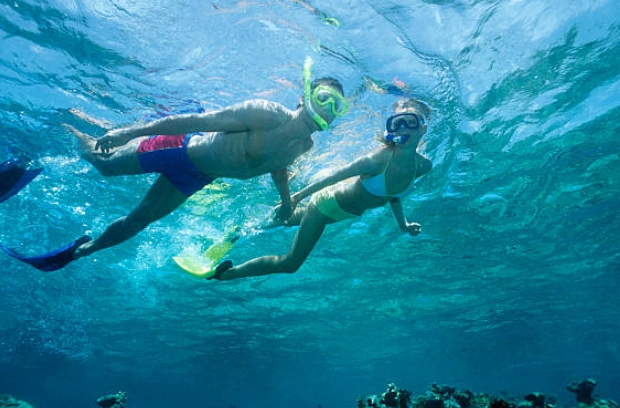
The secret? It's less about the destination (though that helps) and more about alignment—aligning expectations, comfort levels, and goals. This guide is for couples who want the magic, not the mishaps.
What You'll Find in This Guide
- How to Choose the Perfect Snorkeling Destination as a Couple
- The Couple's Snorkeling Gear Guide: What You Actually Need
- Planning Your Romantic Snorkeling Trip: A 3-Day Sample Itinerary
- How to Solve Common Snorkeling-for-Couples Problems Before They Start
- Snorkeling for Couples: Your Questions, Answered
How to Choose the Perfect Snorkeling Destination as a Couple
Picking a spot isn't just about blue water. You need to match the location to your "couple's snorkeling profile." Are you thrill-seekers wanting drift snorkels, or are you looking for calm, waist-deep water to hold hands in? Be brutally honest with each other.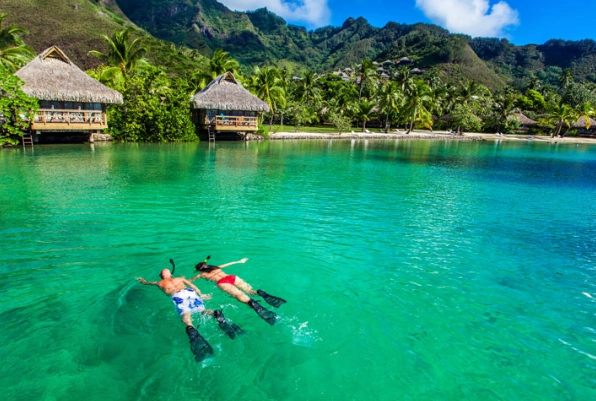
Here’s a breakdown of top-tier destinations, categorized by the experience they offer. I've included the practical details most blogs gloss over—like how crowded it really gets, and if there's a decent lunch spot nearby.
| Destination & Location | Best For Couples Who... | Key Snorkel Spot & Logistics | The Vibe & Extras |
|---|---|---|---|
| Bora Bora, French Polynesia (Motu Piti Aau) |
Want ultimate luxury and calm, protected waters. Budget is secondary. | The lagoon around the motus (small islands). Water is rarely over 10ft deep. Most resorts have private docks. No strong currents. | Secluded, postcard-perfect. Overwater bungalows mean you can snorkel from your deck. It's expensive, but the "wow" factor for a special occasion is unmatched. |
| Big Island, Hawaii, USA (Two-Step, Honaunau Bay) |
Are confident swimmers and want dramatic geology (lava tubes, arches) with big animal encounters. | Two-Step. Free public access. No beach—you enter via a lava rock shelf. Park at the nearby temple lot ($10). Gets crowded by 10 AM. Restrooms available. | Vibrant, wild. You'll likely see spinner dolphins in the morning and Hawaiian green sea turtles year-round. The entry can be tricky for unsteady feet. |
| Roatán, Honduras (West Bay Beach) |
Want great value, a lively atmosphere, and a reef so close you can swim to it from shore. | West Bay Beach. The reef is a 50-yard swim from the sand. Pay a small fee ($2-5) to access the beach through a resort. Rent chairs. Vendors sell water and snacks. | Social, easygoing. You can snorkel in the morning, grab a cheap lunch at a beach shack, and be back in the water by noon. Great for mixing relaxation with adventure. |
| Silfra Fissure, Iceland (Thingvellir National Park) |
Want a truly unique, otherworldly experience and don't mind cold water (2-4°C/35-39°F). | A rift between tectonic plates. You must book a guided tour (e.g., with DIVE.IS or Arctic Adventures). Includes all drysuit gear. Tours run year-round, ~$150-200 per person. | Surreal, adventurous. It's not about colorful fish; it's about 100m visibility in crystal-clear glacial water. A bonding experience through shared challenge. |
My personal, non-consensus take? Avoid the "snorkeling capital" hype during peak season if you dislike crowds. Places like Hanauma Bay (Oahu) or Trunk Bay (St. John) are beautiful, but sharing them with 500 other people can kill the romance. Go at opening time or choose a lesser-known spot nearby.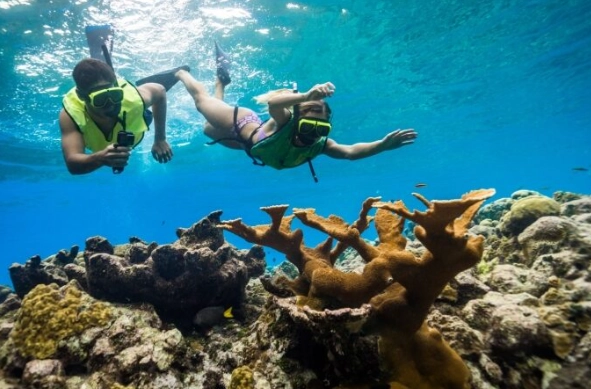
The Couple's Snorkeling Gear Guide: What You Actually Need
Gear advice usually focuses on the individual. For couples, it's about synergy and backup. The goal is self-reliance and comfort, so you're not relying on a sketchy rental shop.
The Non-Negotiable Core (For Each of You)
A well-fitting mask is the single most important item. A leaky mask ruins everything. Here's the trick most miss: Don't test fit by strapping it to your face. Place it on your face without the strap, inhale gently through your nose, and let go. It should suction and stay on for a few seconds. No strap pressure needed. If it falls, it'll leak.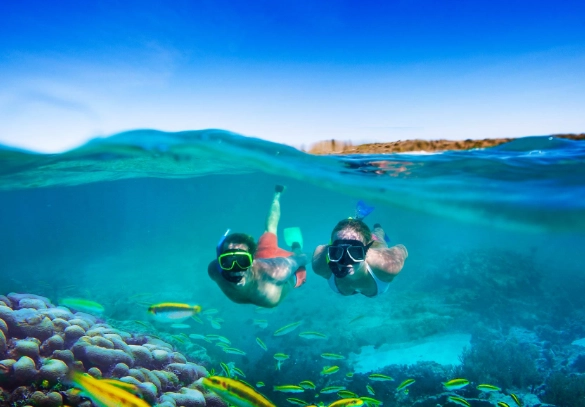
A dry-top snorkel is worth every penny. The splash guard at the top stops water from pouring in when you surface. It prevents the constant sputtering that makes beginners anxious.
Fins should be comfortable, not the cheapest. Blisters are a mood-killer. Get open-heel fins with adjustable straps and neoprene booties. They protect your feet from rocks and hot sand.
The Couple-Specific Gear & Extras
This is where you upgrade the experience.
One shared waterproof bag/dry bag: For keys, phones, a towel, and reef-safe sunscreen. Look for a 20-liter bag with a roll-top closure.
Two rash guards or shorty wetsuits: Sun protection is critical. A rash guard (SPF 50+) prevents painful backs and shoulder burns. A 1mm or 2mm shorty wetsuit also adds buoyancy and protects against minor scrapes. Matching ones? Cheesy, maybe. Practical, definitely.
A floating waterproof phone case: Not for endless selfies, but for the 2-3 incredible shots you'll want. The floating feature is key—if you drop it, it bobs.
A compact safety buoy: This is the expert-level tip. It's a small, inflatable buoy you tow behind you. It makes you highly visible to boats, and you can rest on it if someone gets tired. It says, "We know what we're doing."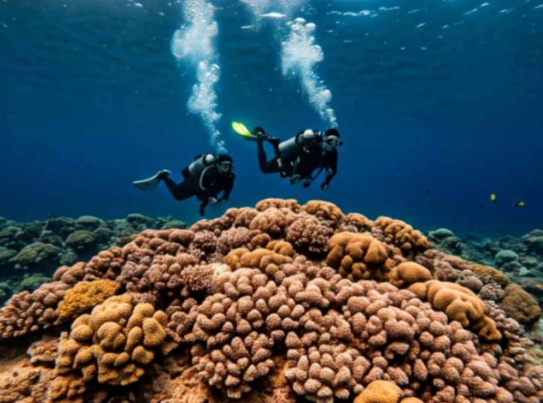
Planning Your Romantic Snorkeling Trip: A 3-Day Sample Itinerary
Let's make this concrete. Assume you're going to Roatán, Honduras, for a long weekend. Here’s how a pro would structure it to maximize fun and minimize stress.
Day 1: Arrival & Shore Snorkeling Trial Run
Morning: Land, check into your West Bay hotel (like Mayan Princess or a similar beachfront condo).
Afternoon: Don't rush. Walk to West Bay Beach, pay the access fee. This is a gear shakedown and confidence-building session. Swim out to the reef together, but stay close to shore. Practice clearing your snorkels, pointing things out, and your non-verbal signals (e.g., thumbs up = I'm good, flat hand = stop).
Evening: Casual dinner at a beachside grill. Early night.
Day 2: The Big Boat Adventure
Morning: Book a half-day boat trip to a site like Blue Channel or Mary's Place. A smaller, locally-run operator is often better than a big catamaran party boat. You'll get more time in the water. Cost: ~$60-$80 per person.
On the boat: Stick together but give each other space. Don't feel pressured to hold hands the whole time. It's okay to explore a small area independently and then regroup to share what you saw.
Afternoon: Return, rinse gear. Spend the afternoon relaxing on the beach, not snorkeling. Snorkeling fatigue is real.
Evening: Nicer dinner. You've earned it.
Day 3: Explore & Departure
Morning: One last, leisurely shore snorkel at a different spot, like Half Moon Bay. It's quieter. This is the nostalgia swim.
Afternoon: Pack up, dry your gear thoroughly before putting it in your suitcase.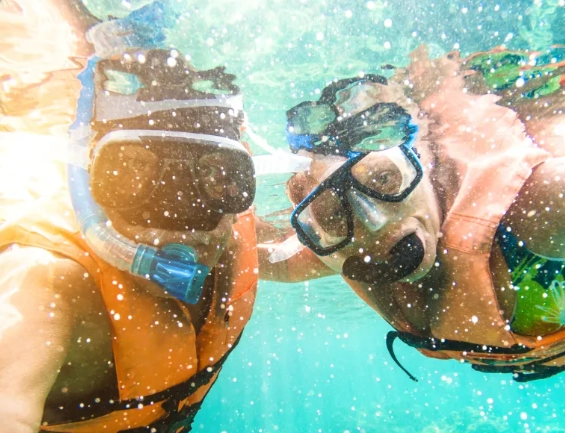
How to Solve Common Snorkeling-for-Couples Problems Before They Start
The biggest issues aren't about fish. They're about people.
Skill Mismatch: The experienced partner must become a patient guide, not a drill sergeant. Let the less confident partner set the pace. Stay in water where they can stand until they're ready. Your goal is their enjoyment, not reaching the deep edge.
Different Interests: One loves fish, the other loves coral. Agree on a pattern: "Let's follow this coral ledge for 10 minutes, then swim over that sandy patch to look for rays." Take turns leading.
"The Gear Competition": A subtle one. One person buys pro gear, the other feels pressured to match. Talk budget upfront. Good mid-range gear (Cressi, Aqua Lung) is fantastic. You don't need $500 fins.
Post-Snorkel Grumpiness: Dehydration, sunburn, and saltwater in your sinuses can make anyone irritable. Have fresh water and snacks ready the moment you get back to shore. Rehydrate immediately.
Snorkeling for Couples: Your Questions, Answered
My partner is a strong swimmer but I'm nervous in deep water. Can we still snorkel together?
Absolutely, and this is the most common scenario. The key is choosing a location with a clear, shallow area next to a drop-off. The confident partner can do short forays into deeper water, returning frequently to the shallows to check in and describe what they saw. Resorts in places like Bora Bora or the Maldives are perfect for this, as their house reefs often have this exact layout. Start every day in the shallow area to build comfort.
What's the one piece of gear most couples forget that would save them hassle?
A plastic water bottle filled with baby shampoo. Before you snorkel, put a tiny drop inside each mask lens, rub it around, and rinse it off with a splash of seawater. This creates a perfect anti-fog film that lasts for hours. Rental shops rarely do this properly. Foggy masks are the number one cause of frustration and aborted snorkels. This $2 trick solves it.
We want a snorkeling honeymoon but also want luxury and privacy. Is that possible?
It is, but you need to be specific when booking. Look for resorts with private motus (French Polynesia), overwater bungalows with direct lagoon access (Maldives, Bora Bora), or high-end villas with a "reef-front" designation rather than just "beachfront." Call the resort and ask: "Can we snorkel directly from our room, and is the house reef healthy?" Resorts like Six Senses Laamu (Maldives) or The Brando (French Polynesia) are built for this exact experience.
How do we handle strong currents as a couple?
First, avoid them if you're not experienced. Ask locals or guides about current conditions before entering. If you get caught in a mild current, do not swim against it. Swim parallel to the shore until you're out of it, or simply relax and let it carry you while signaling to your partner. This is where your safety buoy is invaluable—you can rest on it. Always have a pre-agreed plan: "If we get separated, we'll swim to the nearest safe exit point (like that big rock) and wait." Staying calm is 90% of the battle.
Reader Comments