You bought a snorkel set, used it on one tropical vacation, and next year the mask is leaking or the fin strap snapped. Sound familiar? Most reviews talk about comfort and clarity, but few answer the real question: will this gear actually last? I’ve tested snorkel equipment in everything from crystal Caribbean bays to rocky Mediterranean shores for over a decade. Durability isn't about marketing claims; it's about material choice, design logic, and how it survives real-world abuse. Let's cut through the hype.
What’s in This Guide?
What Actually Makes Snorkel Gear Last?
Forget brand loyalty. Durability boils down to three things: materials, construction, and design for stress points.
A mask frame made of flexible polycarbonate might seem tough, but it can warp in a hot car, breaking the seal. Silicone skirt thickness is measured in millimeters, and that extra 0.5mm can mean years of extra life. A fin with a one-piece strap buckle is a single point of failure; a dual-channel buckle might be fiddlier but often outlives it.
I learned this the hard way. My first "bargain" mask developed a permanent crease in the skirt after being slightly over-tightened in my gear bag. A more expensive, thicker-skirted model? It bounces back.
Pro Tip: The most common failure point isn't the glass or the plastic—it's the silicone. Sunscreen, improper storage, and ozone accelerate its decay. Look for skirts labeled "high-grade" or "medical-grade" silicone; they resist degradation better.
The Durability Deep Dive: Masks, Snorkels, Fins
Snorkel Masks: The Seal is Everything
A leaky mask ruins the experience. Durability here is about maintaining that perfect seal.
- Frame Material: Thermoplastic frames are common and cost-effective but can be brittle in cold weather. Silicone-over-frames or softer TPE frames offer better impact resistance.
- Skirt: This is critical. Double- or triple-flange skirts create better seals but have more folds that can trap sand and degrade. A well-designed single-flange skirt made of ultra-soft, thick silicone can be more durable and easier to clean. Color matters too—clear or white silicone shows mildew less than dark colors.
- Lens: Tempered glass is a must for safety. But the lens retention system—how the glass is held in the frame—varies. Some use a simple plastic clip, others a silicone gasket. The gasket types tend to handle pressure changes (like flying) better without leaking.
Snorkels: Mouthpieces and Valves
Snorkels seem simple, but dry-top models add complexity.
The mouthpiece is the first to go. Thin, poorly molded silicone tears. Look for anatomical shapes with a thicker bite plate and textured wings. The purge valve on semi-dry models is a common clog point with sand. Dry-top snorkels have a floating mechanical ball or membrane at the top to block water. These mechanisms can jam with sand or algae. Simpler designs with fewer small parts often last longer in harsh conditions.
Snorkel Fins: Straps and Blades
Fin straps are the Achilles' heel. Adjustable rubber straps with a buckle are convenient but prone to snapping, especially in sun and salt. Spring straps, while more expensive upfront, are arguably the most durable upgrade you can make—they’re just reinforced silicone and rarely fail.
The blade itself should flex, not crack. Monoprene or high-grade polymer blends resist cracking. Avoid fins with pronounced molded ridges or channels that can become stress concentrators.
Long-Term Reviews: Gear That Survived My Tests
Here are three setups I’ve used extensively, from backyard pools to choppy ocean swims. This isn't about "best overall," but "best built."
| Gear Set | Key Durability Features | Real-World Test Notes | Price Range |
|---|---|---|---|
| Cressi Supernova Dry Snorkel Set | Mask: Thick, clear silicone skirt. Frameless design eliminates frame warp. Snorkel: Dry-top with large, simple float valve. Mouthpiece is exceptionally soft yet robust. | My go-to for 4 years. The mask skirt shows zero perishing. The snorkel dry valve has never stuck, even after being dropped in sand (a quick rinse fixed it). The set looks almost new. | Mid-Range |
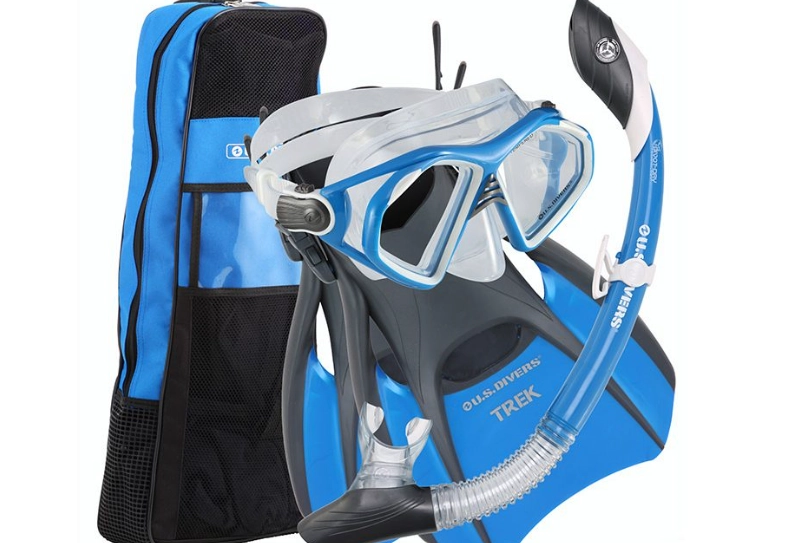
| Aqua Lung Sport Snorkel Set (with Trek Fin) | Mask: Low-volume, sturdy co-injected frame. Snorkel: Flex tube is reinforced. Fin: The Trek fin is a legend—virtually indestructible polymer, closed heel, no straps to break. | This is the "rental gear" standard for a reason. It's nearly bulletproof. The fin is heavy but will outlive you. The mask seal is less forgiving for some faces, but the construction is tank-like. | Budget to Mid |
| Mares Ergo Dry Snorkel Set | Mask: LiquidSkin skirt technology—it's incredibly soft and seals well, claimed to be more resistant. Snorkel: Dry-top with a top-cap that fully seals, not just a ball. | Used for 2 seasons. The LiquidSkin skirt feels amazing and shows no signs of wear. The top-cap snorkel design is effective but has more small parts to rinse. A high-comfort, durable choice if maintained. | Premium |
I paired the Cressi mask with a set of Cressi Pro Light Open Heel Fins with spring straps. After replacing the standard straps (which lasted two years), the spring straps have added another three years of service with zero issues. It’s a hybrid approach that works.
How to Test Snorkel Gear Durability Before You Buy?
You can’t take it for a swim in the store, but you can do a quick inspection.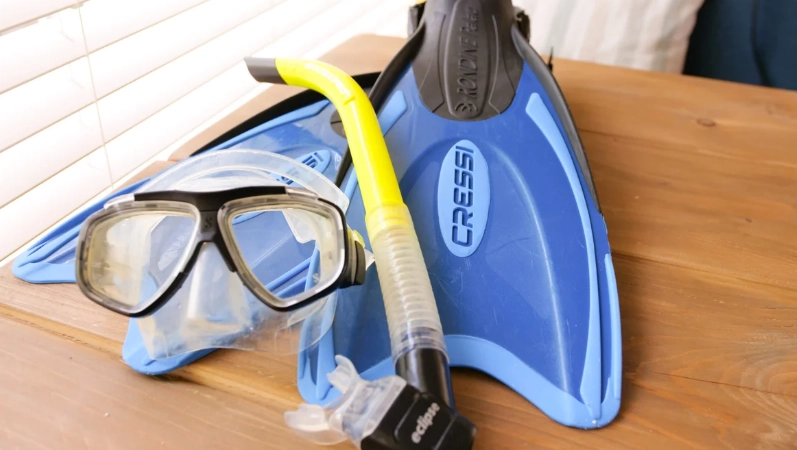
- Flex the Mask Frame: Gently twist it. It should return to shape immediately with no creaking or permanent deformation.
- Inspect the Skirt: Stretch it slightly around the edges. It should be uniformly colored, with no thin spots or manufacturing seams that feel weak.
- Mouthpiece Check: Press your thumbnail into the snorkel mouthpiece. Does it leave a deep, slow-to-fade indent? That’s too soft. It should be firm but comfortable.
- Strap & Buckle Stress: For fins, work the buckle back and forth. Does it feel gritty or loose? For spring straps, stretch them—they should rebound smoothly.
A dive shop manager once told me a trick: lightly smell the silicone. A strong chemical odor can indicate lower-grade material that will break down faster. It’s not foolproof, but it’s a data point.
Maintenance Mistakes That Kill Your Gear Fast
The right gear can be destroyed by wrong care. Here’s what I see people do all the time.
Storing Wet: This is the #1 killer. Mildew grows, metal springs corrode, silicone degrades. Always rinse in fresh water and air dry in the shade, completely, before storing.
Using Harsh Chemicals: Never use bleach, alcohol, or abrasive cleaners on your mask or snorkel. It dries out and cracks the silicone. Mild soap and water only.
Wrong Defog Method: Spitting works, but baby shampoo is better. Never use toothpaste to scrub a new mask—this is an old trick to remove the factory coating, but gritty toothpaste can microscratch tempered glass. Use a paste of baking soda and water instead.
Over-tightening Straps: A mask seal is created by the skirt, not strap tension. Cranking the strap too tight stretches the silicone permanently and warps the frame. Same with fin straps.
Your Durability Questions Answered
 How often should I replace my durable snorkel gear?
Reader Comments