Let's cut to the chase. Yes, there is a massive difference between a scuba mask and a snorkel mask. Using the wrong one isn't just inconvenient—it can be dangerous. I've been diving for over a decade, and I've seen too many beginners on dive boats with a flimsy, oversized snorkel set mask, completely unaware of the risks. The confusion is understandable. They look similar, they both go on your face, and they both let you see underwater. But that's where the similarities end. Think of it like comparing hiking boots to running shoes. Both are footwear, but you wouldn't run a marathon in heavy boots or hike a rocky trail in flexible runners. The core difference lies in their design purpose, construction, and the physical laws they must withstand. A scuba mask is engineered for the pressurized environment of depth, while a snorkel mask is built for surface swimming.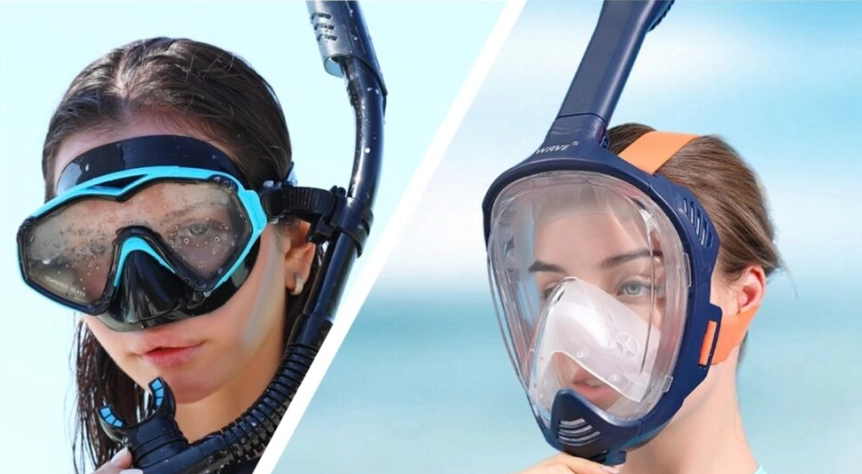
What You'll Learn
The Core Physics Problem: Volume is Everything
This is the most critical concept that most casual articles gloss over. It's not about looks; it's about internal air volume.
When you descend while scuba diving, the water pressure increases. The air inside your mask gets compressed, creating a suction effect against your face—this is called a "mask squeeze." To equalize this pressure, you must exhale a tiny bit of air from your nose into the mask. The larger the volume of the mask, the more air you need to exhale to equalize it. A high-volume mask wastes your precious tank air and requires more effort.
Snorkeling masks, especially the popular full-face models, have enormous internal volumes. They cover your entire face, creating a huge air space. At 30 feet underwater, the pressure is twice that of the surface. Trying to equalize a full-face snorkel mask at that depth would require a significant and forceful exhalation, which is inefficient and can lead to equalization failure, resulting in painful facial barotrauma (think broken blood vessels in your eyes).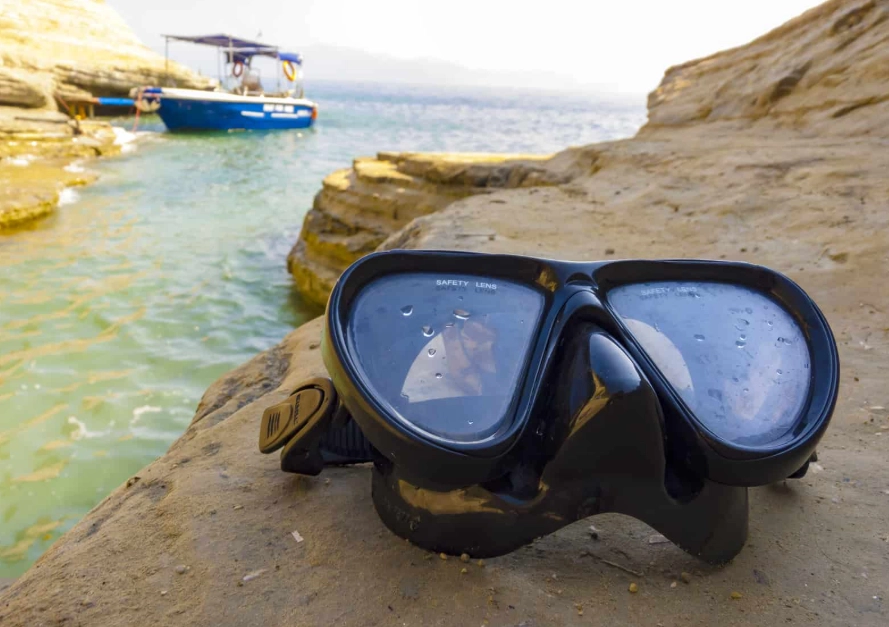
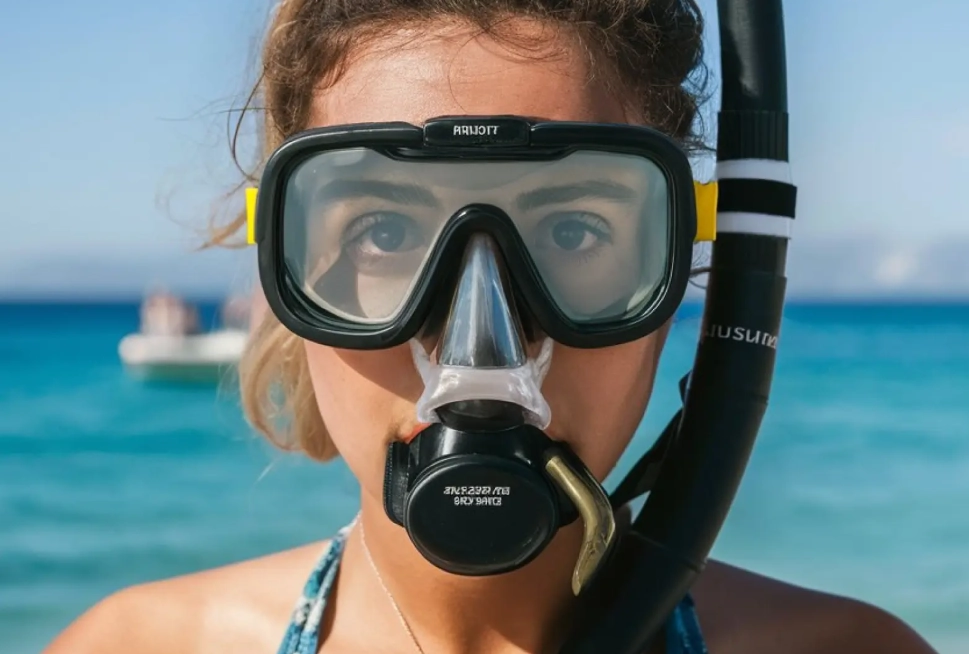
A proper scuba mask is low-volume. It sits close to your face, with the lenses just in front of your eyes. This minimizes the air space, making equalization quick, easy, and air-efficient. It's a fundamental safety feature.
Design & Construction: A Side-by-Side Breakdown
Beyond physics, the materials and features are tailored for completely different environments. Here's a detailed comparison:
| Feature | Scuba Diving Mask | Snorkeling Mask (Traditional & Full-Face) |
|---|---|---|
| Primary Design Goal | Withstand pressure at depth; facilitate easy equalization; provide a secure, reliable seal. | Maximize comfort and field of view at the surface; often integrate breathing apparatus. |
| Internal Volume | Low-volume. Lenses are close to the eyes to minimize air space. | High-volume. Especially full-face masks, which create a large chamber. |
| Skirt Material & Seal | High-grade, soft silicone. Thicker and more pliable for a superior, pressure-resistant seal. Double or triple feathered edges. | Often thinner silicone or sometimes PVC/plastic. Seal is designed for surface use, not deep-water pressure. |
| Frame & Lens Construction | Tempered safety glass, permanently bonded to a durable frame. Built to handle impacts and pressure changes. | May use standard glass or polycarbonate plastic. Full-face masks have complex, multi-part construction with more potential failure points. |
| Nose Pocket | Essential and accessible. Soft silicone pocket allows you to pinch your nose for ear equalization (the Valsalva maneuver). | Often enclosed or inaccessible, especially in full-face masks. You cannot pinch your nose. |
| Field of View | Good to excellent, but prioritized alongside low volume. Often uses side windows or curved lenses. | Often exceptionally wide, particularly with full-face designs, as a primary selling point. |
A Personal Note on Seals: I once rented gear that included a cheap, stiff-skirted mask labeled for "general use." At 60 feet, I felt a persistent, cold trickle. The skirt couldn't conform to my face under pressure. A proper soft silicone scuba mask skirt molds like putty, creating a seal that actually improves with depth. Never compromise on the skirt.
How to Choose the Right Mask for Your Activity
Forget the branding. Look at the function.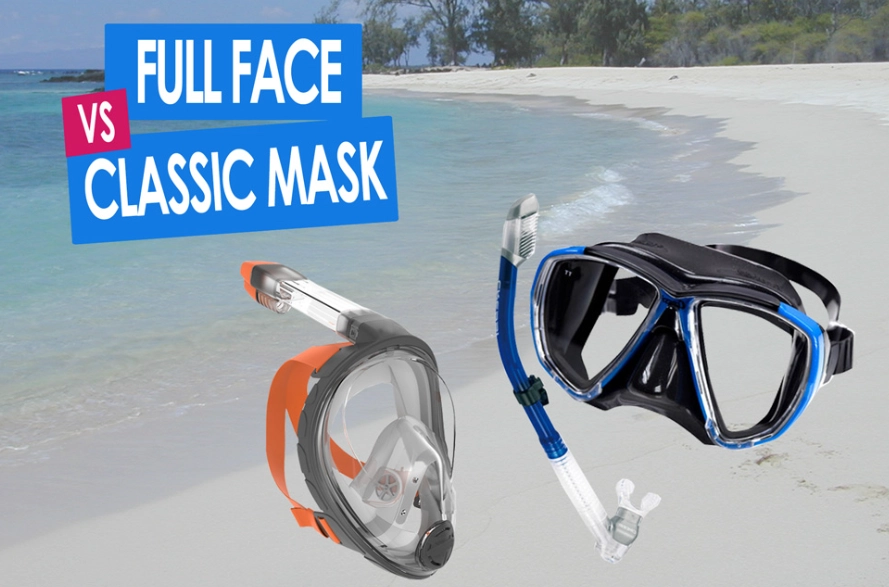
If You Are a Scuba Diver (or Aspiring One):
Your mask is your most personal piece of life-support equipment. Fit is non-negotiable. Here's how to test one:
- The Suction Test: Place the mask on your face without the strap. Inhale gently through your nose. A good mask should stay suctioned to your face for a moment without you holding it. This indicates a preliminary seal.
- Check the Nose Pocket: Can you easily pinch your nose? Your fingers must fit inside the skirt to block your nostrils for ear equalization.
- Skirt Comfort: The silicone should feel soft against your skin, especially across your forehead and under your eyes. Press it around the bridge of your nose—no sharp pressure points.
- Look for Tempered Glass: It should be marked. This is a basic safety standard.
Brands like Scubapro, Cressi, Atomic Aquatics, and TUSA are staples for a reason. Their core masks are engineered for diving.
If You Are a Snorkeler:
Comfort, field of view, and easy breathing are key.
- Traditional Two-Piece Set (Mask + Separate Snorkel): This is the most versatile and recommended setup by purists. It allows nose access, is easy to clear, and you can pair a good mask with a dry-top snorkel. The mask itself can be a lower-volume model that could, in theory, be used for introductory scuba if it passes the fit tests above.
- Full-Face Snorkel Masks: These are designed exclusively for surface snorkeling. They are not for diving, not even duck dives. Their risks include CO2 buildup if the design is flawed (a serious concern highlighted by safety organizations like DAN - the Diver's Alert Network), and the impossibility of equalizing ears or clearing the mask underwater. Use them with caution, only in calm, shallow water, and never if you feel dizzy or short of breath.
Common Mistakes & Myths Debunked
Myth 1: "A more expensive mask is always a scuba mask." Not true. A fancy, expensive full-face snorkel mask is still just for the surface. Price doesn't dictate purpose.
Myth 2: "I can just use my snorkel set for a discover scuba experience." Most reputable dive operators will never allow this. They will provide you with a proper, low-volume scuba mask. It's a huge liability issue for them.
Myth 3: "If it doesn't leak in the pool, it's fine for diving." A mask can seal perfectly at 3 feet but fail miserably at 30 feet due to pressure deforming a stiff skirt. The pool test is only step one.
The Subtle Mistake Everyone Makes: People focus on the lens color or style first. The first thing you should assess is the skirt. Is it soft? Does it feel good on your skin? The skirt creates the seal; the lenses are just windows. A perfect seal with average glass is infinitely better than a leaky seal with the clearest glass on earth.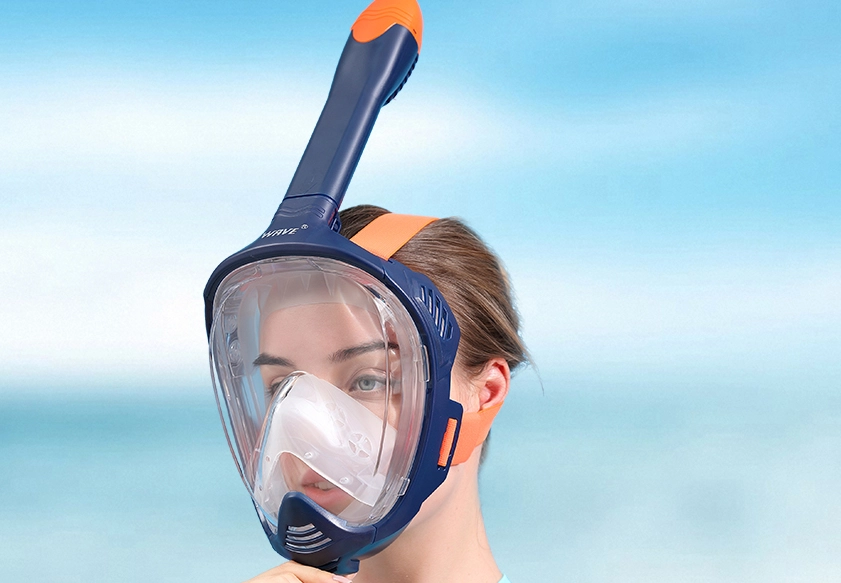
Your Questions, Answered
 What's the deal with prescription lenses in scuba masks?
Reader Comments