In This Guide
- Why Snorkeling Fin Sizing is More Than Just a Number
- The Step-by-Step Guide to Measuring Your Foot for Fins
- Decoding Brand Size Charts: A Comparative Look
- The Gold Standard: How to Actually Try On and Test Fins
- Common Snorkeling Fin Sizing Mistakes (And How to Avoid Them)
- Special Considerations: Kids, Wide Feet, and Adjustable Fins
- Care and Break-In: Yes, Fins Need Break-In Too
- Your Snorkeling Fin Sizing Questions, Answered
- Final Thoughts: It's Worth Getting Right
Let's be honest, nobody really thinks about snorkeling fin sizing until they're floating in the ocean, trying to enjoy the beautiful coral, and all they can focus on is the blister forming on their heel or the cramp in their arch. It's one of those things that seems simple but is surprisingly easy to get wrong. I learned this the hard way on my first big snorkeling trip to Hawaii. I bought fins based on my shoe size, which was a classic rookie mistake. They were too long, flopped around, and I spent more energy trying to keep them on than actually swimming. Total buzzkill.
Getting the right fit isn't just about comfort—though that's a huge part of it. Proper snorkeling fin sizing is directly tied to safety and efficiency. Fins that are too tight can cut off circulation, cause debilitating cramps, and lead to blisters that can get infected (trust me, saltwater in an open blister is no joke). Fins that are too loose will slip off, force you to over-flex your ankles, and waste a ton of your energy with every kick. You'll tire out faster and see less. So, let's dive deep and untangle the whole mess of how to size snorkeling fins correctly, once and for all.
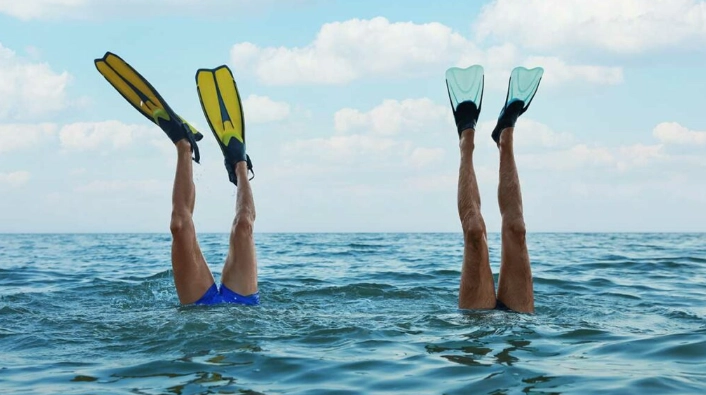 The right fit feels secure, not suffocating.
Why Snorkeling Fin Sizing is More Than Just a Number
You can't just walk into a store and ask for a "size 9" fin. Well, you can, but you'll likely get the wrong thing. Unlike shoes, fins are designed to be worn with or without socks (neoprene booties), and their sizing systems are all over the map. One brand's "Medium" might be another brand's "Large." The foot pocket shape—whether it's designed for a narrower or wider foot—makes a world of difference. And then there's the material; some rubber foot pockets are stiff and need to be snug, while softer, more flexible ones might feel better with a bit more room.
It boils down to three core principles for perfect snorkeling fin sizing: security, comfort, and power transfer. The fin must stay firmly on your foot without you having to curl your toes to grip it (that's a sure sign it's too big). It must not pinch, rub, or create pressure points anywhere, especially across the top of your foot or around your ankles. Finally, when you kick, the power from your leg should flow smoothly into the blade. If the foot pocket is sloppy, you lose that energy. It's like trying to hammer a nail with a wobbly handle.
Pro Tip: Always size your fins with whatever you'll be wearing in the water. Trying them on barefoot when you plan to wear 3mm neoprene booties is a guaranteed path to painfully tight fins. The bootie adds significant volume.
The Step-by-Step Guide to Measuring Your Foot for Fins
Before you even look at a size chart, you need your actual measurements. Not your shoe size—your actual foot length and width in centimeters. Shoe sizes are notoriously inconsistent. Here's how to do it right:
- Get a piece of paper, a pen, and a ruler or measuring tape that uses centimeters.
- Place the paper on a hard floor and stand on it with your full weight. Your foot flattens when you stand, so this is crucial.
- Have a friend mark the very back of your heel and the very tip of your longest toe (not always the big toe!).
- Measure the distance between the marks. That's your foot length.
- For width, measure across the widest part of your forefoot (the ball of your foot).
Write these numbers down. Now you have your baseline. Most fin sizing charts are based on foot length in centimeters. If you're planning to wear booties, you need to account for them. A good rule of thumb is to add 3-5mm to your foot length for a thin sock (like a Lycra skin), and 5-10mm for a 3mm neoprene bootie. For thicker 5mm or 7mm boots, you're often better off looking at dedicated "cold water" fins with much larger foot pockets.
I made the mistake of ignoring width for years. I have relatively wide feet, and I'd always get fins that were long enough but squeezed the sides of my feet into numbness after 20 minutes. It took me a while to realize that some brands, like Cressi, are known for a narrower fit, while others, like Mares, often cater to a wider forefoot. Checking user reviews for comments on "width" is a lifesaver.
Decoding Brand Size Charts: A Comparative Look
This is where people get lost. Let's look at a few popular brands to see how their snorkeling fin sizing translates. Remember, this is a general guide. Always, always check the specific model's size chart on the manufacturer's website, as fit can vary even within a brand's lineup.
| Brand (Popular Model Example) | Their Size Label | Foot Length Range (cm) - Barefoot | Foot Length Range (cm) - With 3mm Bootie | Noted Fit Characteristic |
|---|---|---|---|---|
| Cressi (Pro Light) | XS/S | 22-24 | 21-23 | Narrower, performance fit. Runs small. |
| Cressi (Pro Light) | S/M | 24-27 | 23-26 | Narrower, performance fit. Runs small. |
| Mares (Avanti Quattro+) | XS | 21-23 | — | Wider forefoot, popular for comfort. |
| Mares (Avanti Quattro+) | S | 23-25 | 22-24 | Wider forefoot, popular for comfort. |
| Scubapro (Seawing Nova) | XXS/XS | 21-24 | — | True to size, medium width. |
| Scubapro (Seawing Nova) | XS/S | 24-27 | 23-26 | True to size, medium width. |
| U.S. Divers (Proflex) | Small | 22-25 | 21-24 | Recreational fit, often softer rubber. |
| U.S. Divers (Proflex) | Medium | 25-28 | 24-27 | Recreational fit, often softer rubber. |
See the overlap? A foot measuring 25cm could be a Cressi S/M, a Mares S, a Scubapro XS/S, or a U.S. Divers Small. But the feel will be different due to width and pocket shape. The Cressi will likely feel the tightest. This table is why just ordering a "Medium" online is such a gamble.
Watch Out: Some budget or travel fins use generic S/M/L sizing that doesn't correlate well to any standard foot measurement. They often run large. If there's no detailed size chart from the manufacturer, consider it a red flag.
The Gold Standard: How to Actually Try On and Test Fins
If you have access to a dive shop, go there. It's worth the trip. Here's my ritual for testing snorkeling fin fit:
- Bring Your Gear: Bring the exact socks or booties you'll snorkel with. No exceptions.
- Dry Fit First: Put the fin on while dry. Without straps, push your foot all the way into the pocket until your toes touch the end. There should be no painful pressure on the top of your foot or sides.
- The Heel Lift Test: This is critical. With your foot seated, try to pull your heel up and out of the pocket. You should feel a firm, even resistance all around your heel and ankle. A little movement is okay (especially with new, stiff rubber), but your heel shouldn't pop out easily. If it does, the fin is too big.
- Strap It Up: Fasten the strap. It should be snug but not digging into your skin. You shouldn't have to crank it to the last notch to hold the fin on—that means the foot pocket is too big.
- Walk and Flex: Walk around the shop. Do a few lunges. Flex your foot up and down as if you're kicking. Feel for any immediate pinching or pressure points, especially on the top of your foot near the strap buckle or the sides of your ankle bones.
- Time Test: Leave them on for at least 5-10 minutes. Discomfort that starts as a tiny niggle often turns into real pain after an hour in the water.
What about buying online? It's trickier, but doable. Stick to retailers with excellent return policies. Order two adjacent sizes based on your measurements and the brand's specific chart. Try both with your booties. Keep the one that passes the heel lift and comfort test. Send the other back. Don't be lazy about returns—it's your comfort on the line.
I once kept a pair of fins that were "just a little tight" because I was too impatient to send them back. I regretted it every single time I used them for the next two years, until I finally donated them. Lesson learned: slight discomfort in the store becomes agony in the water.
Common Snorkeling Fin Sizing Mistakes (And How to Avoid Them)
Let's run through the classic errors. I've probably made half of these myself.
- Mistake 1: Using Your Street Shoe Size. This is the #1 mistake. As we've seen, it's meaningless. A US men's 9 can be anywhere from 26 to 27.5 cm depending on the shoe brand. Ignore it completely.
- Mistake 2: Sizing for Barefoot When You'll Wear Booties. This gives you fins you can't even get your foot into with the bootie on. Always size with your intended footwear.
- Mistake 3: Prioritizing Length Over Width. A fin can be the perfect length but unwearable if it's too narrow. If you have wide feet, seek out brands and models known for a wider fit.
- Mistake 4: Assuming All "Mediums" Are Equal. Our comparison table should have killed that assumption for good.
- Mistake 5: Ignoring the Strap. A poorly designed or poorly adjusted strap can ruin the fit of a good foot pocket. Make sure it sits comfortably across the instep and doesn't have sharp edges.
Special Considerations: Kids, Wide Feet, and Adjustable Fins
Snorkeling Fin Sizing for Kids
Kids grow fast, and buying fins every season gets expensive. The temptation is to buy big so they can "grow into them." Resist it. A fin that's too big is dangerous for a child—it can come off easily, cause tripping, and make swimming frustrating. Look for junior-sized fins with a specific size range. Some brands offer adjustable fins for kids, where the foot pocket itself can be lengthened via a movable heel piece. These are fantastic value. Always, always have the child try them on with the socks they'll wear.
If You Have Wide Feet or High Arches
This is my tribe. We need to be picky. Brands like Mares, some Scubapro models, and certain TUSA fins are frequently mentioned as good for wider feet. Avoid Cressi and some Atomic Aquatics models as they tend to run narrow. Look for fins with a "comfort foot pocket" designation. Another option is open-heel fins with adjustable straps, as they often have a more forgiving volume than full-foot pockets. You can also sometimes heat-mold certain fin foot pockets (with careful application of a heat gun, following manufacturer instructions) to create a little more room in specific spots, but this is an advanced technique and can void warranties.
The Lowdown on Adjustable Heel Fins
These are open-heel fins with a spring strap or bungee strap system. They're primarily for scuba diving but are sometimes used for snorkeling, especially in colder water where thick boots are needed. Their sizing is more forgiving because the strap adjusts over a large range. You choose the fin based on the boot size. They offer great security and are easy to get on and off. The downside for snorkeling? They're heavier, often more expensive, and the open heel can let in sand more easily on a beach entry.
Care and Break-In: Yes, Fins Need Break-In Too
New fins, especially good quality ones with stiff rubber, can feel tight and unforgiving at first. There's a difference between a break-in tight and a wrong-size tight. A break-in tight is even pressure that eases after 15-30 minutes of use. A wrong-size tight is a sharp pressure point or pinching that gets worse. To break in new fins, wear them with your booties in a pool or even while watching TV at home. The body heat and flexing will help the foot pocket mold slightly to your foot. Never try to stretch them with external objects like cans, as this can create uneven pressure points and weaken the rubber.
To prolong the life of your perfectly sized fins, rinse them thoroughly with fresh water after every use, especially if you've been in saltwater or a chlorinated pool. Dry them out of direct sunlight, which degrades rubber. Store them flat, not bent or under heavy objects.
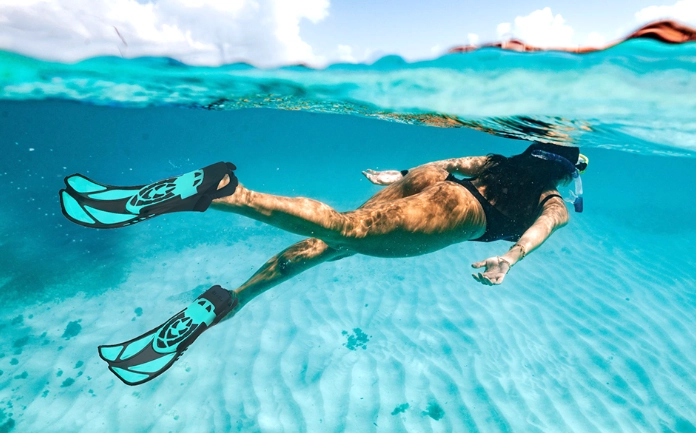 A quick rinse can add years to your fins' life.
Your Snorkeling Fin Sizing Questions, Answered
Final Thoughts: It's Worth Getting Right
Snorkeling is about freedom and wonder. It's about gliding effortlessly over a reef, not fighting your gear. Taking the time to master snorkeling fin sizing is the single best thing you can do to improve your experience. It's more important than having the most expensive mask or the longest snorkel. A perfect fit becomes an extension of your body, not a piece of equipment you're constantly aware of.
So, grab that measuring tape, be honest about your foot shape, and don't settle for "good enough." Your feet—and your next underwater adventure—will thank you for it. Now, go find those perfectly sized fins and get in the water.
Reader Comments