Quick Navigation
- Getting Your Timing Right: It's Everything
- What You Actually Need to Bring (And What You Don't)
- Choosing Your Tour Operator: Not All Boats Are Created Equal
- A Blow-by-Blow: What Really Happens on the Day
- Answering the Big Questions (The Stuff You're Secretly Worried About)
- Beyond the Whale Sharks: Making the Most of Isla Mujeres
Let's be honest. When you first see a picture of someone swimming next to a bus-sized, spotted shark, your brain does a double take. Is that real? Can I do that? Is it safe? I had the exact same questions before I booked my trip. Snorkeling with whale sharks off the coast of Isla Mujeres isn't just another tourist activity; it's one of those rare, pinch-yourself moments that stays with you forever. But between the dream and the reality, there's a lot of practical stuff nobody really talks about. The confusion about tours, the worry about the ethics, the simple logistics of it all. That's what this guide is for. I'm not here to sell you a postcard-perfect fantasy. I'm here to walk you through exactly what it's like, the good and the occasionally frustrating, so you can have an incredible, responsible adventure.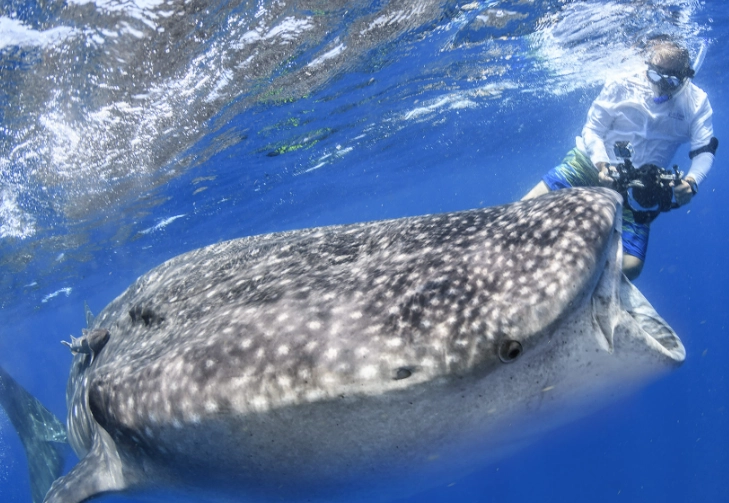
Think of Isla Mujeres as the world's most reliable whale shark cafeteria. Every summer, hundreds of these gentle giants congregate in the warm waters north of the island, feeding on dense plankton blooms. This predictable aggregation makes it one of the best—and busiest—places on the planet for snorkeling with whale sharks. But "best" doesn't automatically mean "easy" or "perfectly organized." You need to go in with your eyes open.
Getting Your Timing Right: It's Everything
This is the single most important factor for success. Get the timing wrong, and you're just taking an expensive boat ride. The season is dictated by nature, not tour operators, and it's shorter than you might think.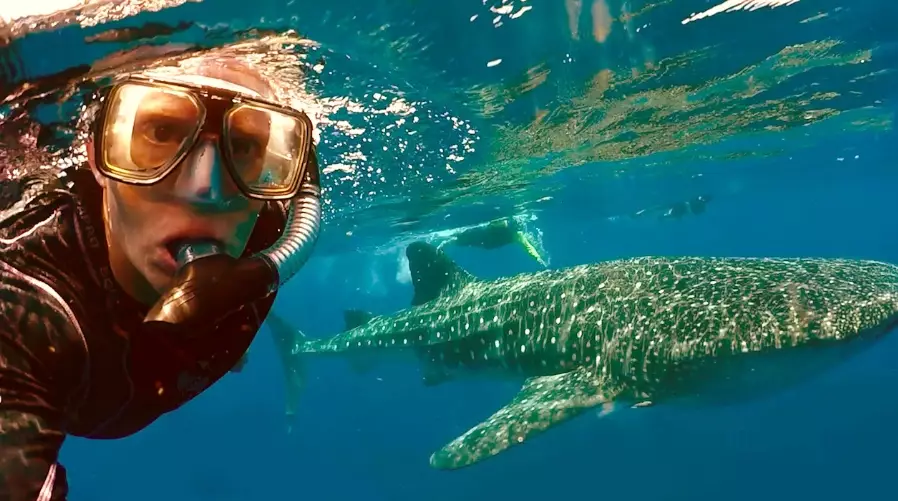
The official season runs from June 1st to September 15th. That's when tours are legally permitted to operate. But within that window, there's a sweet spot. Early June can be hit or miss—the sharks are arriving. Late August into September, the numbers start to thin out as the plankton diminishes and hurricanes become a weather concern.
The absolute prime time, based on local captain knowledge and my own experience asking around, is mid-July through mid-August. This is when the biomass is at its peak, and so are the sharks. I went in late July, and our spotter pointed out over forty dorsal fins in our immediate vicinity. It was surreal.
>Still very good, but monitor weather closely.| Time Period | Whale Shark Activity | Weather & Crowds | Our Recommendation |
|---|---|---|---|
| Early June | Building. Sharks are arriving. Encounters possible but not guaranteed in huge numbers. | Start of rainy season. Fewer crowds. | A gamble. Good if you're flexible. |
| Late June - Mid August | PEAK. Highest concentration. Most reliable for multiple encounters. | Warm, possible afternoon showers. Highest number of tours. | The best bet. Book well in advance. |
| Late August - Mid Sept | Declining. Sharks begin to disperse. Encounters still very likely. | Hurricane season risk. Crowds lessen. | Still very good, but monitor weather closely. |
And then there's the time of day. Tours almost always leave between 7:00 AM and 9:00 AM. This isn't just for convenience. The water is calmer in the morning, and the sun's angle makes it easier to spot the sharks from the boat. By afternoon, winds often pick up, making the ride out (which can be 30-60 minutes) much choppier. Trust me, you want the morning slot.
What You Actually Need to Bring (And What You Don't)
Most tours provide the basics: mask, snorkel, fins, and a life vest (which is mandatory). But relying solely on their gear is a common rookie mistake. Here’s what will make or break your day in the water.
The Non-Negotiable Packing List
- A Premium Biodegradable Sunscreen: This is law. Regular sunscreen is prohibited as it harms the plankton and the sharks. You will be checked. Brands like Stream2Sea or Badger are great. Apply it before you get on the boat, as you'll be getting wet immediately.
- Your Own Mask & Snorkel (If You Have Them): A foggy, leaky mask can ruin the experience. If you own a comfortable, well-fitting mask, bring it. It's worth the suitcase space.
- Rash Guard or Long-Sleeved Swim Shirt: You'll be in the sun for hours. A rash guard protects your skin from sunburn without constant sunscreen reapplication. A dark color (blue, black) is less disruptive to marine life than bright white or yellow.
- Sea-Sickness Remedy: I can't stress this enough. Take it the night before and again in the morning, even if you think you're okay. The boat idles and drifts on the swell, which is a perfect recipe for nausea.
- Waterproof Dry Bag or Case: For your phone, towel, and a change of clothes. The boats are small and can get splashed.
What's Nice to Have
- GoPro or Underwater Camera: Most tours have a photographer, but their photos can be pricey. Having your own lets you capture your personal perspective. Tip: Get a floating wrist strap. Dropping a camera into 100-foot-deep water is a pricey mistake.
- Reef-Safe Lip Balm with SPF.
- A Small Towel.
- Cash (USD or Pesos): For tips (10-15% for the crew is standard) and any extra photos/videos.
Choosing Your Tour Operator: Not All Boats Are Created Equal
This is where your research matters most. A good operator ensures safety, follows the rules, and enhances the experience. A bad one turns it into a stressful cattle call. The rules in Mexico are strict for a reason: to protect the whale sharks. A reputable operator is your guarantee that those rules are followed.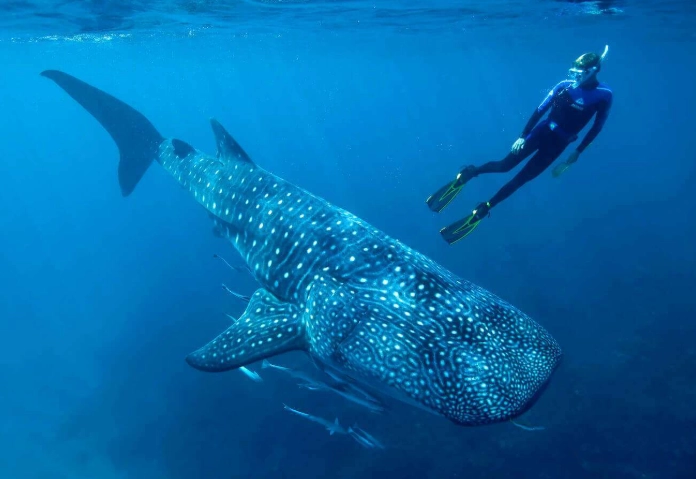
Look for these green flags:
Smaller Group Size: The law allows up to 10 snorkelers per shark, but the best operators limit their boat capacity to 8-10 people total. This means more time in the water per person and a less chaotic experience. I deliberately chose a smaller, slightly pricier tour, and we had twice as many jumps as the overcrowded boats nearby.
Clear Communication on Rules: They should brief you thoroughly: no touching the sharks (a 2-meter distance is mandated), no sunscreen contamination, listen to the guide's instructions instantly.
On-Board Marine Biologist or Certified Guide: This isn't just a nice-to-have. It's a sign of a serious operation. They provide education and ensure protocols are followed. The guide on our boat from a well-regarded local company was constantly pointing out manta rays and explaining the sharks' feeding behavior.
Transparency about Sustainability: Do they mention their practices? Do they support local conservation? The Mexican Ministry of Environment and Natural Resources (SEMARNAT) regulates these tours. A good operator will proudly discuss their compliance.
A Blow-by-Blow: What Really Happens on the Day
Let's walk through it, minute by minute. My tour picked me up from my hotel in Cancun at 7 AM. The transfer to the marina at Puerto Juárez (on the Cancun mainland) took about 20 minutes.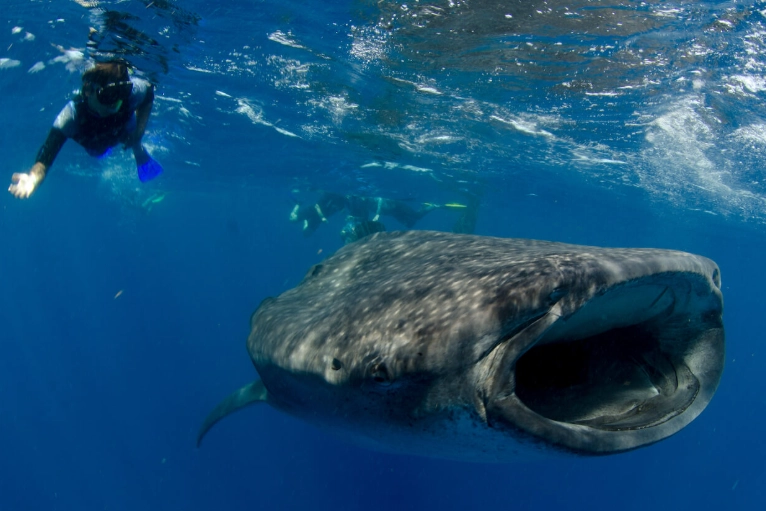
At the Marina & The Ride Out
There's paperwork—a waiver (standard). You'll get a life vest. The crew checks your sunscreen. The energy is a mix of excitement and nervous anticipation. You board a fast, open fibreglass boat (a "lancha") with outboard engines. The ride out is… brisk. You feel every wave. You pass Isla Mujeres on your left, heading north into open water. After about 45 minutes, you start to see other boats circling. Your heart starts to pound. The spotter climbs onto the bow.
The Encounter: Controlled Chaos
The captain and spotter coordinate. The rule is: two swimmers in the water with a guide at a time. When the spotter yells "GO!" you sit on the edge, mask on, and roll backwards into the water. No graceful diving. You hit the water, get your bearings, and the guide points frantically. And then you see it.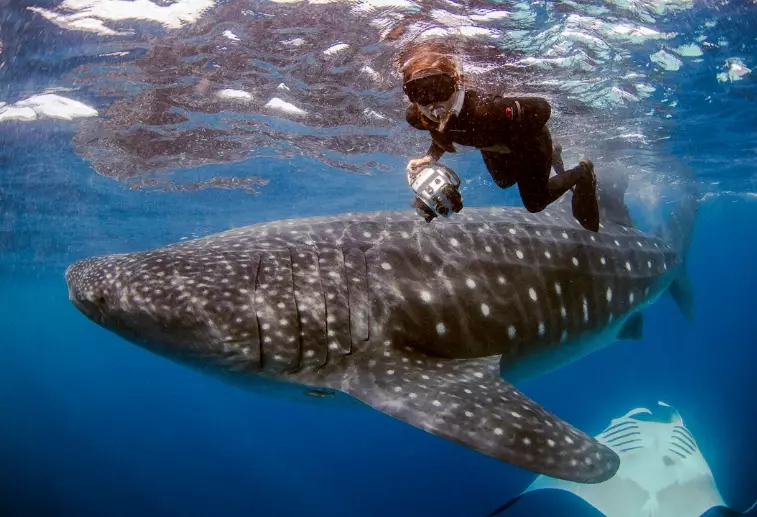
Nothing prepares you for the size.
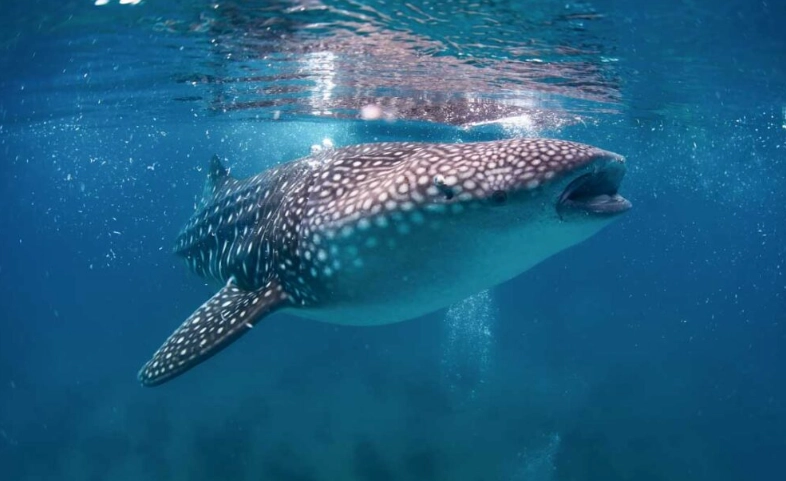
A silent, slow-moving mountain covered in white spots glides past you. Its mouth, wide enough to swallow a car, is open, filtering water. Its tail moves with a powerful, effortless sweep. You're supposed to swim, but you freeze for a second, just staring. The guide taps your fin—swim! You kick, trying to keep pace alongside, staying behind the pectoral fins as instructed. You have maybe 30-45 seconds with it before it dives or you fall behind. The boat whistle blows. Your turn is over. You swim back, heave yourself onboard, breathless and grinning like a fool. You've just been snorkeling with whale sharks in Isla Mujeres.
Then you catch your breath, watch the next pair go, and get ready for your next jump. A good tour will get you 5-8 jumps, depending on conditions and crowds.
The Return & The Aftermath
After a couple of hours, the captain calls it. You're exhausted, salty, and euphoric. Many tours then stop at a shallow reef near Isla Mujeres for a more relaxed snorkel or at a beach club for lunch (often not included in the base price). The ride back feels shorter. You'll be back at the marina by 1:30 or 2:00 PM.
Answering the Big Questions (The Stuff You're Secretly Worried About)
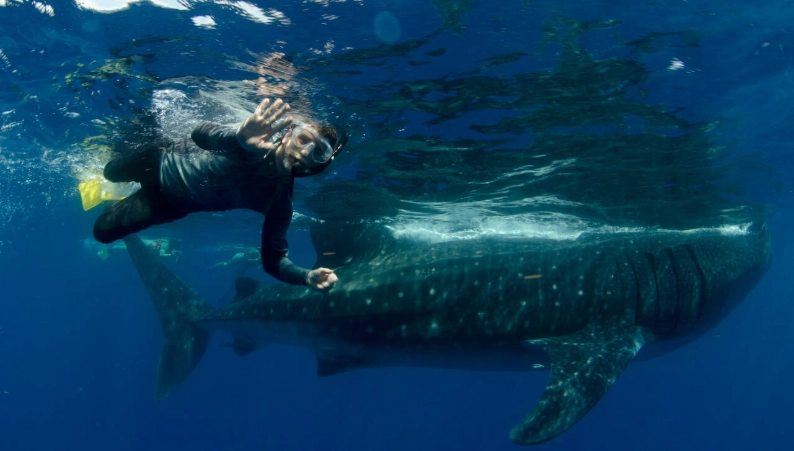
- Let the shark come to you. Don't chase it. Stay where the guide places you and let it pass by.
- Shoot from the side, not directly in front or behind.
- If using a GoPro, set it to wide-angle and take video clips. Screenshots from 4K video are often better than trying to snap the perfect photo in the moment.
- Look down as the shark passes beneath you for that iconic spotted-back shot.
Beyond the Whale Sharks: Making the Most of Isla Mujeres
Don't make it a day trip. Isla Mujeres itself is a gem. After the intensity of the whale shark tour, spend a night or two. Rent a golf cart, explore the sleepy southern tip at Punta Sur, eat fresh fish at a beachfront *palapa*, and wander the colorful streets of downtown (*el centro*). The contrast between the open-ocean adventure and the island's laid-back vibe is perfect.
So, is snorkeling with whale sharks in Isla Mujeres worth it?
If you go at the right time, with the right operator, and with the right expectations—unequivocally, yes. It's a raw, powerful, and humbling encounter with one of the ocean's most magnificent creatures. It's not a sanitized aquarium show. It's nature, on nature's terms. You'll come away with more than photos; you'll have a story about the day you swam alongside dinosaurs in the deep blue sea.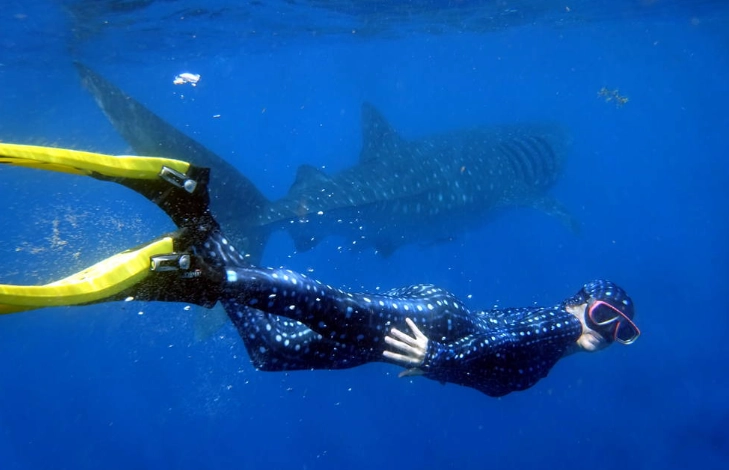
Reader Comments