Let's cut to the chase. If you're researching the Scubapro GO Travel fins, you probably have one main question: are these short, packable fins a gimmick, or can they actually perform? After dragging them through airport security, stuffing them in overhead bins, and kicking them across coral reefs in both tropical seas and cooler temperate waters, I have a clear answer. For the traveling snorkeler or the recreational diver who values suitcase space above raw power, the GO fins are a brilliantly executed tool. But they come with important caveats that most reviews gloss over.
I've been diving for over a decade, and my gear closet is a graveyard of "revolutionary" travel solutions that disappointed. The GO fins, however, have earned a permanent spot in my go-bag. This isn't just a spec sheet review. We're going to talk about what it's actually like to use them, where they excel, where they fall short, and whether they should be your next purchase.
What’s Inside This Review?
- The First Look: More Than Just Stubby Blades
- What Are They Made Of? The Tech Specs Decoded
- The Real Test: Snorkeling and Diving Performance
- The Killer Feature: How They Transform Packing
- How Do They Stack Up Against Other Travel Fins?
- Who Should (and Shouldn't) Buy the Scubapro GO Fins
- Your Questions, Answered (Beyond the Basics)
Unboxing and First Impressions
You notice the weight first. Or rather, the lack of it. Pulling them out of the box, the GO fins feel almost toy-like compared to my standard full-foot or open-heel diving fins. The polymer is firm yet has a slight flex. The famous "Monoprene" material has a unique texture—it's not rubbery like neoprene, nor slick like hard plastic. It's somewhere in between.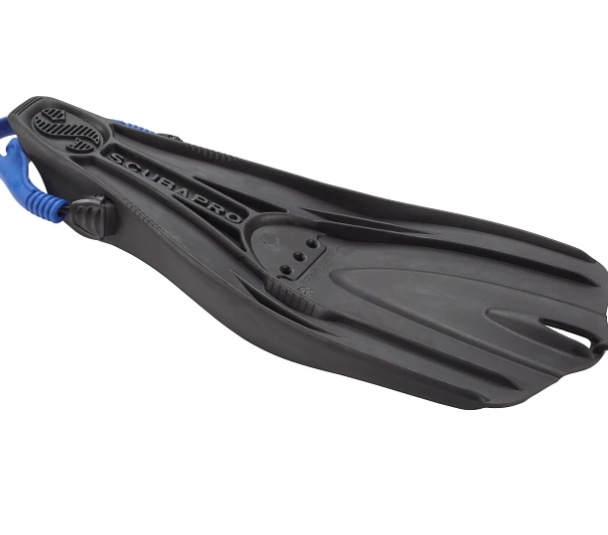
The foot pocket is the real star of the initial feel. Scubapro calls it a "comfort foot pocket," and for once, the marketing term isn't far off. It's wide, with a soft, flexible edge that doesn't dig into your instep or ankle bones. I have slightly wider-than-average feet, and slipping them on barefoot for snorkeling was immediately comfortable. No breaking in needed.
I must admit, when I first held them, I was skeptical. They look so... short. The blade length is a mere 15.4 inches. The question loomed: could these little things actually move water?
Design and Materials: A Closer Look
Let's break down what makes the GO fin different. It's not just a chopped-down version of a regular fin.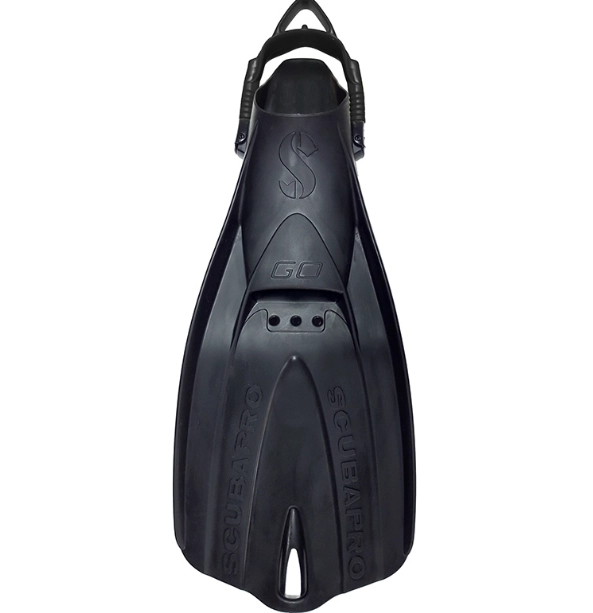
| Feature | Description & Purpose |
|---|---|
| Material (Monoprene) | A proprietary, buoyant polymer. It's lightweight, resists UV degradation, and is neutrally buoyant (won't sink if dropped). This is key for travel—no heavy rubber. |
| Blade Design | Short, stiff center channel with flexible side rails. The idea is to create a "paddlewheel" effect, focusing power despite the short length. The stiffness provides the punch, the flexible edges improve efficiency. |
| Foot Pocket | Wide, anatomical design. Made from a softer, more flexible compound than the blade. It's designed for barefoot use (snorkeling) but has defined heel and instep ridges to secure booties if needed. |
| Vents | Large side vents. These reduce resistance on the up-kick, making finning less tiring. A common feature, but well-sized here. |
| Size & Weight | Approx. 15.4" long, 1.8 lbs per pair (Size M). This is the headline. They can fit in a backpack. |
The buoyant material is a double-edged sword. It's fantastic for snorkeling—if you let go, they float. But for scuba diving, especially in a drysuit or with heavy trim, some divers find they need a touch more weight to compensate. It's a minor point, but one you don't encounter with negative-buoyancy fins.
Performance in the Water: Snorkeling vs. Scuba Diving
This is where opinions split, and where most reviewers fail to give nuanced advice.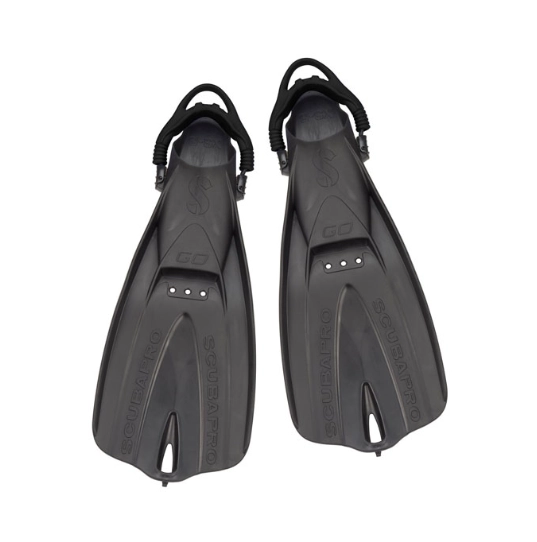
For Snorkeling and Surface Swimming
They are exceptional. Truly. The short, stiff blade requires a faster, more compact kick cycle. Once you adapt (takes about 10 minutes), you get surprising acceleration. Maneuverability around coral heads or in shallow water is superb. You can back-kick and turn on a dime.
The comfort barefoot is a game-changer. On a liveaboard trip in Fiji, I watched fellow snorkelers struggle with rental fins that rubbed blisters. I slipped my GOs on and off a dozen times a day with zero discomfort. The efficiency is good enough that I could easily keep up with stronger swimmers using longer fins.
A Non-Consensus Tip: Don't try to kick with long, slow, powerful strokes like you would with big paddle fins. You'll just get tired and go nowhere. The GO fins reward a quicker, more rhythmic flutter kick. Think "cadence" over "power." This is the subtle mistake many new users make.
For Scuba Diving (Recreational, Warm Water)
Here's the honest take. They are adequate for calm, warm-water, recreational diving where you're not fighting strong currents. I've used them on dives to 60 feet in visibility-rich environments, and they got the job done. My air consumption didn't noticeably spike.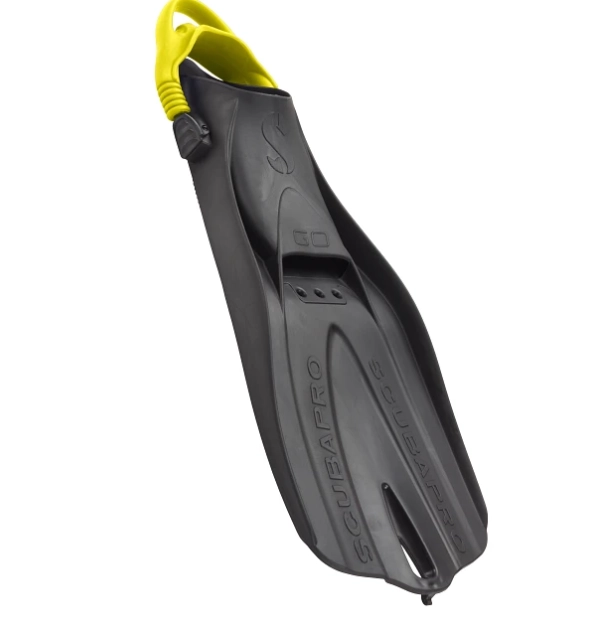
But "adequate" is not "powerful." If you're a diver who loves covering large distances, who regularly dives in currents, or who needs powerful fin kicks for maneuvering in tech diving, these are not your fins. You will miss the thrust of a full-length blade. The GO fins feel like driving a nimble city car—great for the urban commute (reef diving), but you wouldn't take it on the Autobahn (a strong drift dive).
I used them with 3mm booties, and the foot pocket accommodated them well, though the fit is noticeably snugger. For anything thicker than 5mm, I'd be hesitant.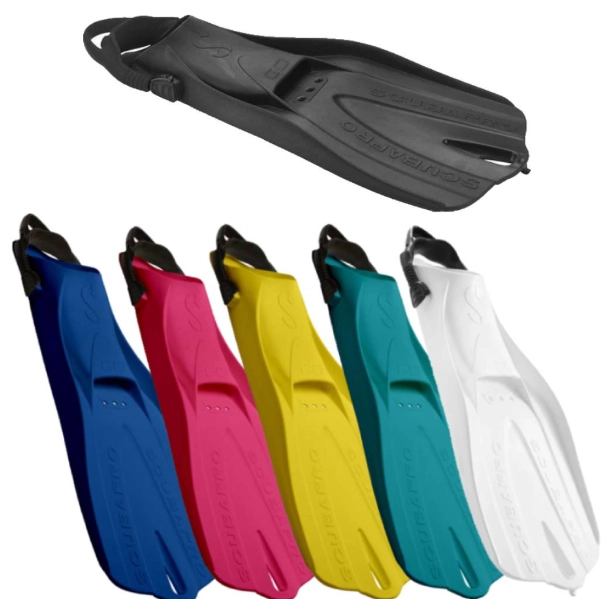
The Packing and Travel Advantage: A Game Changer
This is the undisputed victory. I traveled to Southeast Asia for three weeks with only carry-on luggage. My packing list included a regulator, mask, computer, and the GO fins. The fins fit easily into my 40L travel backpack alongside my clothes and toiletries. This is impossible with any standard fin.
Let's quantify the space saving. A typical full-foot snorkeling fin is about 24 inches long. The GO fin is 15.4 inches. That's over 8.5 inches shorter. In a suitcase, that's the difference between laying them flat (taking up half the bag) and tucking them vertically in a corner or along the side. For airline travelers increasingly facing strict baggage fees and weight limits, this isn't a minor convenience—it's a core financial and logistical benefit.
You also avoid the dreaded "oversized baggage" check-in counter shuffle. They are just another item in your bag.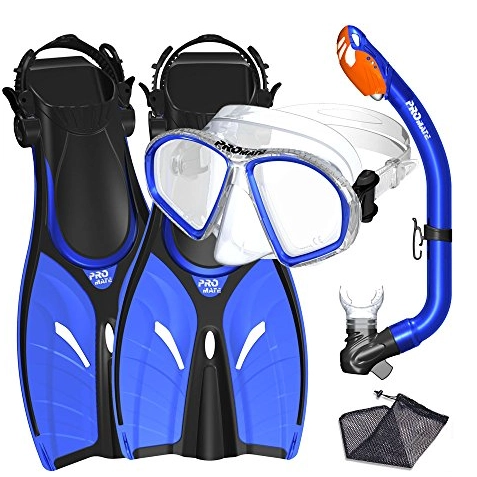
How Do They Stack Up? A Quick Comparison
It's useful to see where the GO fins sit in the travel fin landscape. I'm not just comparing specs; I'm comparing use-case philosophies.
vs. Traditional "Travel" Fins (like the Mares Avanti Quattro+): The Quattro is a brilliant all-around fin, but it's still 25 inches long. It's a "compact" full-power fin. The GO is a different species—a purpose-built, ultra-compact fin that sacrifices some power for extreme packability. The Quattro dives better; the GO travels better.
vs. Other Ultra-Short Fins (like the Cressi Travel Light): The Cressi is a closer competitor. In my experience, the GO fin has a stiffer blade and a more sophisticated channel design, giving it a slight edge in propulsion. The GO's foot pocket is also notably more comfortable for barefoot use. However, the Cressi is often cheaper. You're paying a premium for Scubapro's R&D and material tech.
vs. Split Fins (like the Apollo Bio-Fin Pro): A different technology entirely. Split fins are about efficiency and reduced effort at a steady pace. The GO fin is about punchy acceleration and compact size. It's an apples-to-oranges comparison on performance, but the GO still wins on pure packability.
Who Should Buy the Scubapro GO Travel Fins (And Who Should Skip Them)
This is the decision matrix. Be honest with yourself about your primary activity.
Buy them if:
- You are a frequent traveling snorkeler who wants to always have your own comfortable, reliable fins.
- You are a warm-water recreational diver who prioritizes luggage space and dives in generally calm conditions.
- You travel on airlines with brutal baggage policies and want to carry on all your gear.
- You have limited storage space at home and want a "one fin" solution for pool, travel, and easy dives.
- You have wider feet or find many foot pockets uncomfortable.
Look elsewhere if:
- Your diving regularly involves strong currents, long surface swims, or requires maximum thrust (e.g., photography with large rigs).
- You primarily dive in cold water with thick boots (7mm+). The fit will be tight.
- You are on an extremely tight budget. There are cheaper short fins, though they often compromise on comfort or materials.
- You want a single fin to do everything from tropical snorkeling to temperate technical diving. The GO is a specialist, not a generalist.
Frequently Asked Questions (The Good Ones)
I have narrow feet. Will the GO fins be too loose?
They might be. The foot pocket is genuinely wide. If you have very narrow, low-volume feet, you might find your foot slides laterally inside the pocket, reducing control. Try them on with the socks you plan to use. Some divers with narrow feet use a slightly thicker sock to fill the space, but for barefoot snorkeling, a secure fit is critical.
Can I use these for freediving or spearfishing?
I wouldn't recommend them as primary fins for those activities. Freediving and spearfishing demand maximum efficiency and power per kick to conserve oxygen and chase fish. The long, flexible blade of a dedicated freediving fin is fundamentally better for that. The GO fin could work in a pinch for shallow reef snorkeling-style spearfishing, but for serious depth or hunting, you'll be at a disadvantage.
How do I clean and maintain them after diving in saltwater or a chlorinated pool?
The Monoprene material is low-maintenance but not invincible. Rinse them thoroughly with fresh water after use, especially if you've been in a chlorinated pool, as chlorine can degrade plastics over time. Avoid leaving them in direct, hot sunlight for extended periods (like on a boat deck all day). Don't use harsh chemicals or petroleum-based cleaners. A mild soap and water solution is fine. Dry them in the shade before packing away to prevent mildew in the foot pocket.
Are they really worth the price compared to a cheap pair of short fins from a big-box store?
This comes down to comfort, durability, and performance. The cheap fins often have brutally stiff, inefficient blades and foot pockets made of hard plastic that will guarantee blisters. The GO fin's engineering—the channeled blade, the flexible side rails, the ergonomic foot pocket—justifies its price if you use it regularly. It's a precision tool versus a blunt instrument. If you snorkel once every two years on vacation, rent. If it's a core part of your travels, the investment in comfort and performance is worth it.
My local dive shop only has them in one size. Should I order online?
Fit is everything with fins. If you can't try them on, order from a retailer with a good return policy. Scubapro's size chart is generally accurate. Remember, they fit large. If you're between sizes (e.g., a US Men's 9.5), I'd lean toward the smaller size (M) for a snug barefoot fit, as the material will give a little. If you always wear 3mm booties, you might prefer the larger size (L).
The Scubapro GO Travel fins aren't trying to be the best fin in the world. They're trying to solve a very specific problem: how to have a capable, comfortable finning experience without the traditional baggage nightmare. In that mission, they succeed spectacularly. They forced me to re-evaluate what I really need from a fin when I'm traveling. For 90% of my snorkeling and 70% of my warm-water diving, they are more than enough. The space they free up in my life—both in my suitcase and in my gear closet—makes them one of the most valuable pieces of travel gear I own. Just know their limits, adapt your kick, and enjoy the extra space in your bag.
Reader Comments