Let's be honest. Most advice on choosing a snorkel mask reads like a manufacturer's spec sheet. It's all about lens colors, purge valves, and whether the strap is fancy. They miss the one thing that makes or breaks your entire trip: how the mask seals on YOUR face. A leaky mask turns a magical underwater safari into a constant battle of sniffing water and clearing your view. I learned this the hard way on my first big trip, fiddling with a cheap, ill-fitting mask while my friends glided over coral reefs. Never again.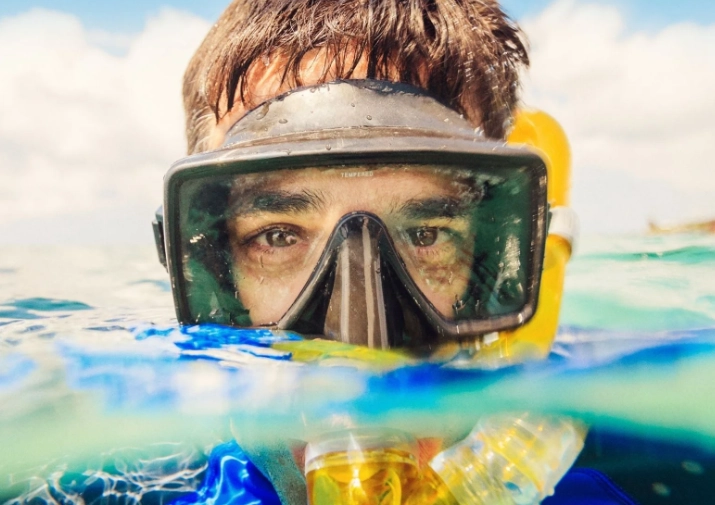
This guide is different. We're going to focus on the 90% of the decision that matters—fit, comfort, and optics—and demystify the other 10% of features. By the end, you'll know exactly how to choose a snorkel mask that feels like a part of you, not a plastic prison.
Your Quick Guide to the Perfect Fit
The Non-Negotiable Fit Test (Do This First)
Before you even look at color or brand, master this test. It's the single most important skill you can learn. Here’s the proper way, which most dive shop employees rush through:
- Remove the strap. Seriously, take it completely off the mask. This eliminates its influence.
- Position the mask. Gently place the mask on your face, with the skirt (the soft silicone part) sitting evenly across your skin. Don't press hard yet.
- Inhale gently through your nose. Just a small, slow sniff. Use your diaphragm, not a big chest breath.
- Hold the inhale and release your hands. The mask should stay suctioned to your face without you holding it for at least 2-3 seconds. No strap needed.
The Pro Tip Everyone Misses: Now, while the mask is suctioned, tilt your head down, then look left and right. Does it stay? Good. Now, make a big chewing motion with your jaw or raise your eyebrows. If the seal breaks with these facial movements, that mask will likely leak when you smile at a turtle or adjust your jaw underwater. This is the critical second step most fitting guides omit.
If it passes, congratulations—the mask's fundamental shape matches your face. Now you can evaluate the other features. If it fails, try another model. Don't think a tighter strap will fix a bad seal; it'll just give you a headache.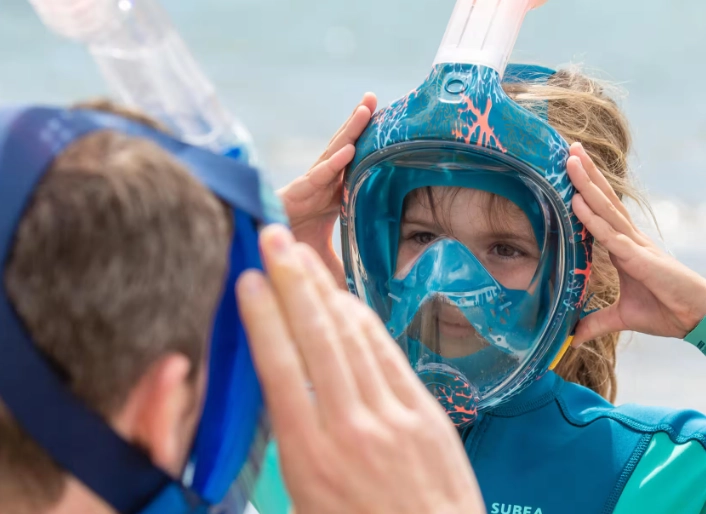
Single vs. Double Lens: It's Not About Looks
This is a major structural choice affecting your field of view, internal volume, and ease of equalization (if you dive down).
| Feature | Single Lens (One-Piece) Mask | Double Lens (Two-Piece) Mask |
|---|---|---|
| Field of View | Usually wider, unobstructed by a nose bridge frame. | Can be slightly narrower due to the frame separating the lenses. |
| Internal Volume | Typically lower volume. Less air inside means less water to clear if it floods and sits closer to your face. | Often higher volume. More air space can feel roomier but requires more effort to clear water. |
| Nose Pocket | Integrated, easy to pinch for equalizing ear pressure on a dive-down. | Enclosed in a separate pocket. Some find it harder to grip, especially with gloves. |
| Best For | Snorkelers who plan to duck-dive, those wanting a minimalist, close-to-face feel, and people with narrower faces. | Snorkelers who primarily stay on the surface, wear prescription inserts, or prefer a more traditional, roomy feel. |
My personal go-to is a low-volume single lens. It feels like wearing goggles, not a goldfish bowl. But I always recommend trying both. Your face will tell you which one seals better during the fit test.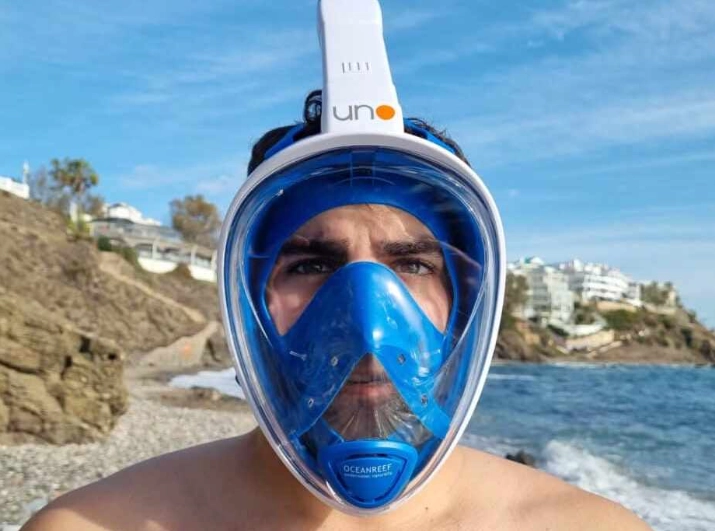
The Skirt & Silicon: Where Comfort Meets Seal
The skirt is the black (or clear) silicone part that touches your face. Its design is crucial.
- Skirt Color: Black skirts block peripheral light, reducing glare and helping you focus underwater. Clear or translucent skirts allow more light in, which some find less claustrophobic, but they can cause internal reflections. For pure snorkeling, I lean towards black for better contrast.
- Silicon Quality: Always choose 100% silicone over cheaper PVC or "hybrid" materials. Silicone is hypoallergenic, supremely flexible for a good seal, and lasts years without degrading. Pinch it. High-quality silicone feels soft, pliable, and springs back immediately.
- Skirt Design: Look for a double- or triple-flange skirt (multiple sealing edges). This creates a more forgiving seal that can accommodate minor facial movements. A single-flange skirt is less forgiving and more likely to leak if you smile.
Lens Technology: Tempered Glass & Anti-Fog
Safety First: Tempered Glass
This is non-negotiable. Your mask must have tempered glass lenses. It's a safety standard. If it breaks, tempered glass shatters into small, blunt pieces instead of sharp shards. Any reputable brand (Cressi, Aqua Lung, TUSA, Scubapro) uses it. If a deal seems too good to be true, check the specs—avoid acrylic or "safety plastic" lenses for primary use.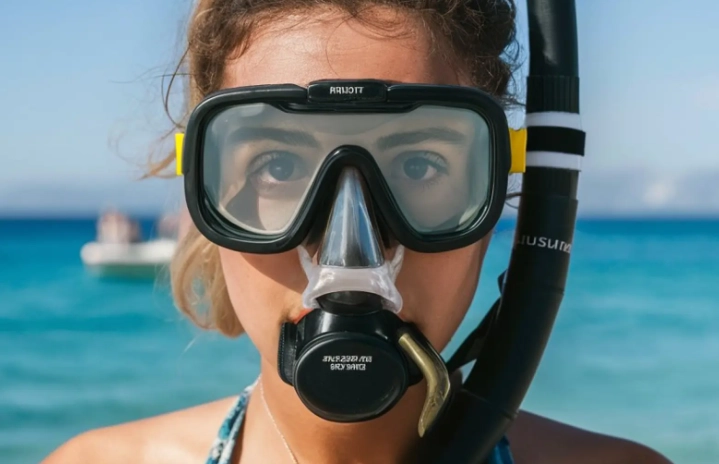
The Fog War: Pre-Treatment is Everything
Every new mask has a thin silicone film on the inside of the glass from manufacturing. This will cause fogging. You must remove it. The old-school toothpaste trick works okay, but it's abrasive. The best method is a gentle flame treatment (briefly passing a lighter flame over the inside of the glass) or using a dedicated mask scrub paste. Then, use a proper defog gel or saliva before every snorkel. Relying on "permanent" anti-fog coatings is a gamble; they wear off.
Specialty Masks: Full Face & Prescription
These solve specific problems but come with trade-offs.
Full-Face Snorkel Masks: They cover your nose and mouth, letting you breathe naturally through both. The appeal is obvious, especially for beginners anxious about the mouthpiece. However, they have significant drawbacks: higher internal volume (harder to clear), potential for CO2 buildup in poorly designed models, and they make equalizing impossible, so you cannot dive down even a foot. I only recommend them for absolute beginners who will stay strictly on the surface in calm water. For anyone else, a traditional mask and separate snorkel is a safer, more versatile skill to learn.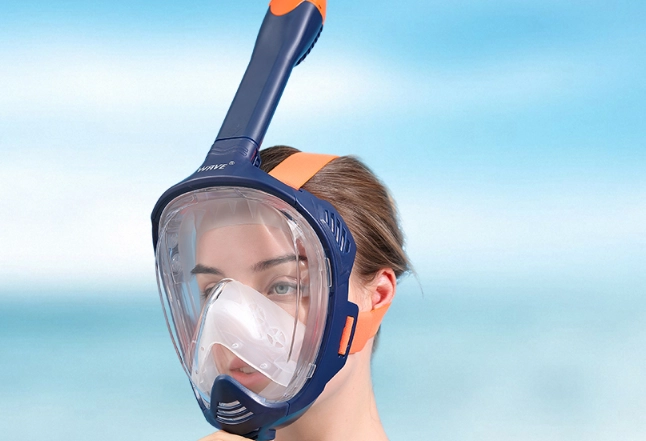
Prescription Masks: If you wear glasses, you have options. Stick-on corrective lenses are a cheap fix but often distort and peel. Custom-ground prescription lenses are the gold standard but are expensive and make the mask a dedicated piece of gear. For mild prescriptions, I often find that the water's natural magnification (+25% to +33%) is enough for me to see coral and fish clearly. It's worth trying a standard mask first to see if your underwater vision is acceptable.
Your Final Pre-Purchase Checklist
Before you click "buy" or hand over your cash, run through this list:
- ✅ Passed the no-strap suction test with facial movements.
- ✅ Lens material is tempered glass.
- ✅ Skirt is 100% silicone (soft, not stiff).
- ✅ Strap is easy to adjust with wide, silicone-padded sections to prevent hair tugging.
- ✅ Field of view feels comfortable and unrestricted.
- ✅ If needed, the nose pocket is easy to pinch for equalizing.
- ✅ The mask comes with a protective case or you've budgeted for one. Sun and sand are killers.
Remember, a $50 mask that fits perfectly is infinitely better than a $200 mask that doesn't.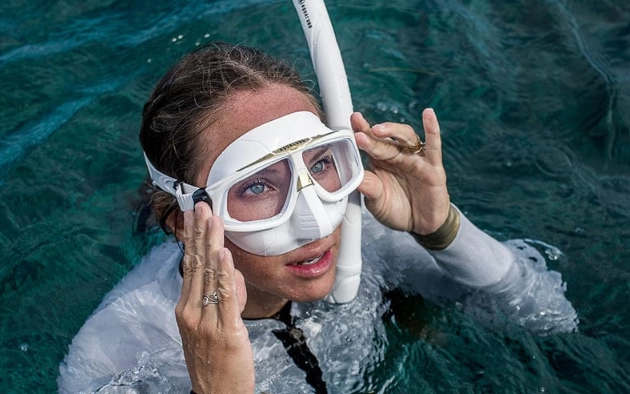
Reader Comments