Quick Guide
Let's be honest. I've been there. You get all excited for a tropical vacation, you buy a cheap snorkel set from a big-box store, and ten minutes into your first swim, your mask is fogged up, your snorkel is letting in water, and you're spending more time fighting your equipment than looking at fish. It's miserable. It can ruin the whole experience. That's how I learned the hard way that not all snorkeling gear is created equal.
Finding the best snorkeling gear isn't about buying the most expensive brand. It's about finding the right pieces that fit you. A mask that seals perfectly on your face, a snorkel that feels natural, and fins that move you through the water without cramping your calves. When you get it right, it's magical. You forget you're wearing anything at all, and you're just... floating, watching another world.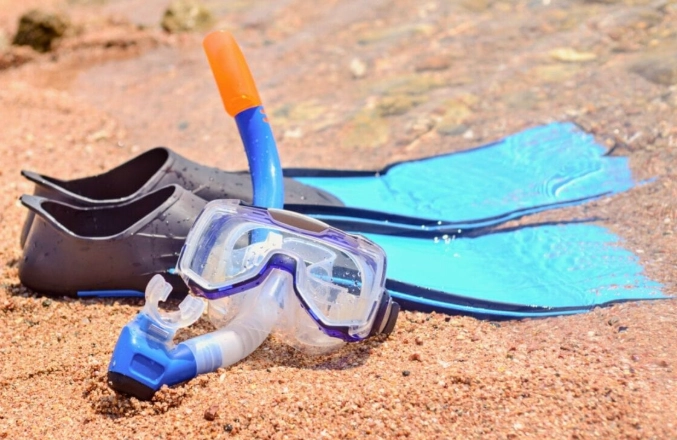
This guide is everything I wish I'd known before I spent money on junk that ended up in a landfill. We're going to break down each piece of kit, talk about what actually matters (and what's just marketing fluff), and I'll even throw in some specific models I've personally had good and bad experiences with.
The Core Trio: Mask, Snorkel, and Fins
This is your essential kit. Get these three right, and you're 90% of the way to an amazing time. We'll tackle them one by one.
The Snorkeling Mask: Your Window to the Underwater World
This is the single most important purchase. If you can't see clearly, nothing else matters. The best snorkeling gear always starts with a great mask.
Forget about color and fancy graphics. Here's what you should actually care about:
- The Skirt: This is the soft part that seals against your face. Silicone is the only material you should consider. It's hypoallergenic, durable, and seals much better than plastic or rubber. Look for a double or triple-feather edge skirt—it conforms to your face more easily. I made the mistake of getting a cheap PVC skirt once, and it was so stiff it left red marks on my forehead after 20 minutes.
- The Lens: Tempered glass is non-negotiable for safety. Period. Plastic lenses scratch easily and can shatter. Most good masks use single-lens designs (one big piece of glass) for a wider field of view, but two-lens designs (with a separate glass for each eye) can sometimes fit narrower faces better.
- The Fit: This is everything. Here's the simple test: Place the mask on your face without putting the strap over your head. Inhale gently through your nose. The mask should suction to your face and stay there on its own for a few seconds while you hold your breath. If it falls, it's not sealing. Check for gaps, especially across the bridge of your nose and under your eyes.
- Field of View: A low-volume mask (one that sits close to your face) is generally better. It lets you clear water with less effort and offers less drag. But some people with prominent brows or cheeks might find a slightly higher-volume mask more comfortable. Try a few.
What about purge valves or anti-fog coatings? A purge valve at the bottom can be helpful for beginners to clear water easily, but it's one more part that can fail. I find a simple, frameless mask is often more reliable. As for coatings, they wear off. Learning to properly prep your mask with spit or baby shampoo is a more permanent solution.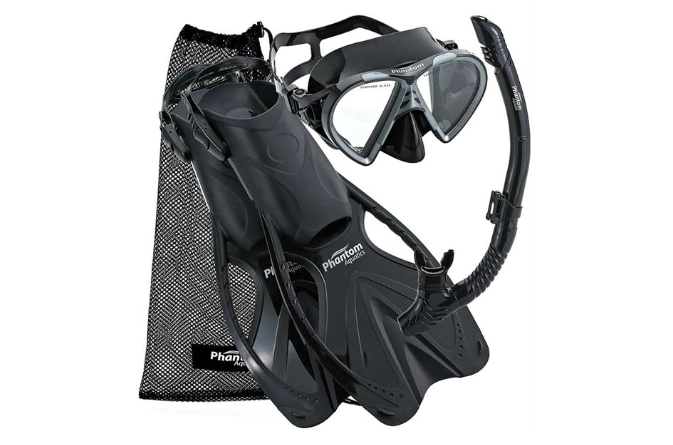
The Snorkel: Your Lifeline to Air
It seems simple—just a tube, right? But design matters more than you think. A bad snorkel can make you swallow seawater, which is a quick way to end your fun.
The big debate: Dry Snorkel vs. Traditional J-Tube.
- Traditional J-Snorkel: Simple, reliable, no moving parts. It's just a tube with a mouthpiece. If you submerge it, it fills with water, and you have to exhale forcefully to clear it (the blast clear). Pros: Lightweight, cheap, foolproof. Cons: Requires a skill to clear, can let in water from surface waves.
- Dry Snorkel (or Semi-Dry): These have a clever float valve mechanism at the top. When the top goes underwater, the valve seals shut, preventing (or greatly reducing) water entry. Many also have a splash guard and a lower purge valve to let water drain out easily. Pros: Great for beginners, choppy water, or if you dive down frequently. Cons: Heavier, bulkier, the mechanism can eventually fail or get grit stuck in it.
My take? For casual snorkelers who mostly float on the surface, a dry snorkel is a fantastic comfort feature. It really does reduce the "oh no, I got a mouthful" moments. For more active snorkelers or freedivers, the simplicity and lower drag of a traditional snorkel is often preferred.
The mouthpiece is critical. It should be soft silicone and fit comfortably without making you bite down too hard. An angled tube that aligns with your mouth's natural position reduces jaw fatigue. Honestly, I've swapped the mouthpiece on a decent snorkel before because the original was like chewing on a hard plastic toy.
Snorkeling Fins: Your Underwater Engine
Fins convert your leg power into efficient movement. The wrong fins can tire you out fast or even cause cramps.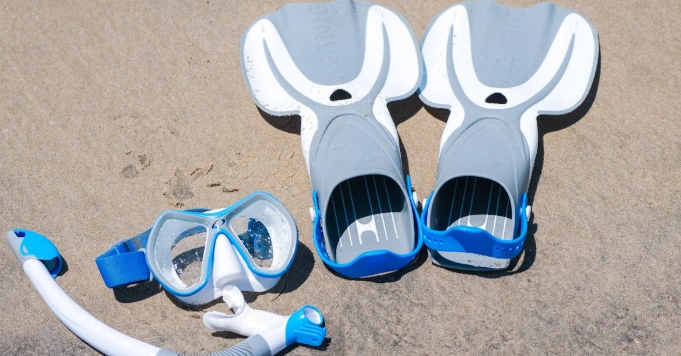
First, the style: Full-Foot vs. Open-Heel.
| Feature | Full-Foot Fins | Open-Heel Fins |
|---|---|---|
| Design | Enclose the entire foot like a shoe. | Have an adjustable strap around the heel; require booties. |
| Best For | Warm water, casual surface snorkeling, travel (pack lighter). | Colder water, rocky entries, more powerful kicking, scuba crossover. |
| Pros | Lightweight, simple, no need for booties. | More power and thrust, adjustable fit, protect feet with booties. |
| Cons | Can chafe, less power, size must be perfect. | Bulkier, require buying booties separately. |
| My Preference for Snorkeling | For 90% of tropical snorkeling trips, a good pair of full-foot fins is perfect. They're just easier. I only break out my open-heel set if I know I'll be walking over sharp coral or lava rock to get in the water. | |
Length and flexibility matter. Long, stiff fins are for divers who need raw power. Snorkelers benefit from shorter, more flexible fins. They're easier to kick with a relaxed flutter kick and cause less fatigue. Look for channels or vents in the blade—they can make each kick more efficient with less effort.
Try them on. Your toes should not be jammed at the end, and there shouldn't be painful pressure points. A little wiggle room is okay.
Beyond the Basics: Other Pieces of the Best Snorkeling Gear Kit
Once you've got the big three sorted, these extras can elevate your experience from good to great.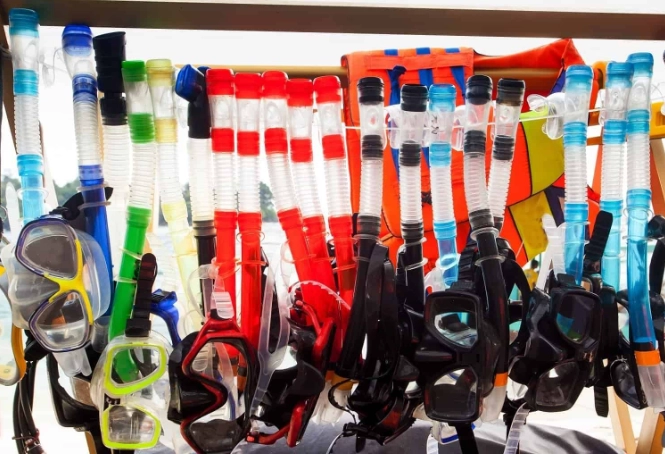
Snorkel Vest or Flotation Aid
This isn't a life jacket, but an inflatable bladder you wear. You can add a little air for extra buoyancy when you're tired, or deflate it to dive down. For weaker swimmers or in areas with currents, it's a fantastic safety and confidence booster. Some tour operators require them. I always bring my own compact one—it rolls up to the size of a water bottle.
Rash Guard or Snorkel Skin
Forget the greasy sunscreen battle. A long-sleeved UV-protection shirt (a rash guard) is a game-changer. It protects your back from sunburn, prevents chafing from your gear, and offers a thin layer of warmth. It's one of the best investments you can make for comfort. I never snorkel without mine now.
Mesh Gear Bag
A simple, affordable must-have. It lets your wet, sandy gear drain and dry while you carry it. No more soggy backpacks. Get one with sturdy handles.
Putting It All Together: How to Choose Your Best Snorkeling Gear
Okay, so you know the parts. How do you make a decision? Let's talk strategy.
Budget: You can get a reliable, solid-quality mask, snorkel, and fin set for between $150 and $250. Spending less often means compromising on materials (like getting a plastic skirt) which hurts comfort and safety. Spending more gets you premium features, lighter materials, or specialized designs. I think the sweet spot for most people is in that $150-$250 range for the core trio.
Fit is King (and Queen): If possible, try before you buy, especially for the mask. Some specialty dive shops have test buckets where you can check the seal. If buying online, check the return policy for items that don't fit. A mask that fits your dive buddy perfectly might be terrible for you.
Brands Matter, But Not Absolutely: Brands like Cressi, Mares, Aqua Lung, and TUSA have decades of reputation for a reason—they make consistent, reliable gear. They're a safe bet. But don't ignore smaller brands that might have a perfect fit for your face shape. Read reviews, but focus on reviews about fit and long-term durability, not just unboxing excitement.
Should you buy a pre-packaged set? It's convenient and often cheaper. The risk is that one piece might not be ideal for you (e.g., the mask fits poorly but the fins are great). For a beginner who isn't sure, a mid-range set from a good brand is a fine starting point. As you get more into it, you'll likely start mixing and matching to create your own perfect kit—your own version of the best snorkeling gear.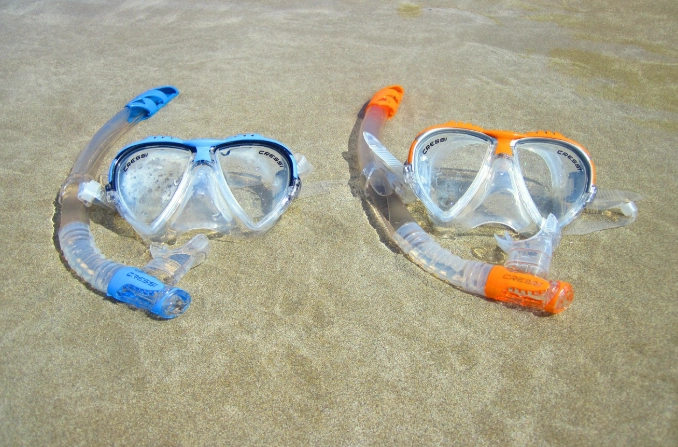
Gear Care: Make Your Investment Last
Good gear lasts for years if you treat it right. Here's the simple routine:
- Rinse: After every use in salt or chlorinated water, rinse everything thoroughly with fresh water. Salt crystals and chlorine are brutal on silicone and mechanisms.
- Dry: Air dry in the shade, not in direct sunlight. UV rays break down silicone and plastics.
- Store: Keep in a cool, dry place. Don't leave gear crammed in a tight bag while wet. Don't store the mask with the strap stretched over the lenses, as this can warp the skirt over time.
- No Touching the Lens! The oils from your fingers are the primary cause of fogging. If you need to clean the inside, use a soft cloth and maybe a tiny drop of mild soap.
Answering Your Questions: The Snorkeling Gear FAQ
This is the hottest debate. Full-face masks cover your eyes, nose, and mouth, letting you breathe naturally through your nose and mouth. Proponents love the easy breathing and panoramic view.
However, they have serious drawbacks recognized by safety bodies. The main risk is carbon dioxide (CO2) buildup. If the design doesn't allow for proper expulsion of exhaled air, you can re-breathe CO2, which can lead to dizziness, headaches, and in extreme cases, unconsciousness. There's also a higher risk of leaking if you have facial hair or an unusual face shape, and they are impossible to equalize your ears in (so you can't dive down more than a foot or two).
Organizations like the Divers Alert Network (DAN) have expressed concerns about their safety. My personal and professional opinion? Stick with a traditional separate mask and snorkel. The safety profile is proven, and a good traditional setup is just as comfortable once you're used to it.
Maybe. The mask and fins might be okay, but never use a snorkel for scuba diving. Scuba regulators are complex, pressure-rated life-support equipment. A snorkel is not. For the mask, ensure it's low-volume and has a silicone skirt—many are interchangeable. For fins, open-heel fins with booties are standard for scuba. If you think you might try scuba, it's smart to buy snorkel fins that are also rated for recreational diving.
Forget the fancy sprays. The old-fashioned way works best. Right before you get in the water, spit generously into the dry lens, rub it all over the inside glass, then give it a quick rinse in the water. The enzymes in your saliva create an anti-fog coating. Baby shampoo (a tiny drop rubbed in and not rinsed off completely) works even better and lasts longer. Just avoid getting it in your eyes.
If you need glasses, you have options: 1) Stick-on lenses: Affordable but can peel or distort. 2) Custom diopter lenses: Many brands (like TUSA or Cressi) sell masks where you can pop out the standard lenses and insert ones with your prescription. This is a great solution. 3) Full custom masks: Expensive, but perfect. It's worth it if you snorkel a lot.
Local dive shops are fantastic for getting expert fitting advice and supporting a local business. Their staff are usually snorkelers and divers themselves. For online, stick to reputable outdoor retailers or the official websites of the major brands. Be wary of deals that seem too good to be true on unknown sites—counterfeit gear is a real problem.
For more information on marine environments and responsible recreation, you can always check resources from the National Oceanic and Atmospheric Administration (NOAA).
 And that's the long and short of it.
Finding your personal best snorkeling gear is a bit of a journey. It might take trying a mask or two. But when you finally get a setup that feels like a natural extension of yourself, it unlocks the ocean. You stop thinking about your equipment and start getting lost in the swaying coral, the curious parrotfish, the silent glide of a ray.
It’s worth taking the time to get it right. Start with a great-fitting mask, add a snorkel that suits your style, and choose fins that feel good on your feet. Build from there. Your future self, floating effortlessly over a reef teeming with life, will thank you.
Now go get geared up. The water's waiting.
Reader Comments