Navigate Your Snorkel Guide
Let's cut to the chase. You're planning a trip to the Galapagos, maybe a once-in-a-lifetime thing, and you've heard the snorkeling is unreal. But then you hit a wall of confusing information. Warm season, cool season, garua, Humboldt Current... it's enough to make your head spin. Is December better than June? Will you freeze in August? Can you actually swim with penguins?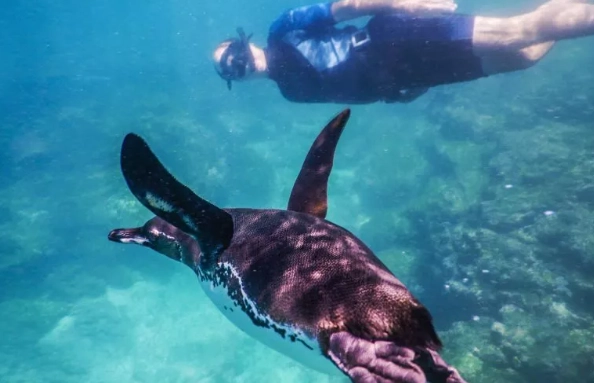
I've been there. I've also been in the water in Galapagos during what some call the "less ideal" time, and you know what? It was still mind-blowing. But I get it. You want to maximize your chances. You want clear water, tons of fish, maybe a playful sea lion pup, and you'd really rather not turn into a human popsicle.
So, let's break this down without the fluff. The truth is, there's no single "best" time to snorkel in Galapagos that fits everyone. It depends entirely on what you're after. This guide won't just give you a month and send you on your way. We're going to dig into the nitty-gritty of water temps, visibility, and—most importantly—what creatures you're likely to see and when. By the end, you'll be able to pick your own perfect window.
It's All About the Seasons (And Currents)
Forget summer and winter. In Galapagos, the year pivots on two distinct oceanic and atmospheric patterns. Calling them "seasons" is almost too simple, but it's the framework everyone uses.
The Warm & Wet Season (Roughly December to May)
This is when the ocean decides to take a vacation. The trade winds relax, the sun is more direct, and the water feels... well, tropical. Air temperatures are warmer, and you'll get brief, heavy showers (usually in the afternoon) that make the highlands lush and green.
Water temperatures are the big sell here. You're looking at averages between 70°F to 80°F (21°C to 27°C). For many people, especially those not used to cold-water diving, this is the sweet spot. A 3mm wetsuit is often plenty, and some hardy folks even go in with just a rash guard. The sea is generally calmer, which is a huge plus if you're prone to seasickness on boat rides to snorkel sites.
But here's the trade-off. The warmer surface water sits on top of the cooler, nutrient-rich water below. This stratification can mean slightly reduced visibility, often in the 30-60 foot range (10-18 meters). It's still excellent by most of the world's standards, but it's not the liquid glass you might see in photos. The plankton that bloom in the nutrient mix can also contribute to this.
Wildlife highlights? This is prime time for sea turtle nesting and hatching on the beaches. In the water, you'll see plenty of colorful tropical fish. It's a fantastic, comfortable introduction to Galapagos snorkeling.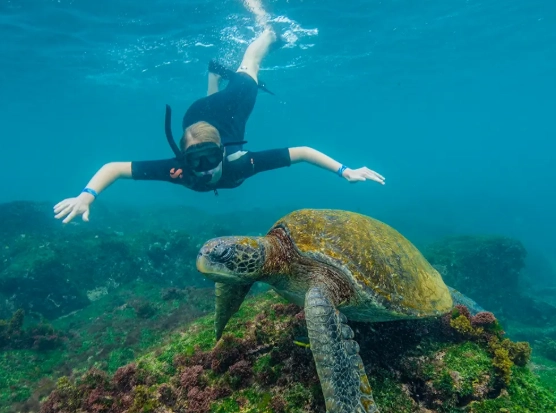
The Cool & Dry Season (Roughly June to November)
Enter the Humboldt Current. This cold, nutrient-rich river in the ocean sweeps up from Antarctica and wraps around the islands. It transforms everything.
The air feels cooler and drier (especially in the highlands), and a persistent mist called "garua" often shrouds the taller islands. But the real story is underwater. The current churns up all those nutrients, creating an explosion of marine life. This is the best time to snorkel in Galapagos if your goal is to see the big, iconic stuff in action.
The water gets cooler, ranging from 65°F to 75°F (18°C to 24°C). That "65°F" part is no joke—it can be bracing. A good 5mm to 7mm wetsuit, plus hood and booties, becomes non-negotiable for most people. I learned this the hard way with a cheap, thin rental suit in August. My dive buddy was fine; I was shivering after 20 minutes. Don't be me.
The payoff? Unbelievable water clarity. With less temperature difference between layers, the water mixes better, and visibility can soar to 80 feet (25 meters) or more. And those nutrients? They form the base of a food web that brings in the predators.
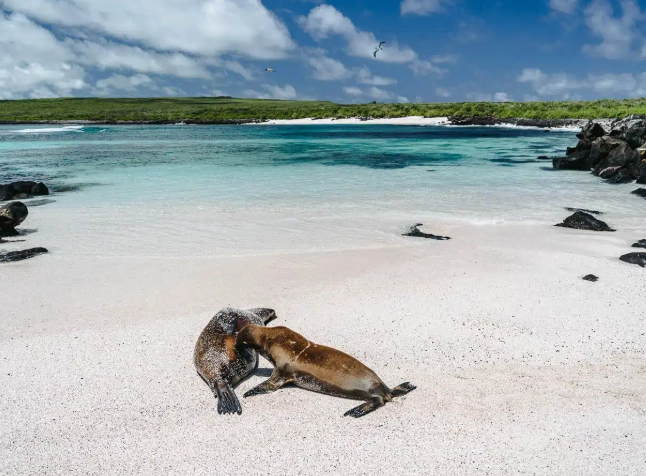
This is the season for whale sharks (especially around Wolf and Darwin Islands, though that's mostly a diving zone), massive schools of hammerheads, and the utterly charming Galapagos penguins becoming more active and abundant. Sea lions are playful year-round, but the cooler water seems to give them even more energy.
Your Month-by-Month Snorkel Cheat Sheet
Okay, seasons are helpful, but you book trips by the month. Here’s a more granular look. Think of this as your planning dashboard.
| Month | Avg. Water Temp | Visibility | Key Marine Life Sightings | Vibe & Notes |
|---|---|---|---|---|
| January | 74-78°F (23-26°C) | Good (40-60 ft) | Green sea turtles (nesting), marine iguanas, reef fish. Whale shark possibility (low). | Warm, rainy. Water is comfortable. Land is green and beautiful. |
| February | 75-80°F (24-27°C) | Good (40-60 ft) | Peak sea turtle nesting/hatching. Penguins still around but less active. | Hottest water. Great for those who hate being cold. Afternoon rains. |
| March | 75-80°F (24-27°C) | Good (40-60 ft) | Marine iguana mating colors. Boobies start their courtship dances. | Transition month. Still warm, rains starting to taper. |
| April | 75-80°F (24-27°C) | Very Good (50-70 ft) | Waved albatross return! Water still warm, visibility improving. | One of the best overall months. Great mix of weather & wildlife. |
| May | 72-76°F (22-24°C) | Very Good (50-70 ft) | Sea lion pups appear. Giant manta ray chance increases. | The "shoulder" sweet spot. Warmth of wet season, clarity improving. |
| June | 70-74°F (21-23°C) | Excellent (60-80+ ft) | Cooler water arrives. Penguins & sea lions super active. Whale shark season begins up north. | Season shift. Water clarity jumps. Bring a good wetsuit. |
| July | 68-72°F (20-22°C) | Excellent (60-80+ ft) | Peak for whale sharks (Wolf/Darwin). Cold water upwelling in full swing. | Busy, famous for clear water and big life. Can be windy. |
| August | 65-70°F (18-21°C) | Excellent (60-80+ ft) | Sea lion pupping peaks! Penguins abundant. Humpback whales passing through. | Coldest water. Not for the faint of heart. Unbeatable for activity. |
| September | 65-70°F (18-21°C) | Excellent (60-80+ ft) | Penguins at their most playful. Sea lion pups learning to swim. | Water is still cold. Arid landscape. Visibility often at its peak. |
| October | 66-72°F (19-22°C) | Excellent (60-80+ ft) | Blue-footed booby chicks. Fur seals more active. Last of the whale sharks. | The garua starts to lift. A fantastic, less-crowded option. |
| November | 68-74°F (20-23°C) | Very Good (50-70 ft) | Transition month. Water starts to warm slightly. Great birdlife. | Another great shoulder month. Conditions start to balance out. |
| December | 70-76°F (21-24°C) | Good to Very Good | Turtles return for nesting. Warm water species become more common. | Wet season begins. Holiday crowds. Underwater Christmas is a treat. |
See what I mean? Picking the best time to snorkel in Galapagos is like choosing your favorite ice cream flavor. Do you want the rich, creamy comfort of warm water (December-May), or the intense, sorbet-like clarity and kick of the cool season (June-November)?
Beyond the Calendar: What REALLY Matters for Your Trip
The month is just one piece. Here are the other factors that will make or break your snorkeling experience, often overlooked in simple "best time" lists.
Your Personal Cold Tolerance
This is the biggest one. I can't stress it enough. That 65°F (18°C) water in August feels completely different to someone from Scandinavia versus someone from Florida. Be brutally honest with yourself. If you get cold easily, the warm season is your safe bet. Being miserably cold ruins the fun, no matter how many penguins zoom past you. A great wetsuit helps immensely, but it's not a magic force field.
The Specific Islands & Sites
Galapagos isn't one big bathtub. The western islands (like Isabela and Fernandina) are almost always cooler and richer due to the Cromwell Current. The far northern islands (Wolf & Darwin) are a league of their own, with colder water and massive pelagic action year-round, but that's primarily a liveaboard dive trip. The central and southern islands (like Santa Cruz, San Cristobal, Floreana) see more variation between seasons.
Your itinerary matters. A trip that focuses on the western circuit will be cooler and richer. An itinerary staying in the central islands might feel warmer.
Sea Conditions and Your Stomach
The warm season usually means calmer seas. The cool season brings stronger winds and choppier water, especially in the afternoons. The boat rides between sites can be... lively. If you are even slightly prone to seasickness, come prepared with medication (talk to your doctor), acupressure bands, ginger chews—the whole arsenal. A rough ride can spoil your day before you even get in the water.
Answers to the Questions You're Actually Asking
Wrapping It Up: How to Make Your Final Decision
So, after all this, how do you choose your best time to snorkel in Galapagos?
Ask yourself these three questions, in order:
- What's my #1 wildlife dream? Is it swimming with penguins? Seeing a turtle? Watching a sea lion pup? Match that dream to the months in the table above.
- How do I handle cold water? Be real. If the thought of 68°F water makes you shudder, lean warm season. If you're tough and well-equipped, the cool season's rewards are unparalleled.
- When can I actually go? Look at your calendar. Then cross-reference with your answers to 1 and 2.
My final, personal take? The shoulder months—April/May and October/November—are the ultimate sweet spot for many people. You get a taste of both worlds: decent water warmth, good visibility, active wildlife, and often fewer tourists. April, in particular, is a gem with the albatross returning.
But here's the ultimate truth, the one thing I wish someone had told me: There is no bad time to snorkel in Galapagos. Seriously. I've been shivering in August and sweating in February, and both trips live in my memory as highlights of my life. The islands are so profoundly alive, so uniquely wild, that the moment you slip beneath the surface and lock eyes with a curious sea lion, the water temperature becomes a minor detail.
Do your planning, gear up right, and go. The ocean is waiting.
For the most current park regulations, visitor site details, and conservation efforts, always check the official source: the Galapagos National Park Directorate website. For scientific research on Galapagos marine life and climate patterns, the Charles Darwin Foundation is an invaluable resource.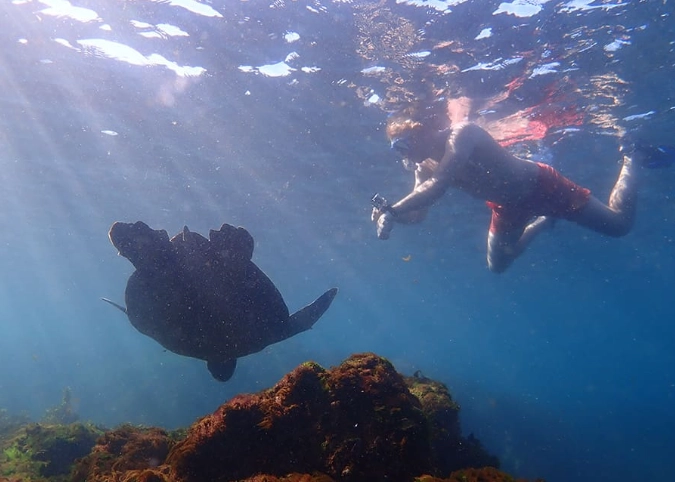
Reader Comments